
 Gaby
Gaby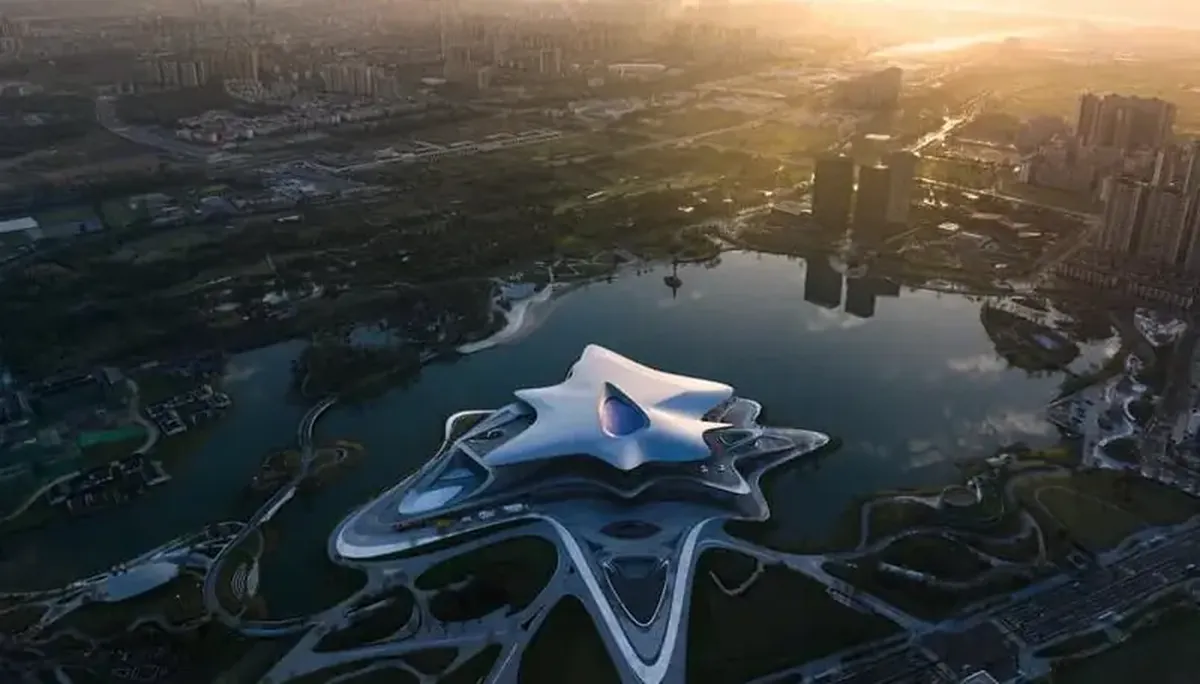
Zaha Hadid Architects designed the Science Fiction Museum for Chengdu, a city of about 20 million in Sichuan Province. Covering 59,000 square meters, the museum will host exhibitions, conferences, and other events.
Situated next to the picturesque Jingzhong Lake in the New Science and Innovation City, the museum sits in the heart of the Pidu District. The project’s concept pays homage to Chengdu’s cultural heritage — a city that has nurtured well-known Chinese science fiction authors for decades.
Chengdu has long been a hub for scientific innovation and research. The city also favors futuristic architecture, acting as a bridge between fantasy and reality.
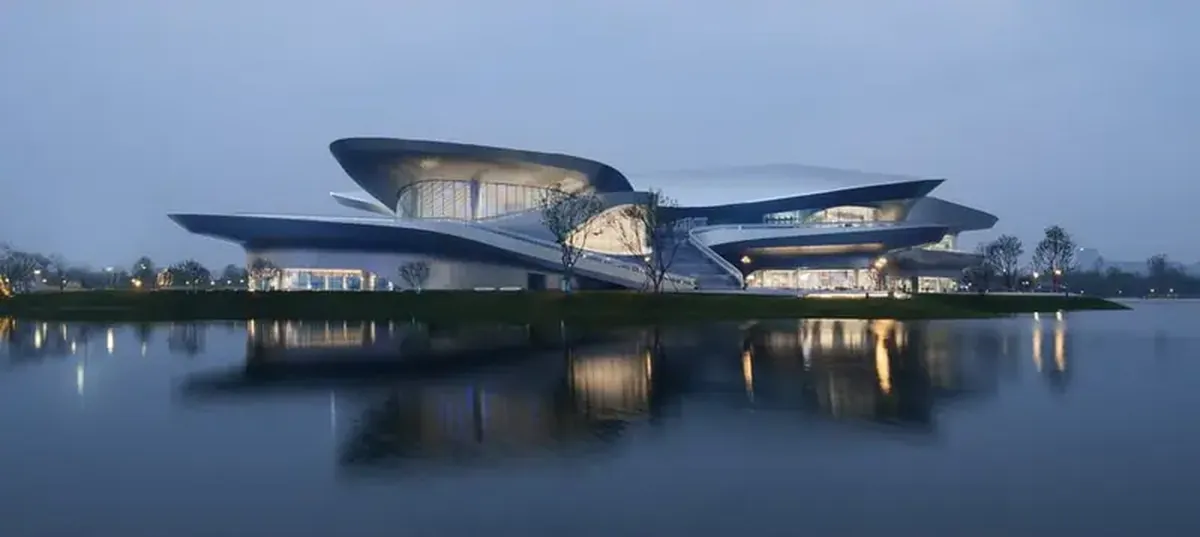 The design of the new museum integrates with the surrounding environment, creating a harmonious connection between the building and the lush park. Designboom says visitors strolling through the park will encounter unexpected discoveries. Guests will follow pedestrian paths leading from the city to the heart of the museum, moving between levels of indoor and outdoor halls.
The Roof — A Nebula with a Star
The Science Fiction Museum by Zaha Hadid Architects stands out for its dynamic, fluid forms. From certain angles the structure seems to hover above the lake, blending architectural and natural beauty.
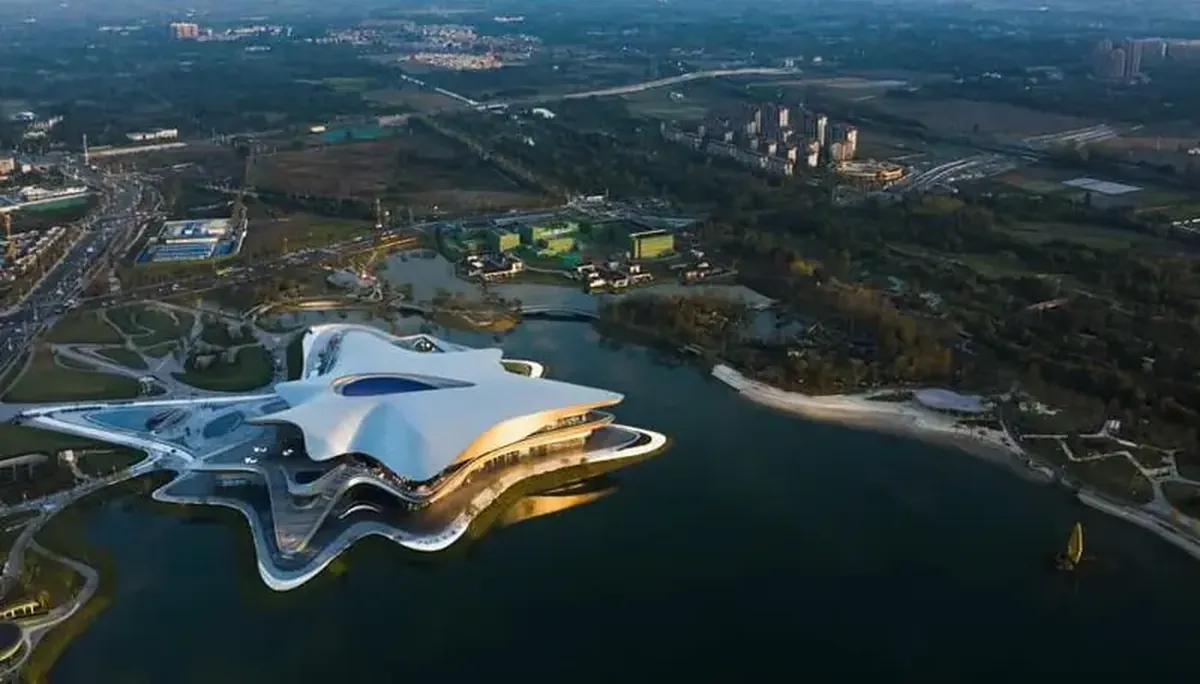 From a bird’s-eye view, the museum’s roof looks like a nebula with a giant silver star spread across it. At the center of that star is a droplet-shaped atrium opening that brings in daylight. In the evening, actual stars peek through the opening.
This unusual roof design is a metaphor for the union of lived experience and boundless imagination. That idea plays out across the museum’s spaces: galleries, a multifunctional hall, a conference center, cafés, educational areas, and more.
Prioritizing Ecology
Large windows, including the atrium opening, frame views of Mount Silin. Even inside, visitors stay connected to the lush surrounding nature.
The ZHA museum meets China’s highest three-star rating in the national green building program. The structure maximizes natural ventilation and incorporates photovoltaic elements in the canopy to cut energy use.
Additionally, the surrounding park includes systems for collecting and storing rainwater.
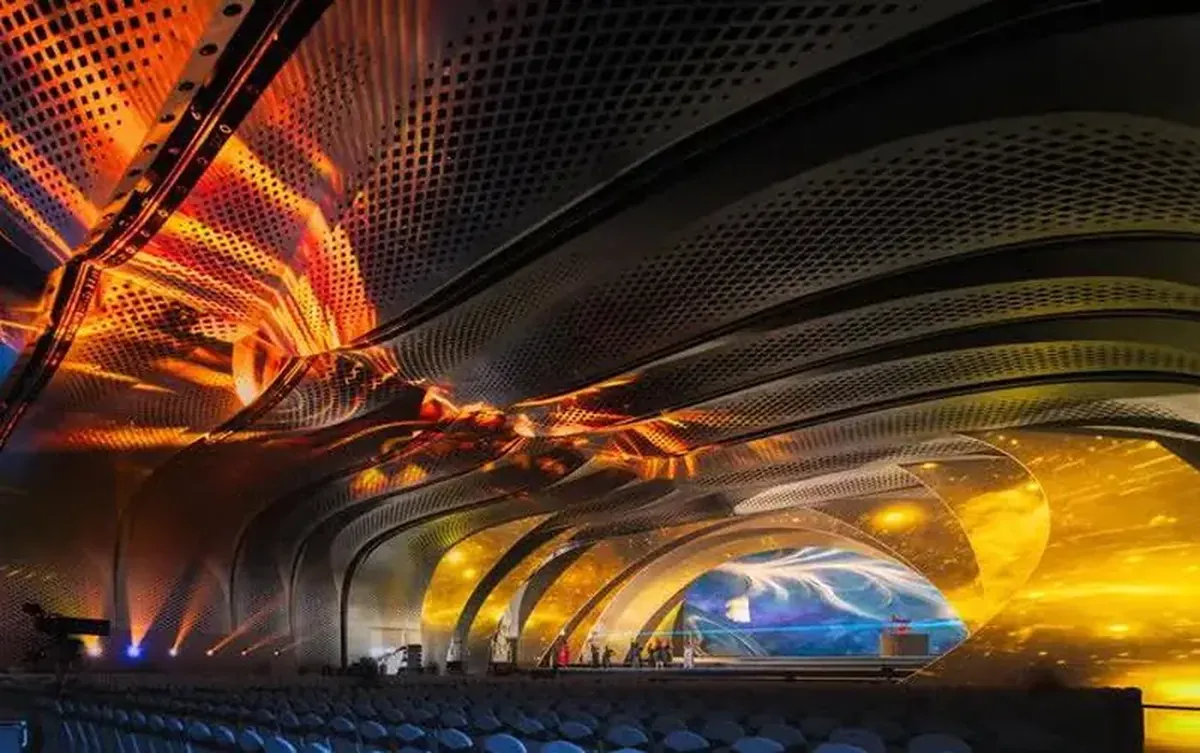
Recently, the new museum hosted the 81st Science Fiction Convention and the Hugo Awards ceremony, which annually honor the best science fiction authors from around the world.
