
 Gaby
Gaby
The twists of fate and the tragic end of the 37-year-old outcast with an easel have only added to the value of his legacy. After his death, the mentally troubled “missionary for the poor” became an auction-house favorite among millionaires. In just ten years, the man often called the “mad Dutchman” produced about 2,100 works; most of his 860 oil paintings were completed in the last two years of his life, a period in which he was searching for himself until the very end – when he shot himself in the chest.
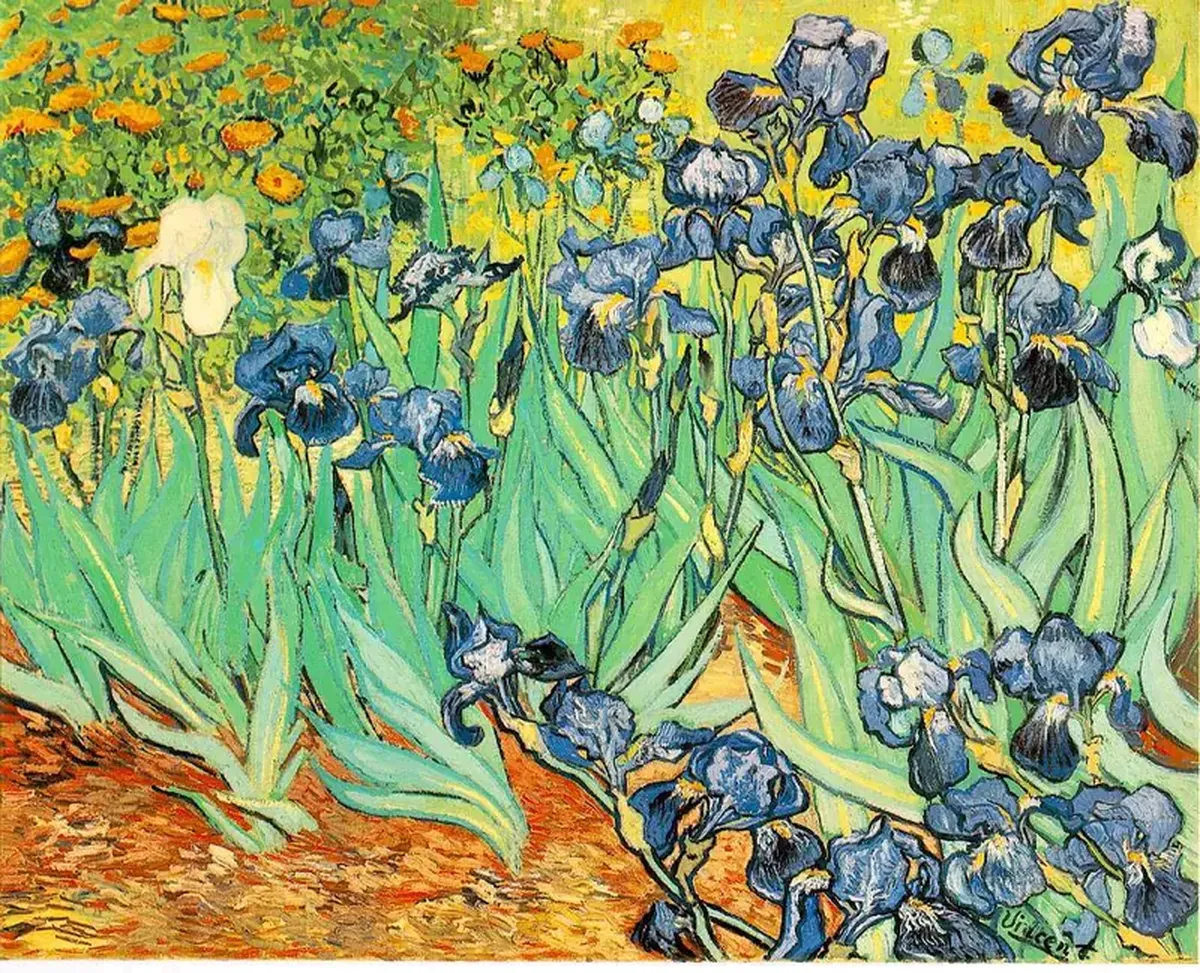
“Irises” (1889)
Vincent… in Replacement
The biography of Vincent Willem van Gogh is full of odd coincidences, beginning with his birth. The future reformer of painting was born to a Reformed Church pastor on March 30, 1853, in the Dutch town of Groot-Zundert. The red-haired boy was the eldest of six children, though not literally the first: a year before his arrival, his parents lost a newborn son, and the name Vincent was given again to honor the child who had died.
He inherited his name from several forebears: his grandfather Vincent van Gogh was a theologian with a university degree, and his great-grandfather of the same name had been a successful sculptor. Three of the grandfather’s six sons, including another Vincent who lived in The Hague, worked in the art trade. Across generations, the van Gogh family gravitated toward both art and religion, and Vincent Willem would try his hand at both.
Perhaps that sense of being a replacement shaped his temperament: hasty choices, mood swings, and a constant search for identity. Vincent often painted pairs of male figures, which psychiatrists later saw as signs of duality or a split in personality, possibly linked to bipolar disorder. Could that explain why he struggled to connect with people, changed jobs and places repeatedly, and always felt out of place, as if living someone else’s life?

Vincent van Gogh at the age of 18
Willful and Vulnerable
From a young age, Vincent stood apart from his siblings. Among the three boys and three girls, the governess judged him the least agreeable. A troublemaker and instigator, he sparked conflict at every turn. Impulsiveness, stubbornness, and social withdrawal marked his character. He left his first school after a year and fled two boarding schools. Being sent 20 kilometers from home caused him so much distress that he carried that feeling of rejection for the rest of his life. At Willem II in Tilburg, van Gogh learned three European languages (he spoke French frequently) and received his first drawing lessons, but he lasted only a year and a half there before leaving.
Describing his childhood, van Gogh called it “gloomy, cold, and empty.” In 1869, with help from his uncle Vincent, nicknamed Cent, the fifteen-year-old found work as an art dealer at Goupil & Cie: first in The Hague, then in London. Evaluating paintings on the job, he also began to learn to paint. He hadn’t yet decided on a career as an artist, but he already had strong opinions about art. “Only one in ten paintings is created with the idea of art,” he wrote to his sister, outraged that artworks were treated as mere products. He called that commerce organized crime and argued that “art has no greater enemies than art dealers.” His employer noticed his outspokenness, and in 1876 the dissenting employee was dismissed.
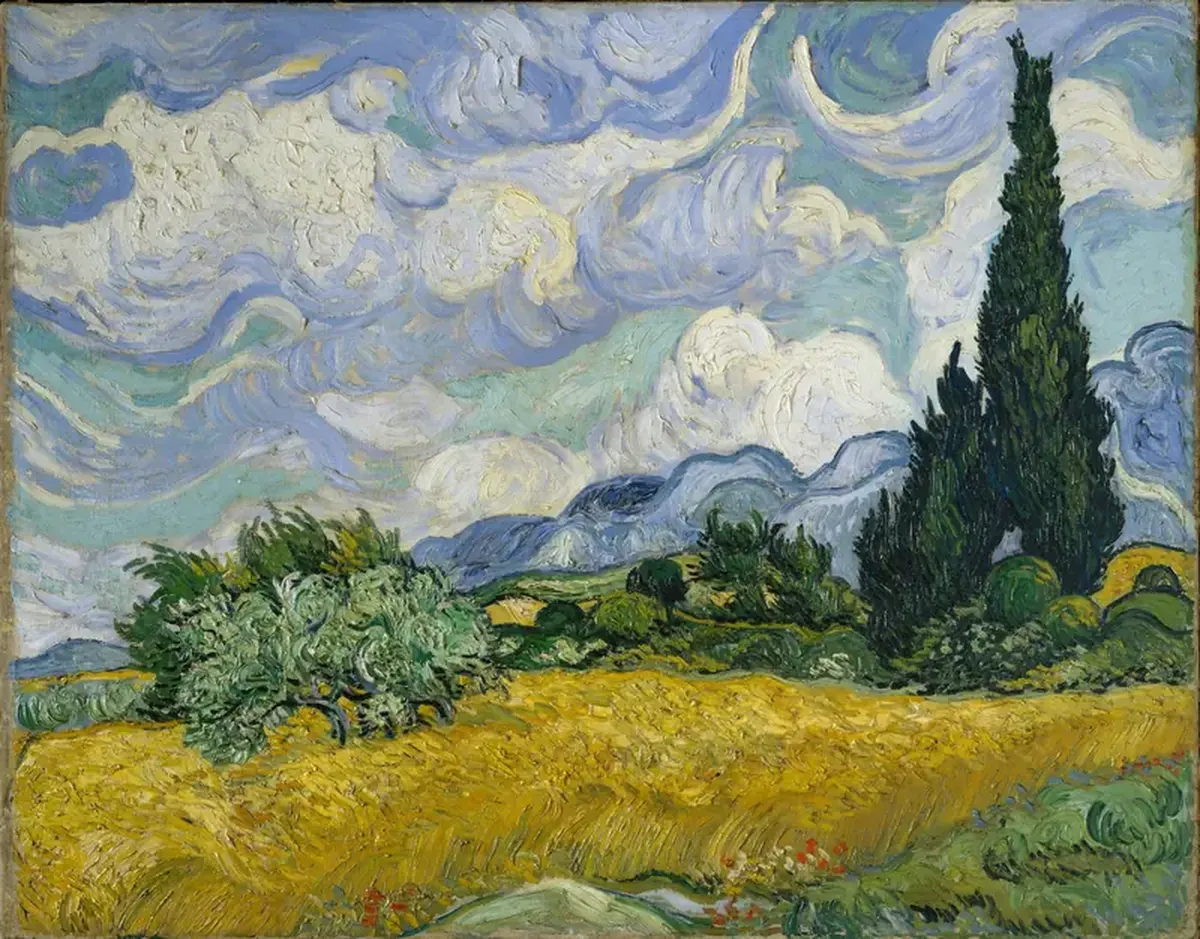
“Wheat Field with Cypresses” (1889)
Failed Debut
Van Gogh’s business failures came alongside the pain of unrequited love. The landlady’s daughter, with whom he was infatuated while renting a room, did not return his feelings, and in despair he turned to the Bible. Following his father’s example, the pastor’s son decided to dedicate himself to saving souls. He planned to study theology in Amsterdam and translate Scripture into the languages he knew. That plan faltered, too. Enrolling at a Protestant missionary school near Brussels, he lasted only three months before being expelled for impulsiveness and untidiness.
His first missionary posting in a Belgian mining village also failed. In Borinage, van Gogh intended to spend six months gaining experience for admission to evangelical training. He preached to the poor and illiterate, taught children, visited the sick, and drew topographical maps at night to earn money. The Evangelical Society paid him 50 francs, which he shared with the local community. By 1879, he had become so absorbed in the miners’ hardships that he gave away his food and clothes. He demanded better working conditions from the mine management on behalf of the miners and refused to pursue further formal education, which he saw as elitist. His zeal led the synodal committee of the Protestant Church of Belgium to remove him from his post.

“The Church at Auvers” (1890)
Salvation in Creativity
Painting became van Gogh’s remedy for depression. “If you’re going to learn from someone, learn from an artist!” he decided, and with financial support from his younger brother Theo, he moved to Brussels in 1880. He took classes at the Royal Academy of Fine Arts, but after a year he left and continued to teach himself. Back at his parents’ home, he fell for a cousin who was visiting with her son; she rejected his advances, and the shock pushed him to move to The Hague and give up on pursuing a conventional personal life.

“The Potato Eaters” (1885)
Studying with Anton Mauve, a member of the Hague School and a distant relative, van Gogh experimented with technique and color. Painting urban neighborhoods, he combined sepia, chalk, pen, and watercolor in some works. His early pieces were realistic and focused on laboring people; paintings like “Peasant Woman” and “The Potato Eaters” use dark tones to convey oppression. Later, yellow came to dominate his palette—scholars link that shift in part to the medication he took for epilepsy. The foxglove used in some anticonvulsant treatments can alter color perception.

“Sunflowers” (1888)
The Misunderstood Outcast
The more van Gogh immersed himself in painting, the less interest he had in religion. Over time he cooled toward preaching and grew contemptuous of many clergymen. He even called his own father a hypocrite after Pastor Theodor disapproved of Vincent’s relationship with a prostitute in The Hague. Meeting a pregnant woman named Christine on the street, Vincent took pity on her and invited her and her children to live with him. Friends and family condemned the decision, and Vincent quarreled with them over it. He believed his role was to help someone out of poverty and vice, and expected his father to support that effort.

That “noble experiment” ended poorly. The household life with the woman broke down, and Vincent moved to Drenthe in the northern Netherlands, where he lived in a small cabin-studio and painted the local landscape and peasants. Even there, he became an outcast after a clash with the local pastor, who forbade villagers to model for him and accused him of immorality. Once again, van Gogh retreated into his art. He later studied at the Antwerp Academy of Arts, and in February 1886 he moved to Paris to join Theo, who was selling paintings there.

“Portrait of a Woman in Blue” (Antwerp, 1885)
Parisian Inspiration
Paris marked the start of van Gogh’s most productive and eventful period. Among fellow artists, he finally found appreciation. Gallery owner Theo believed in his brother and helped convince skeptics that Vincent’s name would soon be known. Vincent absorbed Japanese prints and the synthetic work of Paul Gauguin, and his style changed dramatically. He developed a distinctive impasto technique, using expressive, dynamic brushwork.
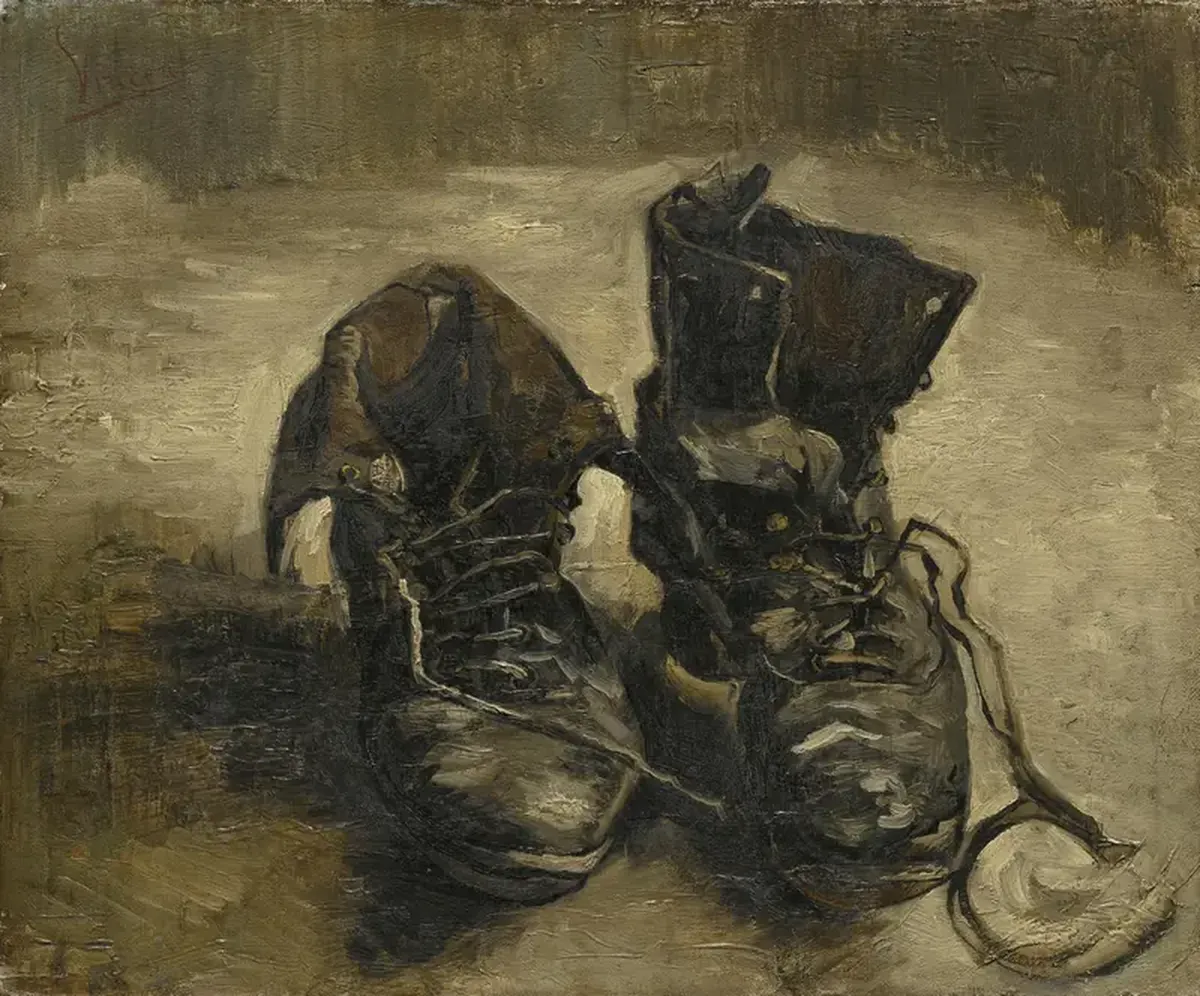
“Shoes” (1886)
During his Paris period, van Gogh produced about 230 paintings. Among his still lifes and self-portraits, a 1887 series titled “Shoes” stands out. The first worn pair in that series came from a flea market. The battered shoes symbolize the difficult path he walked: van Gogh imagined himself a pilgrim and literally walked many miles. On one occasion he walked three days to Aylworth for a teaching job; years earlier he had walked from Borinage to Brussels as a form of self-punishment after his missionary failure.

“The Artist on the Way to Work” (1888)
The Face of Madness
Van Gogh tortured his body with sleepless nights, heavy smoking, absinthe, and sexually transmitted diseases. By his thirties he had ravaged his health: a damaged stomach, lost teeth from poor nutrition, early impotence, and serious mental decline. Doctors and historians have proposed dozens of diagnoses, including manic-depressive illness, schizophrenia, epilepsy, and chronic depression. With that mix of ailments, he drank strong coffee by the liter while working on the “Sunflowers” series, claiming that extreme excitement helped him achieve the “height of yellow paint” he wanted. He may have reached a peak of instability while living in the “Yellow House,” during Paul Gauguin’s stay.
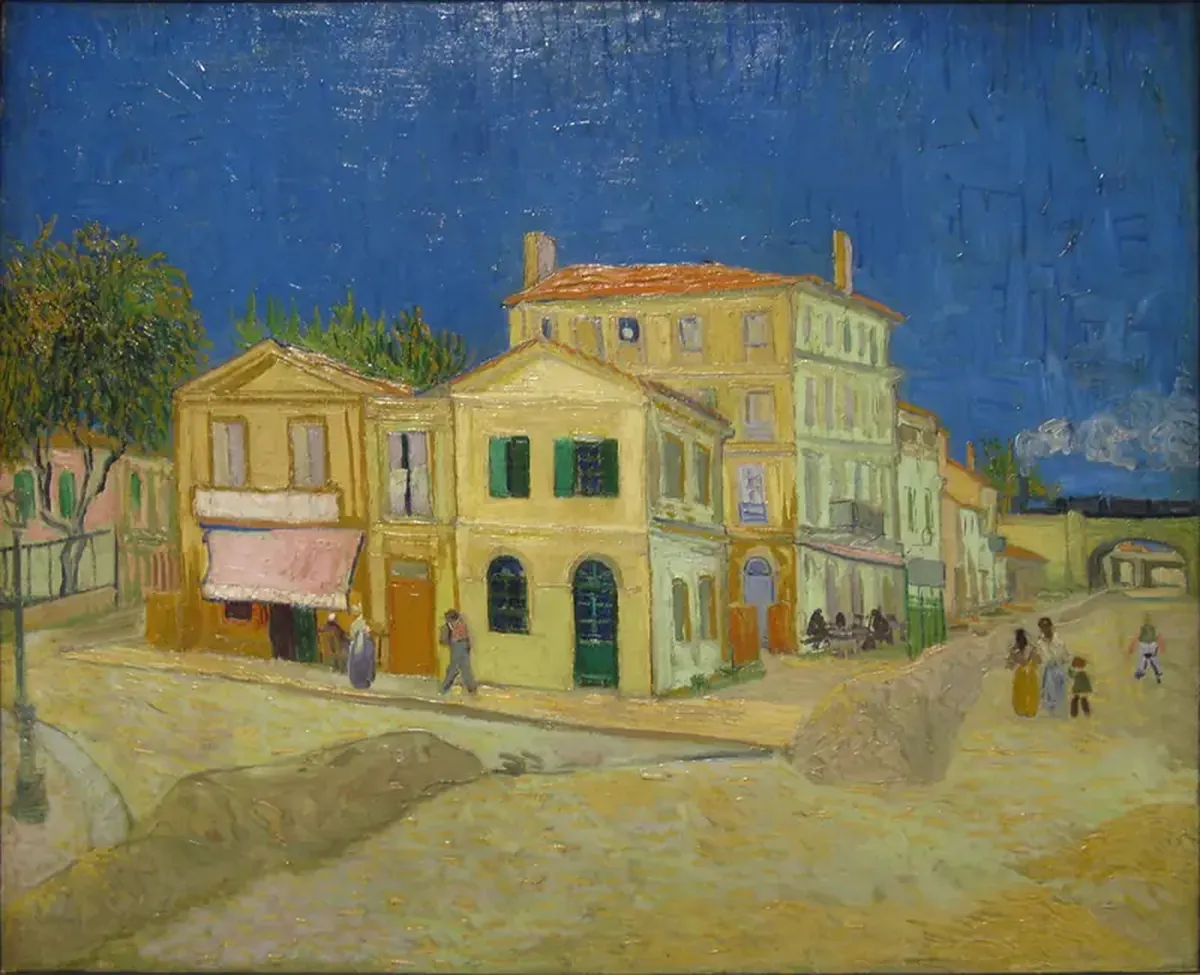
“The Yellow House” (1888)
Van Gogh pinned his hopes for a collaborative community on Gauguin: he imagined a “Studio of the South,” a brotherhood of like-minded artists for future generations. Theo agreed to finance the plan and to pay for Gauguin’s visit to Arles. When Gauguin arrived on October 25, 1888, witnesses said van Gogh looked disheveled and unwell. A local remembered him as “poorly dressed, dirty, and unfriendly,” and a neighbor complained of his smell and “disgusting temperament.” Arguments soon followed.
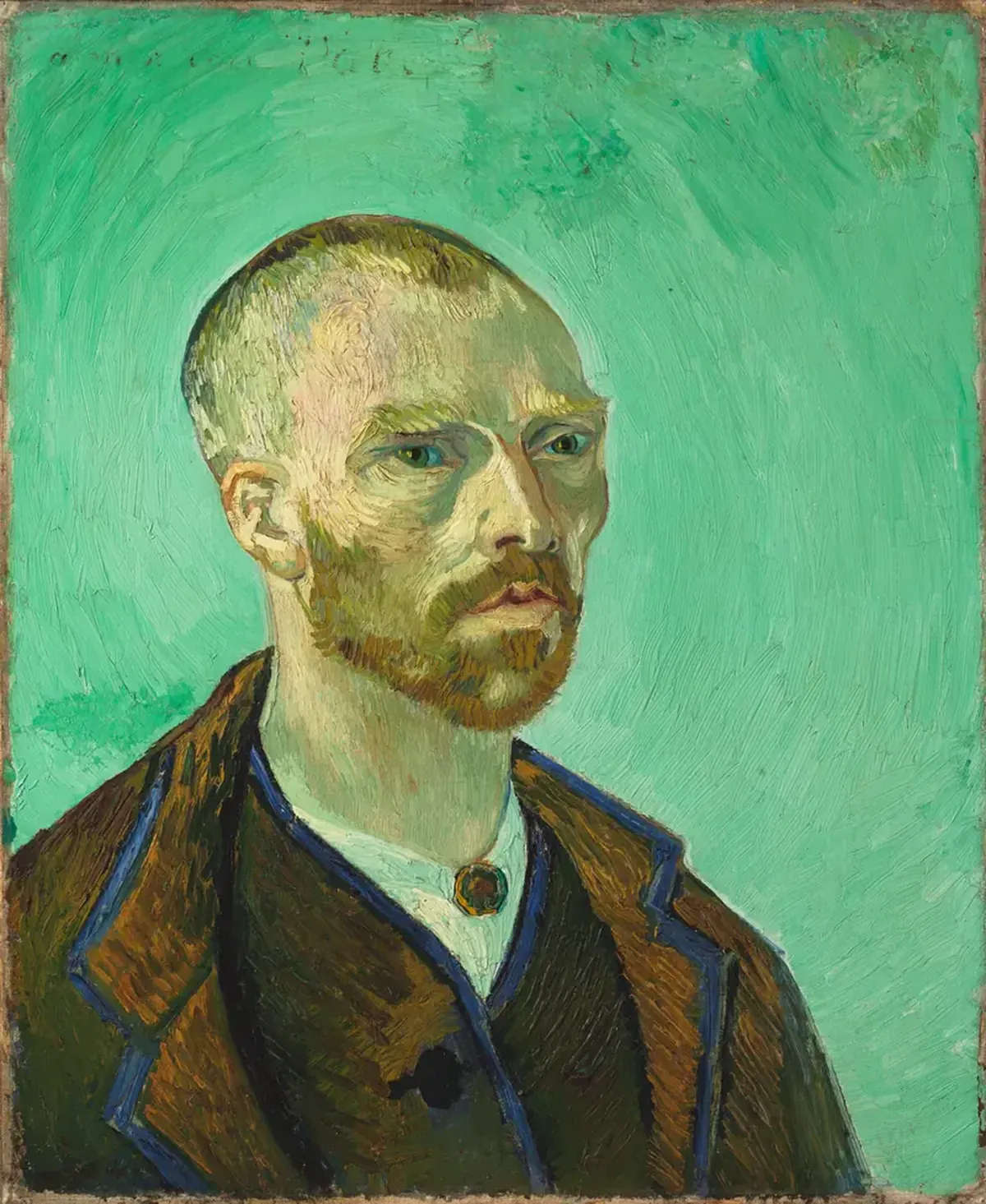
“Self-Portrait Dedicated to Paul Gauguin” (1888)
Why Did Van Gogh Cut Off His Ear?
The full truth about the Christmas Eve confrontation on December 23 remains unclear. During another episode of mental distress, van Gogh lunged at Gauguin with a razor while Gauguin slept. Gauguin woke in time and stopped the attack, then left. The popular account says that van Gogh, overcome with remorse, cut off his earlobe that night and allegedly showed it to prostitutes at a local bar. Another version claims Gauguin wounded van Gogh in self-defense with a fencing foil and that the weapon was later thrown into the river during Gauguin’s hasty departure. The next day Vincent was taken to a psychiatric hospital and placed in a locked ward without visitors.

“Self-Portrait with Cut Off Ear and Pipe” (1889)
During periods of remission, van Gogh was allowed to work in the hospital workshop, but townspeople petitioned the mayor to have the scandalous artist isolated. He was eventually admitted to a psychiatric facility in Saint-Rémy-de-Provence, near Arles, where from May 1889 he spent a year in a ward for the mentally ill. There he painted “Starry Night” from memory. The works he produced in that period are marked by intense emotional force.
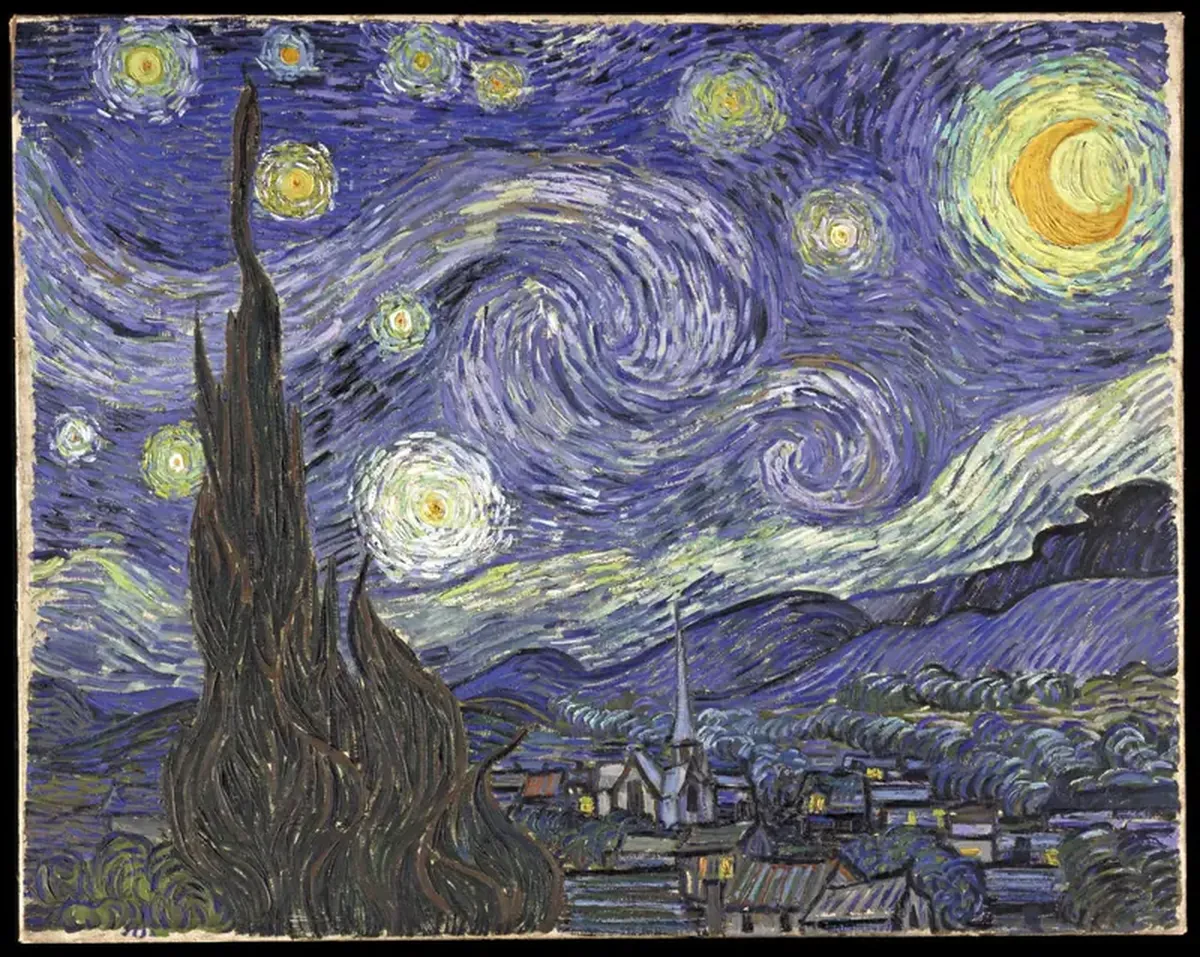
“Starry Night” (1889)
At the end of July 1890, van Gogh painted the haunting “Wheat Field with Crows” in a single day. A month earlier he had visited Theo, who had been living in Paris with his wife and child; the brothers argued over money and the storage of Vincent’s paintings. Feeling like a burden, Vincent left and returned to Auvers-sur-Oise. On July 27, after going out to paint with his brushes and paints, he shot himself in the chest with a bird-scarer’s rifle.

“Wheat Field with Crows” (1890)
La tristesse durera pour toujours
Because the bullet struck below the heart, van Gogh managed to make it back to his room. A doctor called Theo, who arrived immediately and stayed at his brother’s side until he died of blood loss. Vincent’s heart stopped at 1:30 AM on July 29, 1890 – about 29 hours after the injury. During that time Vincent smoked constantly while Theo tried to encourage hope for recovery. “Why save me?” the dying artist asked. “Sadness will last forever.”
Theo never organized a posthumous exhibition for Vincent: he fell ill with a nervous disorder and died six months later. The brothers are buried together. Critics still wonder why Vincent’s last unfinished painting was “The Roots of Trees,” completed just hours before his suicide attempt. Perhaps that work was meant to express something he felt he lacked.

“Portrait of Dr. Gachet” (1890)
P.S. “Self-Portrait with Cut Off Ear and Pipe” sold in the 1990s for $90 million; “Portrait of Dr. Gachet” for $82.5 million; “Wheat Field and Reaper” for $81.3 million; and “Wheat Field with Cypresses” for $57 million. In today’s dollars, “Irises” and “Portrait of the Postman Joseph Roulin” are valued at over $100 million.
