
 Gaby
Gaby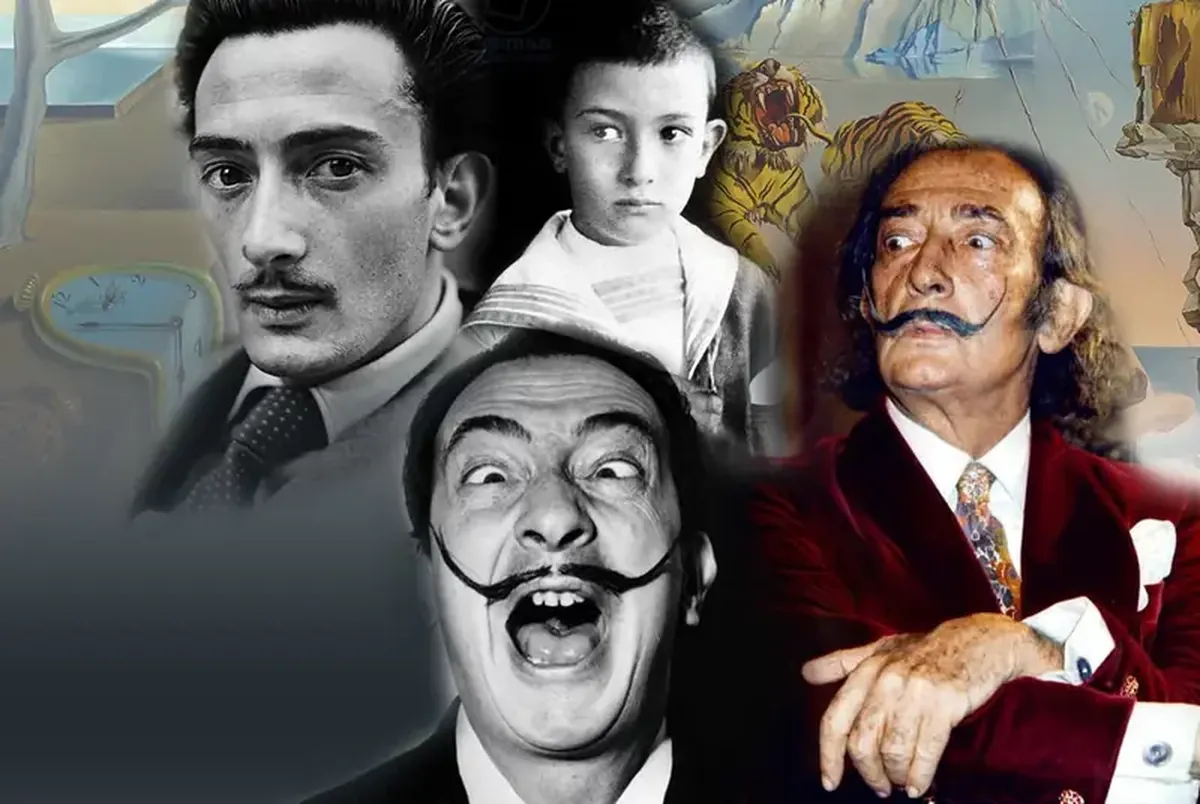
Surrealism was an art style and way of life embraced by an eccentric genius who fascinated the public and psychiatrists alike. The theatrical performances of this dreamer, provocateur, and oddball became part of his personal brand and an extension of a commercially successful artistic approach he called the “paranoid-critical” method.
The Willful “Savior”
The renowned Catalan was born on May 11, 1904, into the family of a wealthy notary in Figueres. His parents named him Salvador (which means “Savior” in Spanish), a choice that helped instill in him a drive to stand out. He shared his name with his father, Salvador Dalí i Cusi, and with an older brother who had died at age two. That first son died of meningitis nine months before the birth of the “twin.” When his parents took the five-year-old Salvador to his brother’s grave and told him the deceased boy’s soul had been reincarnated in the newborn, the story shocked him. Dalí did not want to be anyone’s copy and spent his life convincing the world of his singularity.
“At six, I dreamed of becoming a chef; at seven, Napoleon; and as I grew older, my ambitions only increased,” he wrote in his autobiography, which he subtitled “The Secret Life of Salvador Dalí, Revealed by Himself.”
In childhood fights and daring adventures, he always acted like the victor. He provoked his family and drew attention with expressive antics—the temperamental but shy Salvador had few other tools. His younger sister, Anna Maria, who was four years younger, remembered his difficult nature but added, “There were plenty of reasons to love him.”
Talent Without Borders
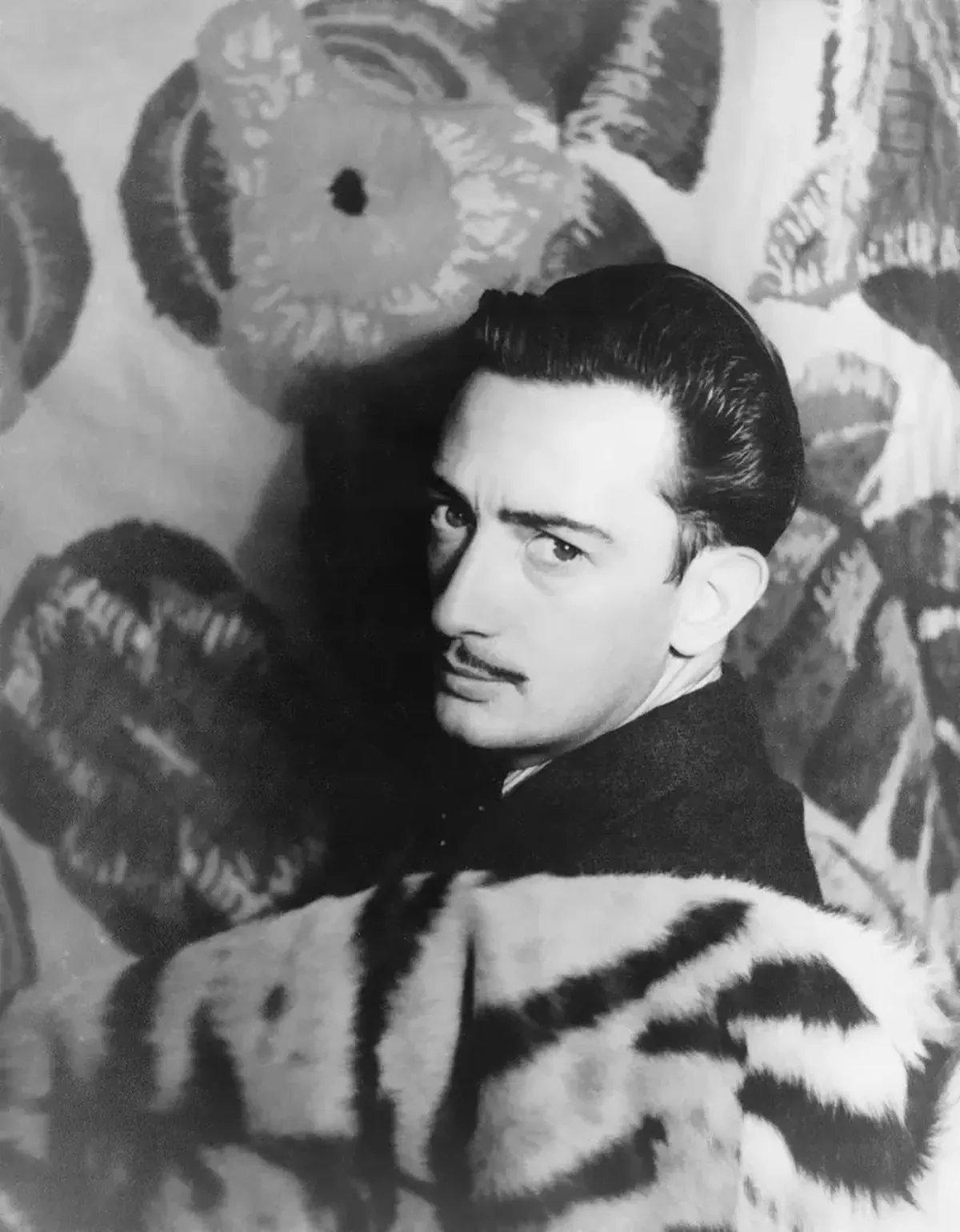
By age six Dalí was already handling a paintbrush, impressing his family with an impressionistic landscape painted in oil on a board. He was given a special room to paint and spent days and nights there. He honed his gifts under the guidance of painting professor Joan Núñez. He studied at the municipal art school and, from 1914 to 1918, attended a monastic institution in Figueres; he was expelled at 15 for poor behavior. Still, he completed his secondary education and earned the certificate to enter the Madrid Academy of Fine Arts.
At the same time the “troublesome” teenager discovered writing and began publishing at 16. His youthful essays on great artists foreshadowed the books he would later write: Dalí proved himself a talent in both painting and literature.
The year his mother died—47-year-old Felipa Domenech, who succumbed to breast cancer—Dalí enrolled in the capital’s Academy of Fine Arts, where he expanded his techniques and met interesting people, including director Luis Buñuel and poet Federico García Lorca.
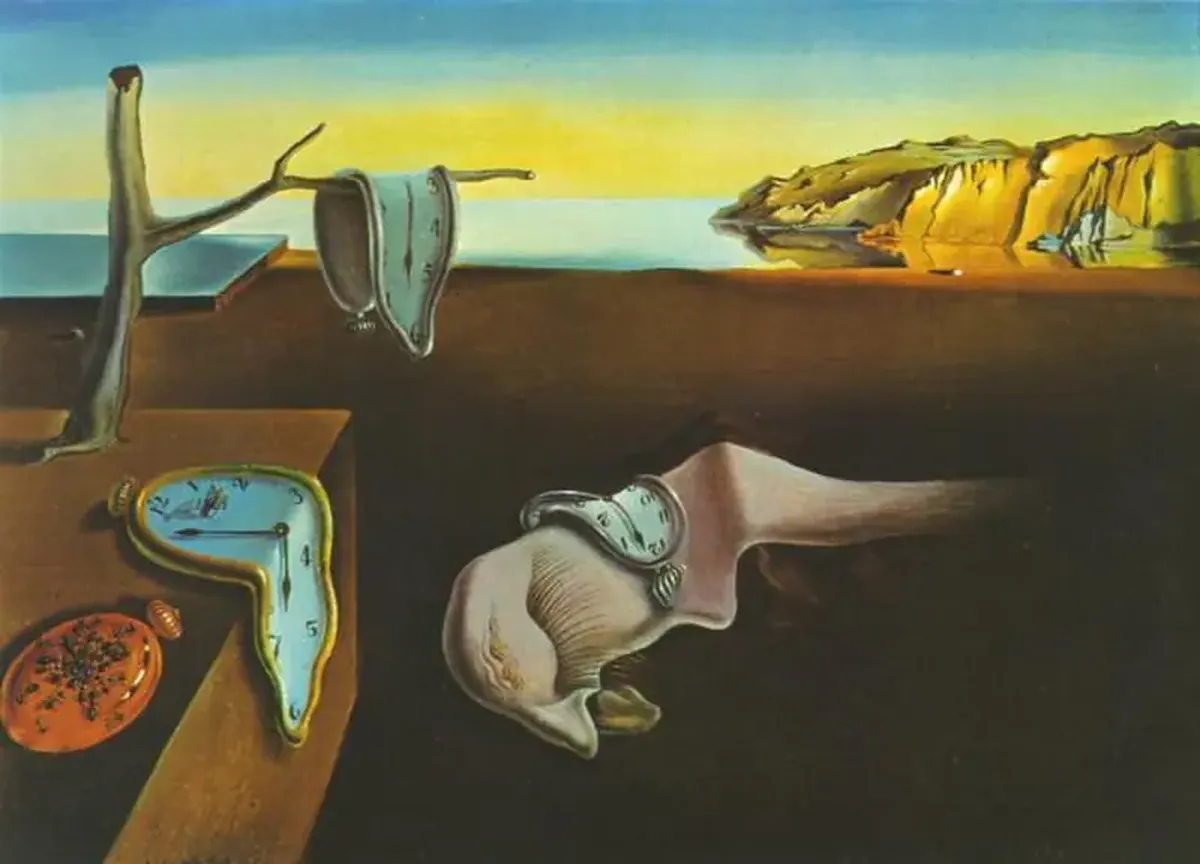
“The Persistence of Memory,” Salvador Dalí
Destructive Self-Expression
Dalí’s artistic impulse pushed him to look for new ways to engage with the world. He became fascinated by Freud and the unconscious, paying attention to inner experiences and symbolic associations. Delving into hidden feelings, he shifted masks and blurred the line between fantasy and reality. His painting style matched his public persona: in his art, appearance, and speech, Dalí embraced posing.
Disciplinary infractions led to a year-long suspension from lectures at the Academy. During that time—and after participating in student protests—he became captivated by Pablo Picasso, who remained an important influence throughout his life. Dalí gradually lost interest in the Academy and left of his own accord in 1926. He moved to Paris after his first solo show at the Dalmau Gallery, where more than thirty of his early works were displayed.
His search for identity in art drew him to the surrealist circle. His meeting with André Breton in the late 1920s was strained by aesthetic and political disagreements, and the rift with some colleagues grew. Dalí famously declared, “Surrealism is me!”
One outrageous stunt cost him a rift with his family. He offended their memory of his mother by writing a line inspired by Freudian themes on a painting: “Sometimes it’s nice to spit on your mother’s portrait” (on the 1929 work “The Sacred Heart”). After that quarrel he even sent his father an envelope containing his own semen with the message, “This is all I owe you.”
The final rupture came with the arrival of his muse, Gala, whom his family believed had driven him mad.
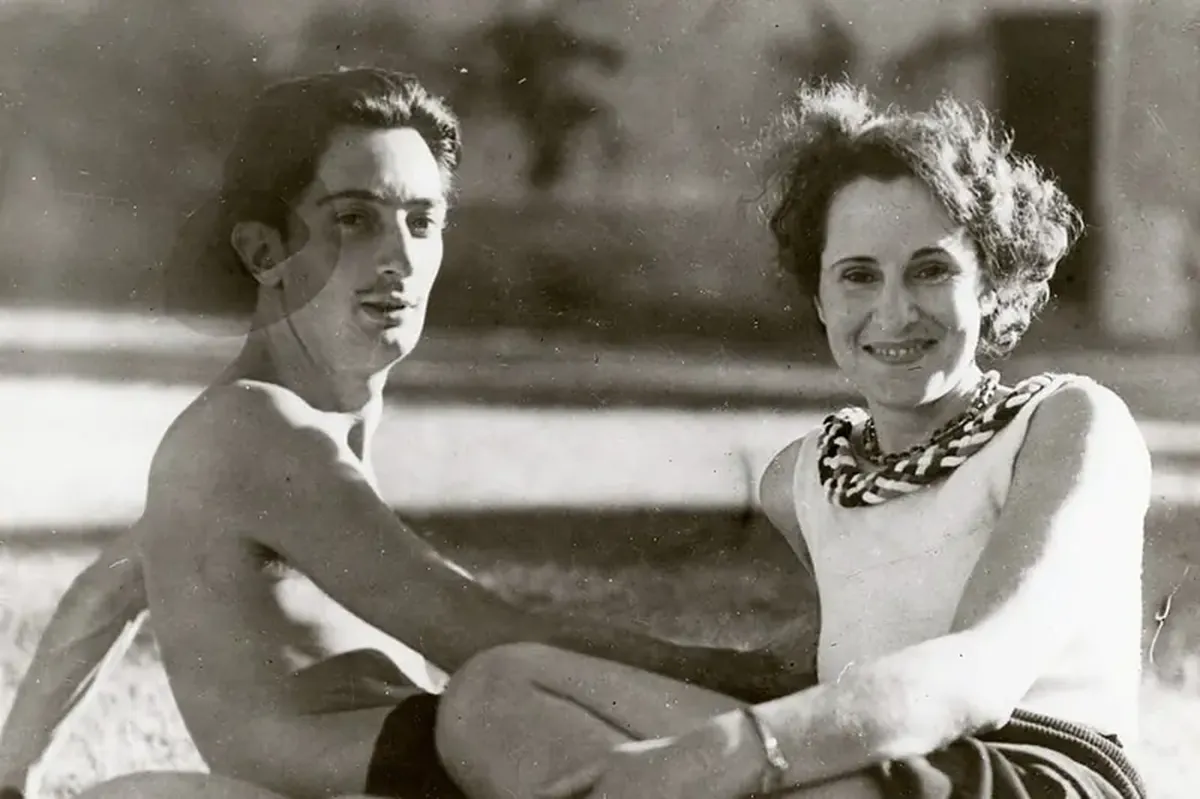
Dalí and Gala, 1930
The Sweet Couple
Opinions differ about Gala, his model, wife, and manager: some saw her as a blessing, others as a curse. People close to Dalí labeled Elena Diakonova the “greedy Russian,” but he adored her for half a century, saying that Gala’s faith in his genius helped create Salvador Dalí.
When he became involved with the then-wife of poet Paul Éluard, Dalí had little experience with real romantic relationships and approached the relationship as an already-formed artist. By 1929–30 he had produced surreal works that gained attention—most famously “The Persistence of Memory”—and he explored life and death through a sexualized lens influenced by Freud.
The year he met Gala began with scandal: in 1929 the provocative film he scripted with Luis Buñuel, An Andalusian Dog, premiered after a script conceived in under a week. Another arthouse film based on Dalí’s script, The Golden Age, opened in London in early 1931. Gala was already established in the European art world and eagerly took on promoting her new partner. The lovers married in 1934 after living together since 1930; Éluard, Gala’s former husband, served as a witness at the wedding. Dalí later “apologized” to the poet with a painting he gifted him.
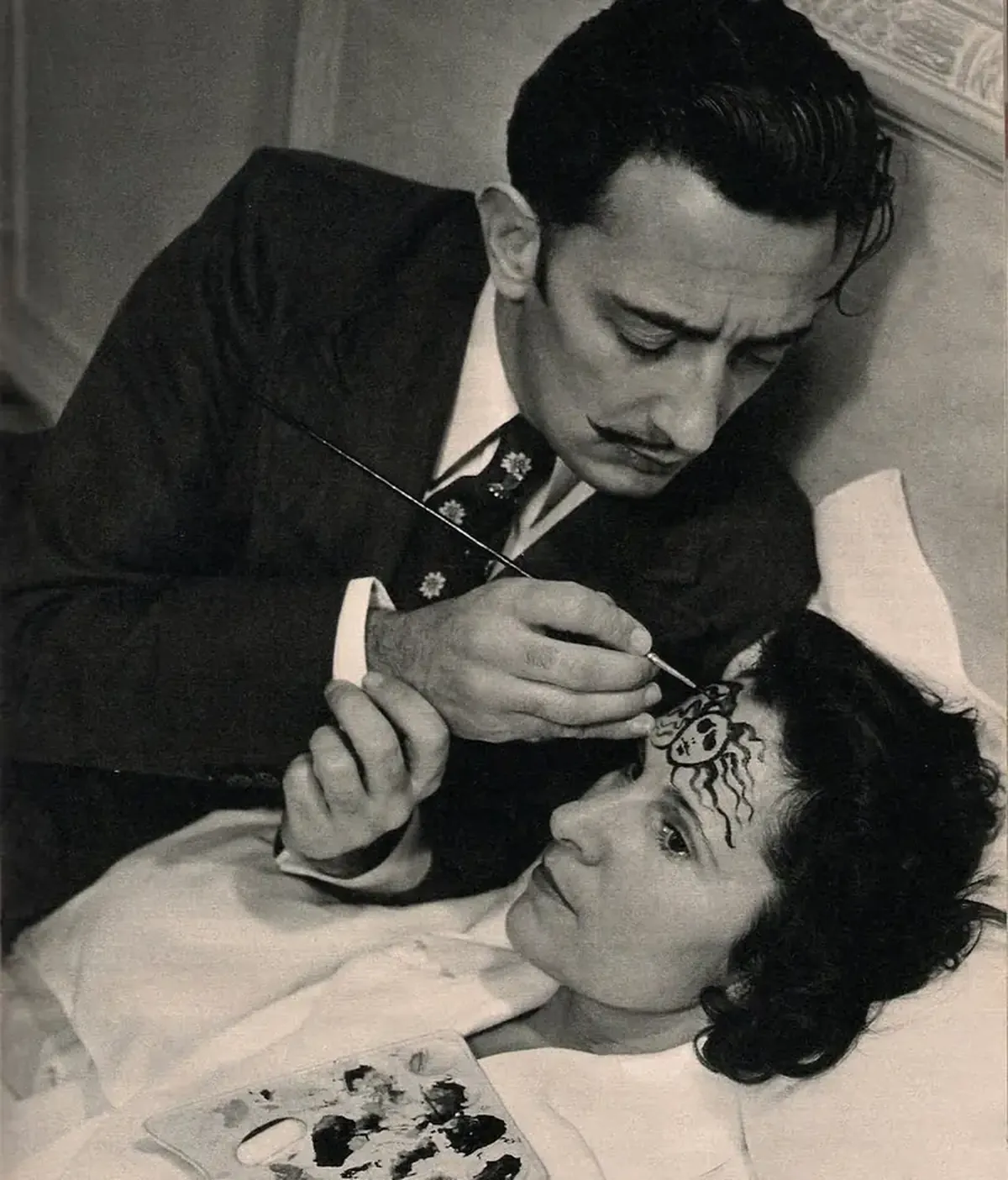
Dalí and Gala, 1940
“Surviving in an Era of Progress”
After a 1937 trip to Italy, Dalí decided he wanted to rescue art from what he saw as modernist decline. He was so taken with Renaissance masterpieces that he began to use academic proportions for bodies even in his metaphysical fantasies.
The occupation of France in 1940 forced Dalí and Gala to move to the United States. They lived there for eight years and opened a studio in California. Dalí collaborated with Walt Disney on the animated short Destino, a project that stalled for years because of commercial concerns. For similar reasons, a dream sequence based on Dalí’s designs was cut from Alfred Hitchcock’s Spellbound.
His years in the U.S. proved extremely productive. Dalí branched into literature—shocking puritans in 1942 with his fictionalized autobiography, The Secret Life of Salvador Dalí, and publishing the novel Hidden Faces—book illustration, theatrical set design, and the first surrealist ballet, Mad Tristan. He also found success in interior design and advertising photography. Dalí argued that if art was to survive “in an era of barbaric technological progress,” it would begin with his own experience.
Marquis de Púbol
When he returned to Spain he came back as a global celebrity. Wealthy patrons became clients. Dalí bought Gala a castle and rebuilt a theater-museum in Figueres—destroyed during the Civil War—to house his work, outfitted with striking displays and special effects of his own design.
Gala’s death in 1982 hit him hard, though the couple had been living apart for some years. Doctors suspected Dalí had Parkinson’s disease in his frail final years. Despite illness, the member of the French Academy of Fine Arts and recipient of the Spanish Grand Cross continued to work. In the same period he received the title Marquis de Púbol.
In late autumn 1988, 84-year-old Salvador Dalí was hospitalized for heart failure, and on January 23, 1989, he died. He bequeathed his property and artistic legacy to Spain and requested to be buried under a floor people could walk on; no inscription was placed on the slab above his resting place.
Nearly thirty years later, in July 2017, a Girona clairvoyant claimed to be Dalí’s daughter and asked a Madrid court for a DNA test. Genetic analysis did not confirm her claim.
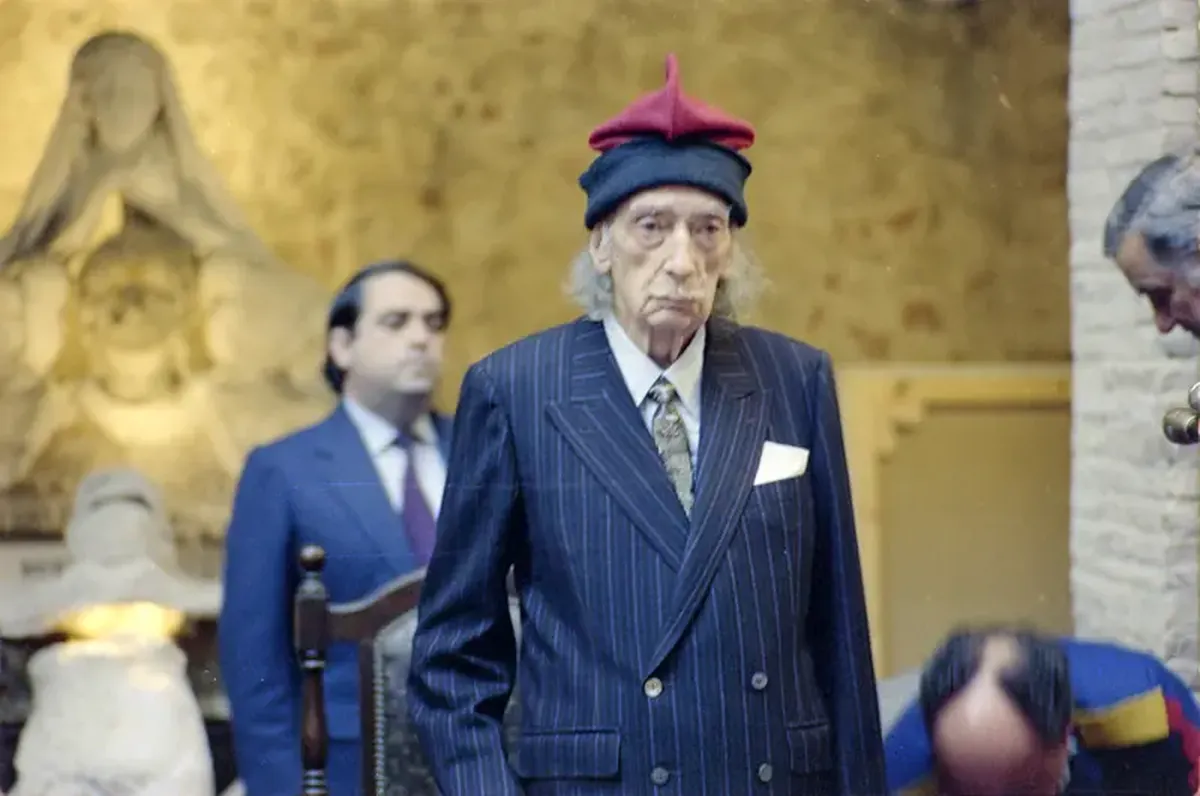
Salvador Dalí, 1981
Dalí: Quick facts
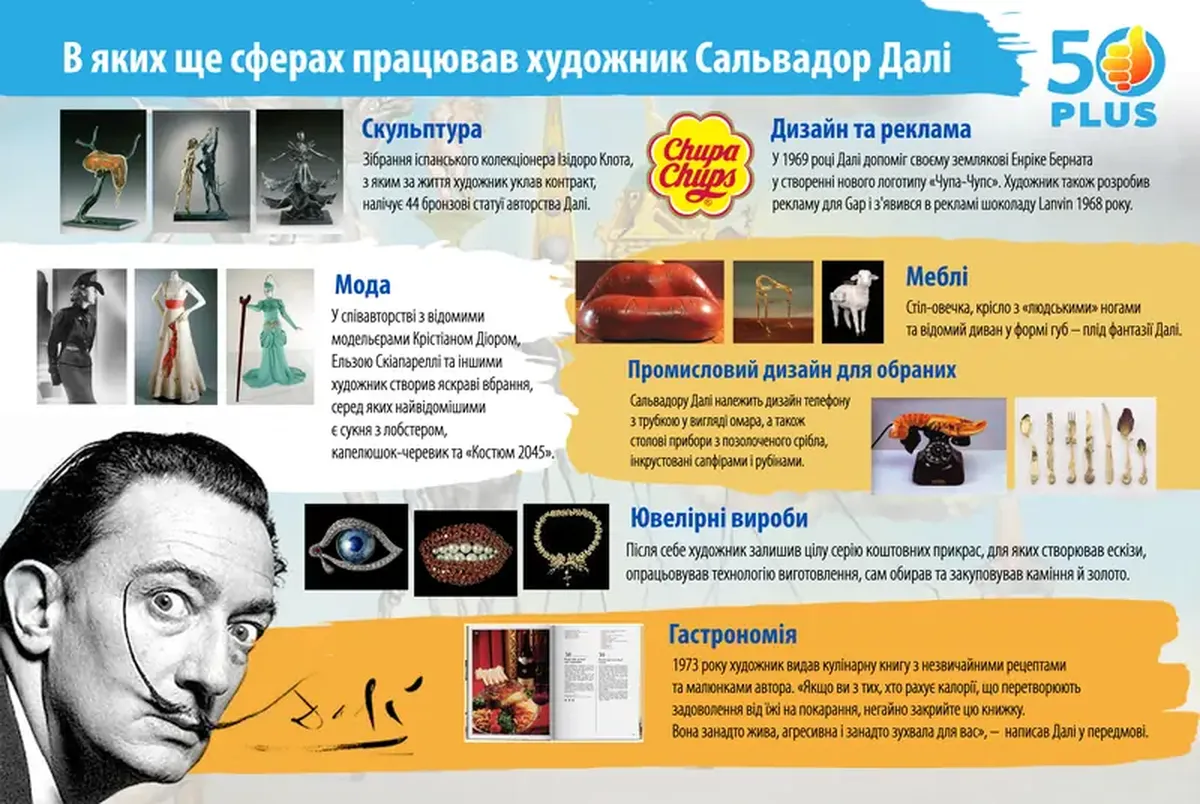
- Dalí was a painter, director, and writer who also worked as a graphic artist, designer, and sculptor. The Clot collection includes 44 bronze statues by Dalí from his home in Port Lligat.
- He designed a phone with a lobster-shaped receiver, a table made from a sheep’s carcass, a chair with “human” legs, and the famous lip-shaped sofa.
- Dalí used motifs from his paintings to create jewelry and collaborated with couturier Christian Dior on eccentric clothing designs: a tiny bikini, a suit made of boxes, and a dress resembling a human skeleton.
- In 1969 Dalí helped fellow Spaniard Enrique Bernat redesign the Chupa Chups logo.
- At surrealist exhibitions, Dalí sometimes arrived carrying a 12-meter-long breadstick, wearing a diving suit and a leopard-print robe, with a rotten herring on his head.
- He once smashed surreal displays in the upscale Bonwit Teller windows in New York after seeing the client’s “corrections.” One bathtub with submerged mannequins broke the glass and fell onto the street, giving Dalí a dramatic public exit.
- At a Plaza Hotel party in the 1970s, Dalí famously slipped singer Cher a remote-controlled vibrator as a joke.
- In the film Impressions of Upper Mongolia, you can see stains on a brass plate made with uric acid that Dalí “produced” himself.
- Dalí kept unusual pets, including an ocelot and a giant anteater, which he sometimes walked through the streets and brought to social events.
- At the end of 1959 the ovocipède—a transparent, spherical vehicle with a passenger seat—was presented in Paris. Engineer Laparra built it based on a sketch by Dalí.
- He had planned to be buried in a crypt next to Gala, but after a fire at the castle in which he nearly died, he abandoned that idea and spent his final years near his theater-museum. His body was entombed in the museum floor after his death at age 84.
