
 Gaby
Gaby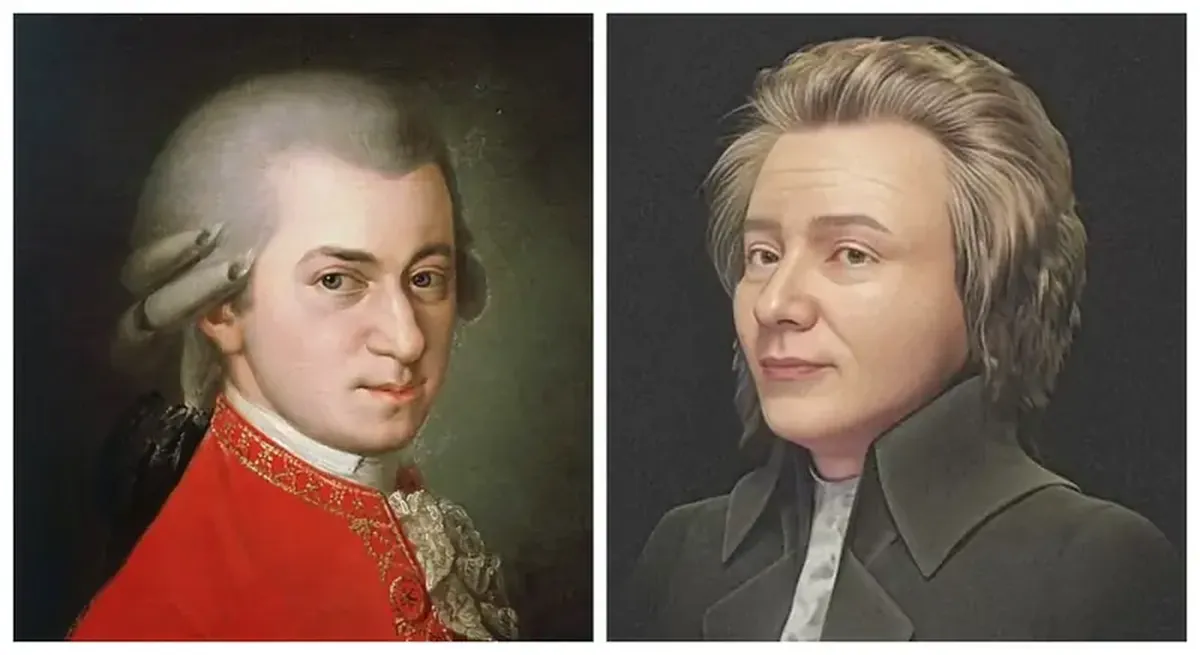
An international team has recreated the appearance of Austrian composer and virtuoso Wolfgang Amadeus Mozart (1756–1791). This mystery has remained unsolved until now.
Most portraits of the composer were painted after his death. The few surviving images from his lifetime do not provide a complete picture of what Mozart looked like as an adult. Some depict him as a child, while the accuracy of others is questionable.
In 1962, German musicologist Alfred Einstein wrote: “No earthly remains of Mozart have survived, except for a few miserable portraits, none of which are identical.”
The Mystery Unraveled
Cicero Moraes, a Brazilian forensic reconstruction expert and 3D designer, has recreated the faces of many historical figures. “Our team has been working on facial reconstructions for over ten years, consistently assisting police forensic teams and reconstructing the appearances of historical figures,” Moraes said.
By chance, he discovered Mozart’s skull while working on another project. Together with his team, Moraes decided to recreate the composer’s appearance, as reported by the Daily Mail.
“The skull was in good condition, although the lower jaw and some teeth were missing. We were ultimately able to reconstruct the jaw, the missing teeth, and the complete skull using statistical data and anatomical models,” the expert explained.
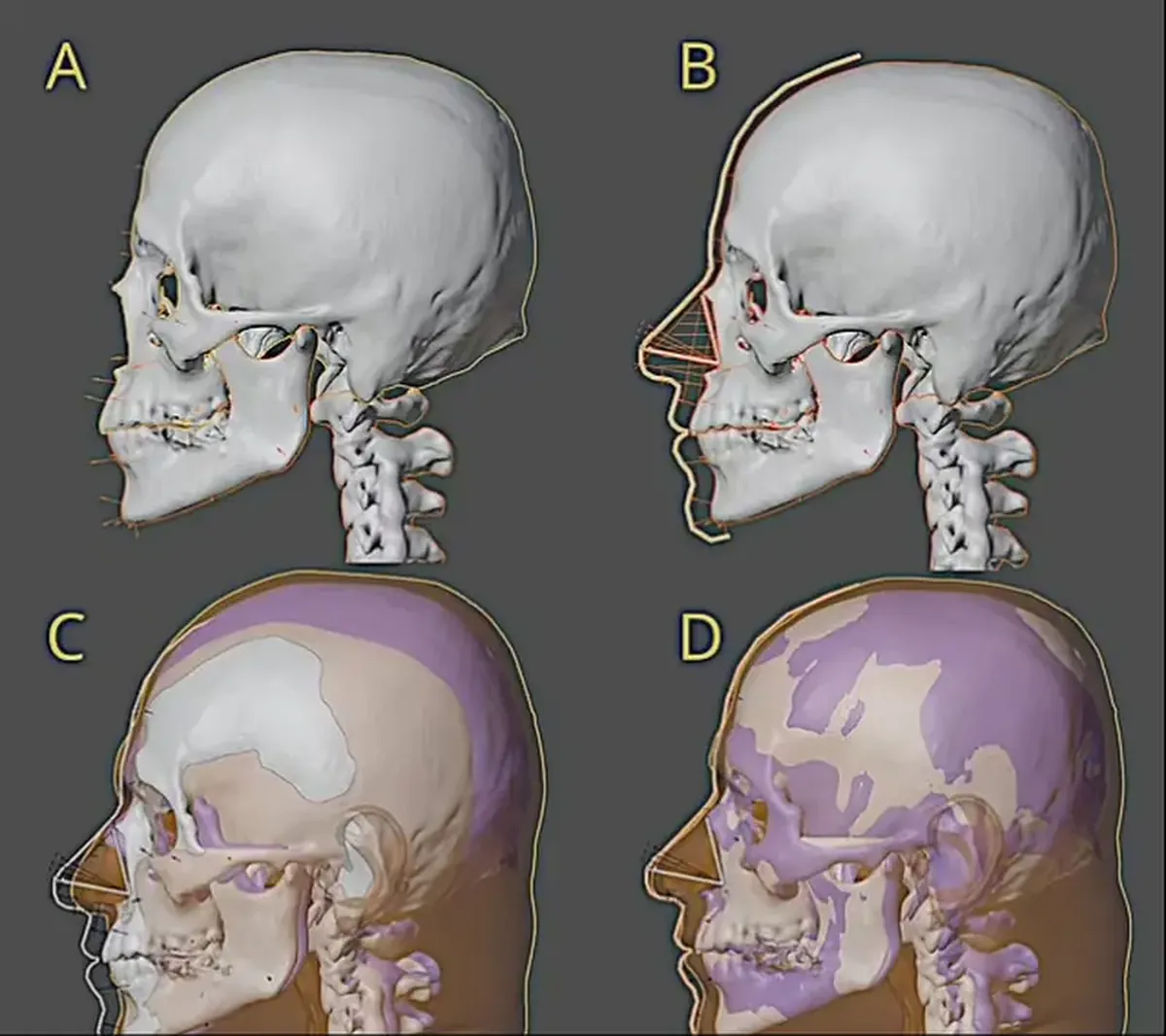
The team began with a virtual reconstruction of the skull and then used various techniques to build a full facial reconstruction. According to Moraes, the scientists “used soft-tissue thickness markers, which helped us map the boundaries of the skin on the face, and also design structures such as the nose, ears, lips, and so on.” Those markers were based on measurements from hundreds of adult Europeans.
To create the most accurate result, the researchers also used anatomical deformation techniques, adjusting a virtual donor head to match the parameters of Mozart’s skull.
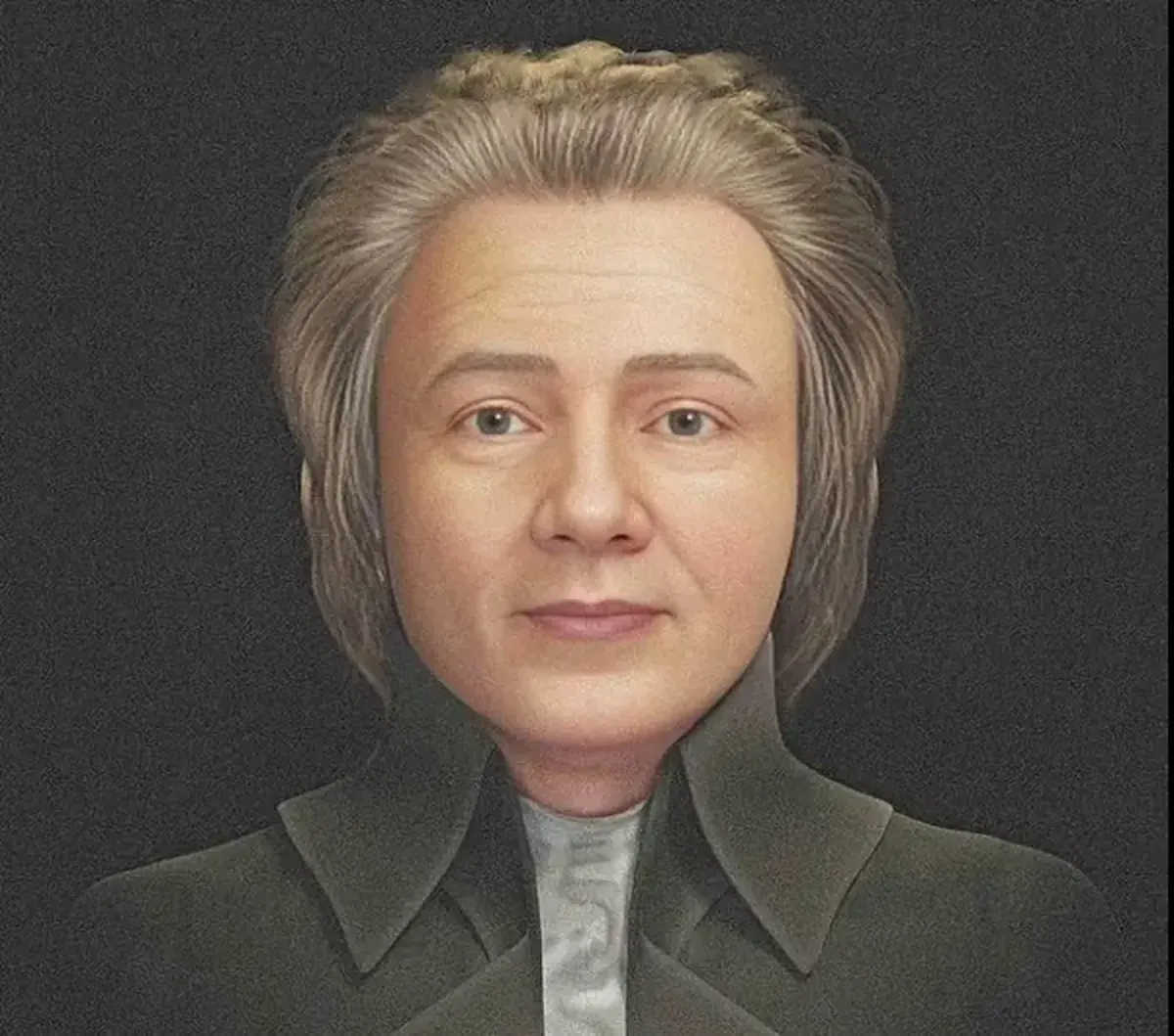
“After correlating all the data, we produced a basic bust and then added hair and period clothing,” the expert said. He added that the finished face had a “refined” appearance.
What Else Cicero Moraes Shared
Moraes says the most famous portrait of Mozart was painted by Barbara Kraft in 1819, 28 years after his death.
One of the most significant lifetime portraits is an unfinished 1783 canvas by Joseph Lange. Mozart’s wife, Constanze, described that painting as “undoubtedly the best representation of him.” Interestingly, the face reconstructed by Moraes’s team closely resembles Lange’s portrait.
The expert said, “Only after the bust was completed did we compare it with these images. The result was entirely consistent with both works.”
What is known about the composer’s skull? Ten years after Mozart’s death, the skull was retrieved from a mass grave in Vienna by gravedigger Joseph Rothmayer. The skull then changed hands several times before being donated to the Mozarteum in Salzburg in 1902.
Moraes asserts that “the skull has characteristics that correspond to the lifetime portraits” of the composer. He said he felt fortunate to reconstruct the appearance of such a renowned figure. “I am a big fan of classical music, listening to it almost every day, and Mozart is in my playlist,” the expert said.
Cicero Moraes’s international team included archaeologists Michael Gabicht and Olena Varotto from Flinders University (Australia), Luca Sineo from the University of Palermo (Italy), Thiago Beaini from the University of Uberlândia (Brazil), Francesco Maria Galassi from Lodz University (Poland), and Jiří Šindelář from GEO-CZ, a cultural heritage preservation company (Czech Republic).
The results were published in the journal Anthropological Review.
