
 Gaby
GabyOn a gloomy March Monday in 1827, German composer Ludwig van Beethoven died at 56. For a long time, he had suffered from jaundice and was bedridden. His limbs and abdomen were swollen, and each breath was a heavy struggle.
While sorting his personal effects, his friends found a document Beethoven had written 25 years earlier: a will in which he begged his brothers to tell the public about his condition. In it, a despairing Beethoven confessed he had contemplated suicide.
Today, everyone knows that one of the world’s greatest composers became completely deaf by age 48. It began with ringing in his ears in his early twenties. As his hearing worsened — first losing high tones — he stopped performing publicly as a pianist.
It was tragic irony: Beethoven desperately wanted to know the reasons for his suffering. His doctor, Johann Adam Schmidt — whom Beethoven outlived by two decades — never determined the cause of his illness.
In 2023, nearly two centuries after his death, researchers at the Max Planck Institute in Germany tried to fulfill Beethoven’s last wish in a way he couldn’t have imagined: they analyzed DNA from his hair.
“First of all, we wanted to shed light on Beethoven’s health issues, particularly the progressive loss of hearing that ultimately led to his complete deafness,” noted biochemist Johannes Krause, co-author of the study.
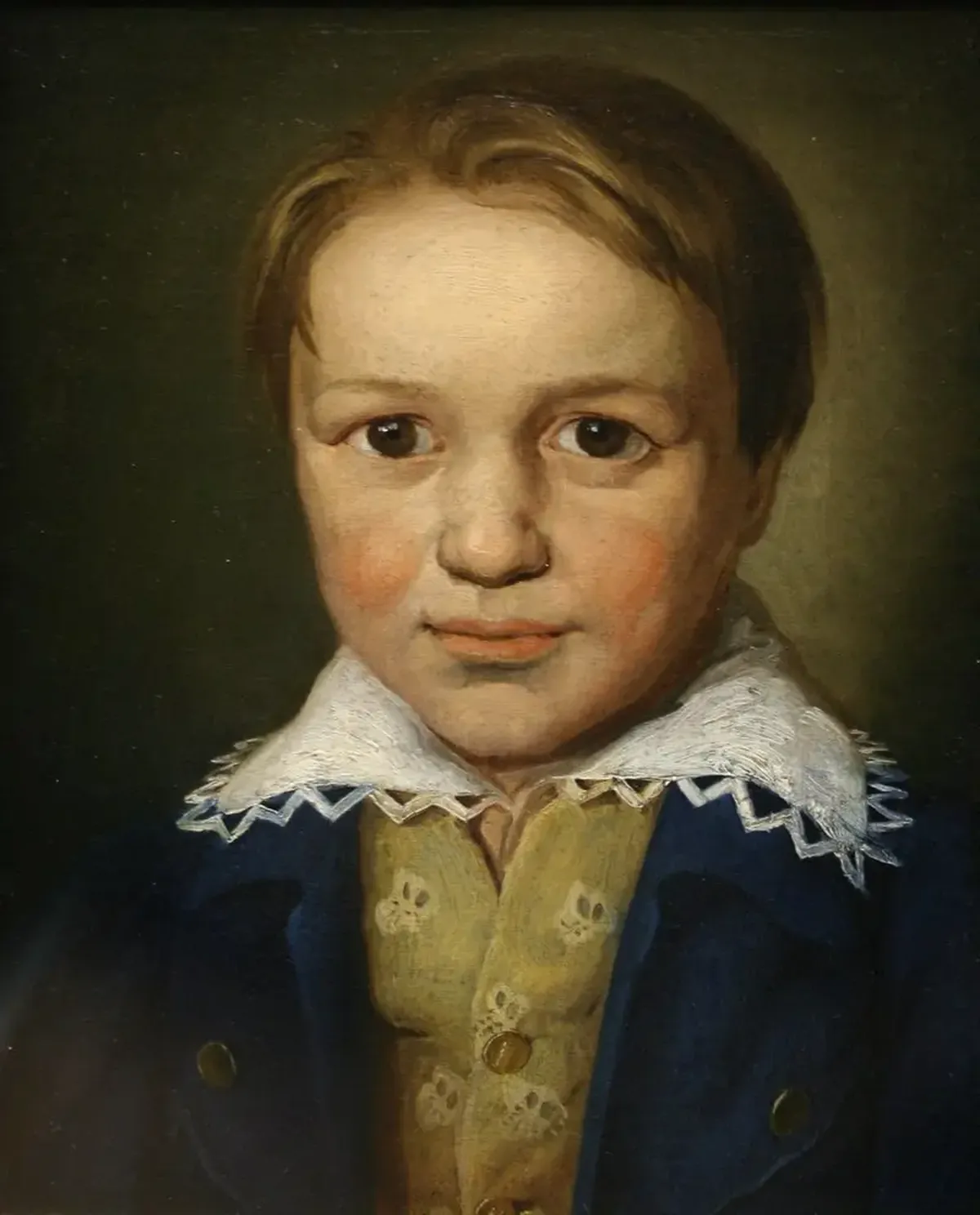
Portrait of Beethoven at the age of 13.
Deafness – not the only ailment that plagued Beethoven
The composer’s health problems were not limited to just hearing loss. At least since the age of 22, he had suffered from severe abdominal pain and chronic diarrhea. Six years before his death, he showed the first signs of liver disease. Experts believe that this condition, at least in part, contributed to his death at a relatively young age.
In 2007, a forensic examination of a strand of Beethoven’s hair suggested that his death may have been accelerated by lead poisoning.
Given the period’s drinking vessels made with lead and medical treatments that used lead, that conclusion wasn’t surprising. But the 2023 study showed that that strand of hair came not from Beethoven but from an unknown woman.
However, several strands of hair more likely to be his indicated that his death could have been the result of a hepatitis B infection. The effects of hepatitis B were exacerbated by alcohol consumption and other risk factors for liver disease.
What about the composer’s other diseases?
Krause said, “We have not been able to find the exact cause of Beethoven’s deafness or gastrointestinal problems.” He added that many questions remain about the composer’s life and death: Where did he contract hepatitis? Why did people long believe a female hair strand belonged to Beethoven? And what caused his stomach pains and hearing loss?
Given that the team’s aim was to fulfill Beethoven’s wish—to explain his hearing loss—they didn’t achieve that main goal. But they uncovered another surprise hidden in his genes.
Researchers compared Beethoven’s Y chromosome, obtained from hair samples, with the Y chromosomes of his living male relatives and found discrepancies. Those discrepancies indicate non-paternity events — that is, extramarital relationships — in generations before Beethoven’s birth.
The conclusions of the study were published in the journal Current Biology.
