
 Gaby
Gaby
A team of Spanish researchers has dated the bone of the oldest domesticated dog. Humans have been befriending their canine companions for more than 17,000 years. The discovery shows dogs lived alongside people much earlier than scientists previously thought.
The debate among scientists about when exactly humans domesticated dogs has persisted for decades. A shoulder bone from a canid — a wolf-like dog — discovered in the Spanish Erralla cave in 1985 has shed new light on the timeline of our four-legged friends’ domestication.
The Bone Awaits the Scientists’ Verdict
So when and how did dogs split from their wolf ancestors and become domesticated? Using that fractured shoulder bone from the Spanish cave, researchers found a new answer to the question.
A team from the University of the Basque Country established when our relationship with companion dogs began. Using modern analysis methods that would have been impossible 37 years ago, the researchers determined the Erralla shoulder bone dates to between 17,410 and 17,096 years ago.
The team says the bone belongs not to a wolf but to a dog, Canis familiaris. This shoulder bone is the oldest dog bone ever examined by scientists.
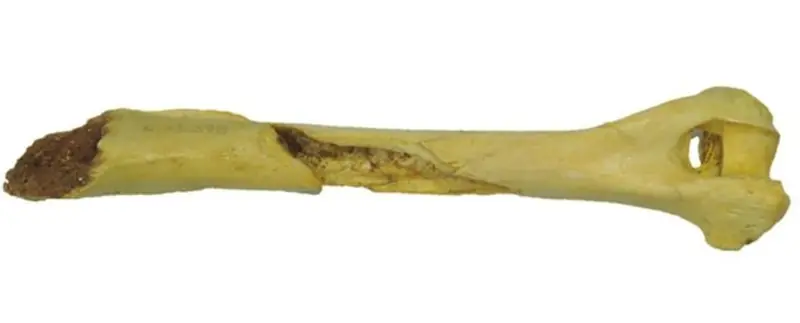
To uncover this information, the team — led by geneticist and anthropologist Montserrat Hervella — primarily used radiocarbon dating to pinpoint when the animal lived. Genetic and morphological analyses helped identify the species.
The Canis familiaris represented by the bone shared a mitochondrial lineage with other dogs from the Magdalenian period of the Upper Paleolithic (about 17,000–9,000 years ago), whose remains have been found elsewhere in Western Europe. For example, bones from Gironde, France, were dated to 15,114–14,237 years ago, while remains from Bonn-Oberkassel, Germany, were dated to 14,809–13,319 years ago.
Wolves Became Attached to Humans and Self-Domesticated
The origins of these dogs are likely linked to the last glacial maximum (around 22,000 years ago), when the Earth endured extremely harsh cold. Wolves began to self-domesticate as they grew attached to human settlements.
Archaeology professor Conchi de la Rua said the results make it more likely that wolf domestication began earlier than previously believed, at least in Western Europe — where interactions between Paleolithic hunter-gatherers and wild species such as wolves may have intensified in glacial refugia like the Franco-Cantabrian region during that climatic crisis.
Recent studies by other teams suggest dog domestication happened multiple times, according to ScienceAlert.
