
 Carlos Solis
Heart disease still kills more people worldwide than any other cause. Since the 1950s, doctors and patients have relied on cholesterol levels from a routine blood test to estimate risk. Over the past two decades, though, evidence has mounted that an inflammation marker, C-reactive protein (CRP), predicts more accurately.
What Is C-Reactive Protein?
The liver produces CRP in response to infections, tissue damage, autoimmune disease, or metabolic problems such as obesity and diabetes. In plain terms, CRP is a blood marker of inflammation — a signal that the immune system is active somewhere in the body.
Measuring CRP is simple: a standard blood test will do. A level below 1 mg/dL counts as low and indicates minimal inflammation and a lower risk of heart disease. A level above 3 mg/dL points to higher inflammation and increased risk. About 52% of Americans have elevated CRP levels in their blood.
Studies that compare predictive power show CRP outperforms other common risk markers. CRP predicts heart attacks and strokes better than the so-called “bad” LDL cholesterol and better than lipoprotein(a). One study found CRP forecasts cardiovascular events about as reliably as blood pressure.
Why Inflammation Matters for Heart Disease
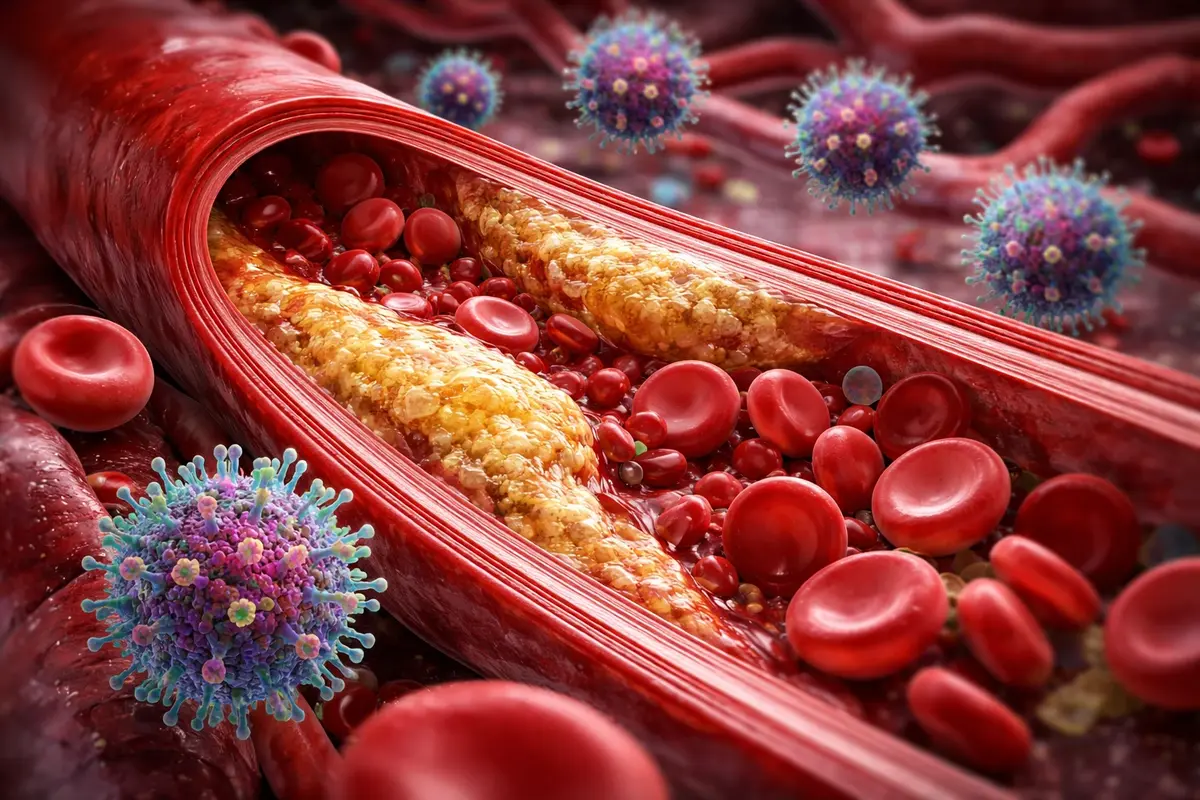
Inflammation plays a role at every stage of plaque formation in artery walls, a process called atherosclerosis that can lead to heart attack or stroke. When a vessel is damaged, for example by high blood sugar or tobacco smoke, immune cells rush into the injured area.
Those immune cells take up cholesterol molecules circulating in the blood, and a fatty plaque forms in the artery wall. That process can continue for decades until immune activity weakens the thin cap covering the plaque. Once that cap breaks, a blood clot can form, cutting off circulation, starving tissue of oxygen, and causing a heart attack or stroke. So cholesterol is only part of the story — the immune response shapes every stage of disease development.

Can Diet Lower C-Reactive Protein?
Lifestyle strongly influences how much CRP the liver makes. Specific foods and nutrients can lower CRP. Those include legumes, vegetables, nuts and seeds, berries, olive oil, green tea, and chia and flax seeds.
Weight loss and regular exercise also reduce CRP levels. In other words, diet and activity changes can lower background inflammation and therefore cut the risk of heart events.
Does Cholesterol Still Matter?
Cholesterol remains an important risk factor, but it is not the only decisive measure. What matters more is the number of particles carrying that LDL cholesterol, not just the total mass. Two people can have the same LDL level but different risk because one has more, smaller particles.
Apolipoprotein B testing, which measures the number of cholesterol particles, predicts heart-disease risk better than simple LDL mass measurements. Physical activity, weight loss, and diet also influence apolipoprotein B levels. Fiber, nuts, and omega-3 fats are linked to fewer particles, while high sugar intake increases particle number.
Another marker, lipoprotein(a), sits on the surface of cholesterol particles and makes them stickier and more likely to deposit in atherosclerotic plaques. Lipoprotein(a) levels are genetically determined and do not respond to lifestyle, so a single lifetime measurement is usually enough to assess that added risk.
The Best Way to Prevent Heart Disease
Heart disease results from interacting risk factors across a lifetime, so prevention is more complex than following a low-cholesterol diet. A comprehensive risk assessment that includes LDL, CRP, apolipoprotein B, and lipoprotein(a) gives a fuller picture and can motivate long-term lifestyle changes.
Basic prevention steps include a balanced diet, regular exercise, adequate sleep, stress management, keeping a healthy weight, and quitting smoking if you smoke. Combining these measures substantially reduces long-term cardiovascular risk.
Based on reporting from The Conversation
