
 Gaby
GabyCats and humans share a unique communication channel that developed over thousands of years. Initially, cats were solitary creatures. They preferred to live and hunt alone rather than in groups, and their social behavior was mostly limited to interactions with their mothers. Outside of these relationships, cats rarely meow at one another, explained Grace Carroll, an animal behavior specialist at Queen’s University Belfast. However, when cats began living alongside humans, their vocalizations took on new meanings. To put it simply, when a cat meows at us, it seems to see us as a sort of feline mother.
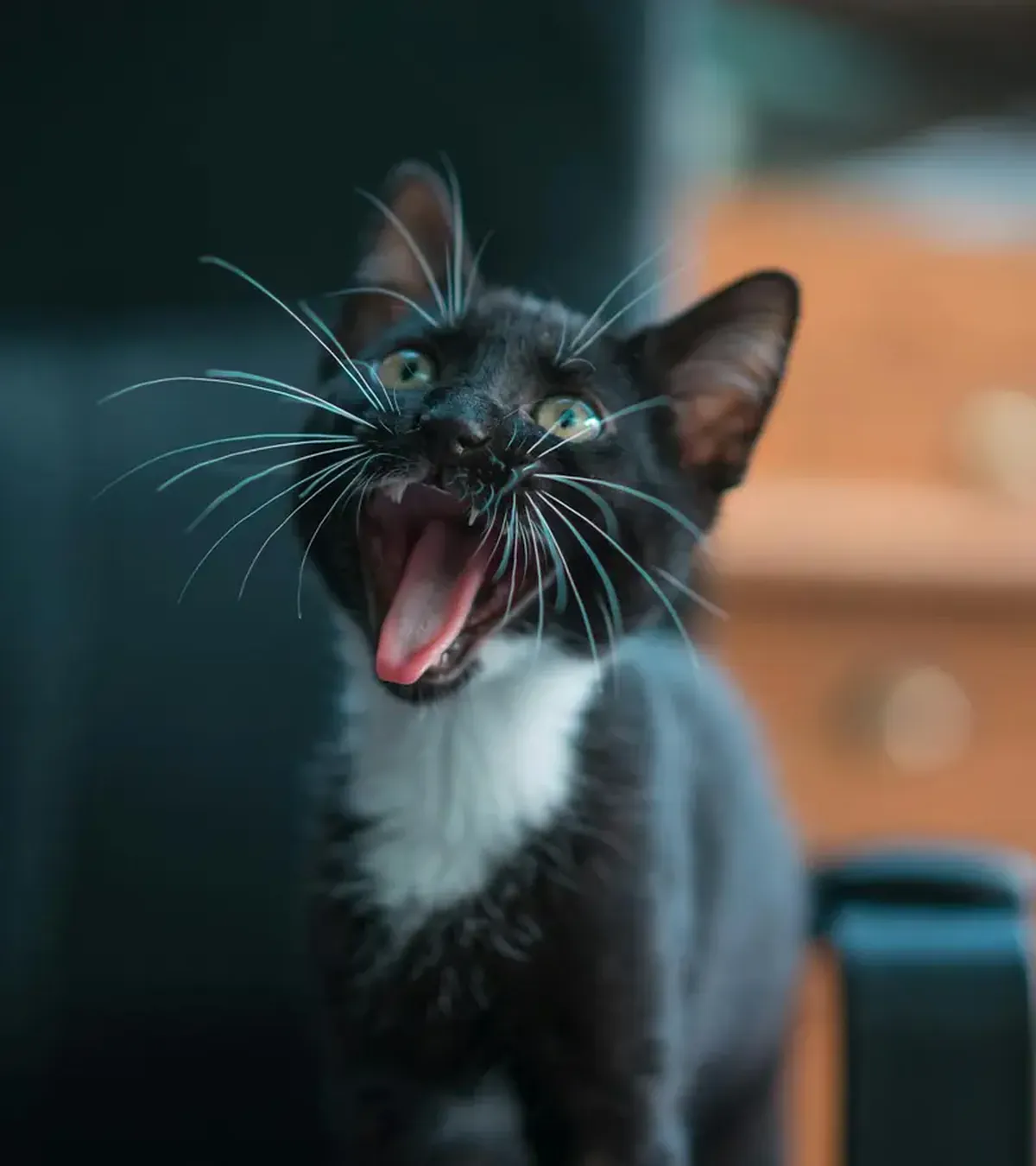
So, where did the habit of meowing at humans come from? Cats likely first encountered humans around 10,000 years ago when Homo sapiens began establishing permanent settlements. These settlements became a food source for the less fearful animals. Over time, cats developed closer bonds with humans. Unlike dogs, which were intentionally bred for specific functions, cats essentially domesticated themselves. Those that adapted to human companionship had a survival advantage. Thus, a population emerged that was well-suited to living alongside people.

Vocal Adaptations of Cats
Moreover, cats even adapted their vocalizations to their new “housemates.” Although this process took considerable time, it was significant. Grace Carroll noted that human infants are born immature; this means they are entirely dependent on their parents. Such dependency has made us particularly sensitive to signals of distress: ignoring those signals can be costly. Meanwhile, cats modified their meows to also “activate” our sensitivity. A 2009 study conducted by animal psychologist Karen McComb and her team provided evidence of this adaptation. Participants in the study, including cat owners and non-cat owners, listened to two types of purring. The first type was recorded when cats were seeking food (solicitation purring), while the second was when they were not (non-solicitation purring). Both cat owners and participants from the other group rated solicitation purring as more insistent and less pleasant.

Acoustic analysis revealed that these solicitation sounds contained a high-frequency component reminiscent of a cry. This hidden wail “activates” our innate sensitivity to danger sounds that we cannot ignore. It’s not just cats that have adapted their sounds; we have too. When people talk to infants, they use “motherese” — a simplified, high-pitched form of speech that helps facilitate communication with babies. Humans have applied the same style to their interactions with pets. A 2022 study led by animal behavior expert Charlotte de Mouzon showed that cats can distinguish speech directed at them from speech directed at humans. When we address our cats, we demonstrate and reinforce a bond similar to the one between a mother cat and her kitten. The two-way communication we have developed with our furry friends is truly unique. And it seems cats may have the upper hand in this relationship: they’ve made us prioritize caring for them. However, most devoted cat lovers wouldn’t have it any other way.
