
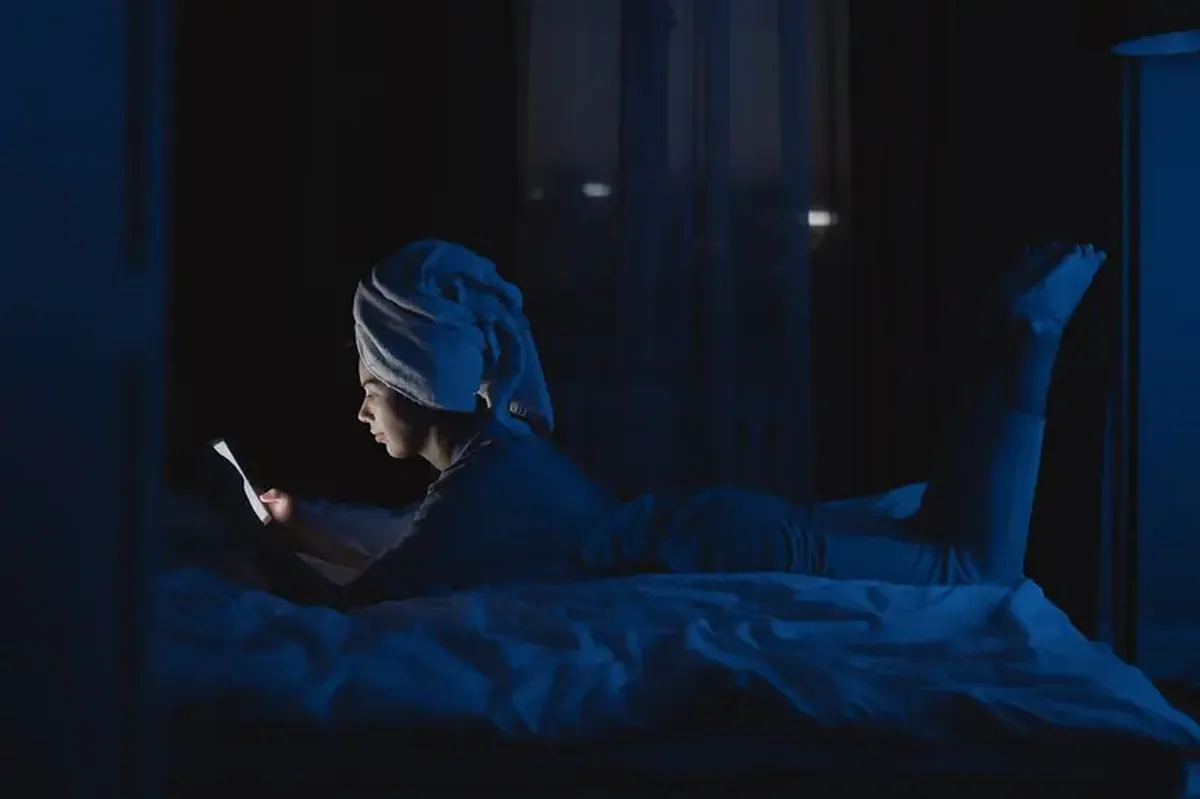
You’ve probably heard that you shouldn’t use your phone before bed. Health experts usually advise avoiding mobile phones right before bedtime because blue light from screens can interfere with falling asleep and may suppress melatonin, the hormone that makes you sleepy. For that reason, they often recommend putting the phone down at least an hour before going to sleep.
But a new study challenges that advice, suggesting light from phone screens doesn’t actually stop people from falling asleep. Researchers at Flinders University in Australia say there’s no scientific reason to worry about blue light from devices.
The researchers acknowledge that blue light—a part of the visible spectrum emitted by phones, tablets, televisions, and other devices—is real. But they found no convincing evidence that it affects the eyes in a way that delays falling asleep. Instead, they say the complaints about phones and sleep come down to behavior: people keep their devices on at night, and that constant availability is what disrupts sleep, according to the Daily Mail.
What the Researchers Found
Dr. Michael Gradisar, a clinical psychologist, sleep expert, and lead author of the study, analyzed 11 studies that examined the relationship between blue light from smartphones and sleep.
“None of these studies conducted worldwide found evidence that screen light interferes with falling asleep,” Gradisar said. “When we look at all the factors that can be harmful to our sleep, screens are clearly overrated.”
One of the most cited studies, from about ten years ago, showed that light from phone screens delayed sleep onset by 10 minutes. “But does a delay of ten minutes really matter?” Gradisar asked.
He says the main reason phones disrupt sleep is not blue light but that people simply don’t turn their phones off at night.
Russell Foster, a professor of circadian neurobiology at the University of Oxford, expresses a similar view. “There is no evidence that blue light from screens has any significant impact at all,” he said. He added that the amount of light a person gets from screens is relatively small. The real problem is leaving phones on next to the bed, which can harm sleep—especially if you end up using the phone in the middle of the night.
