
 Gaby
Gaby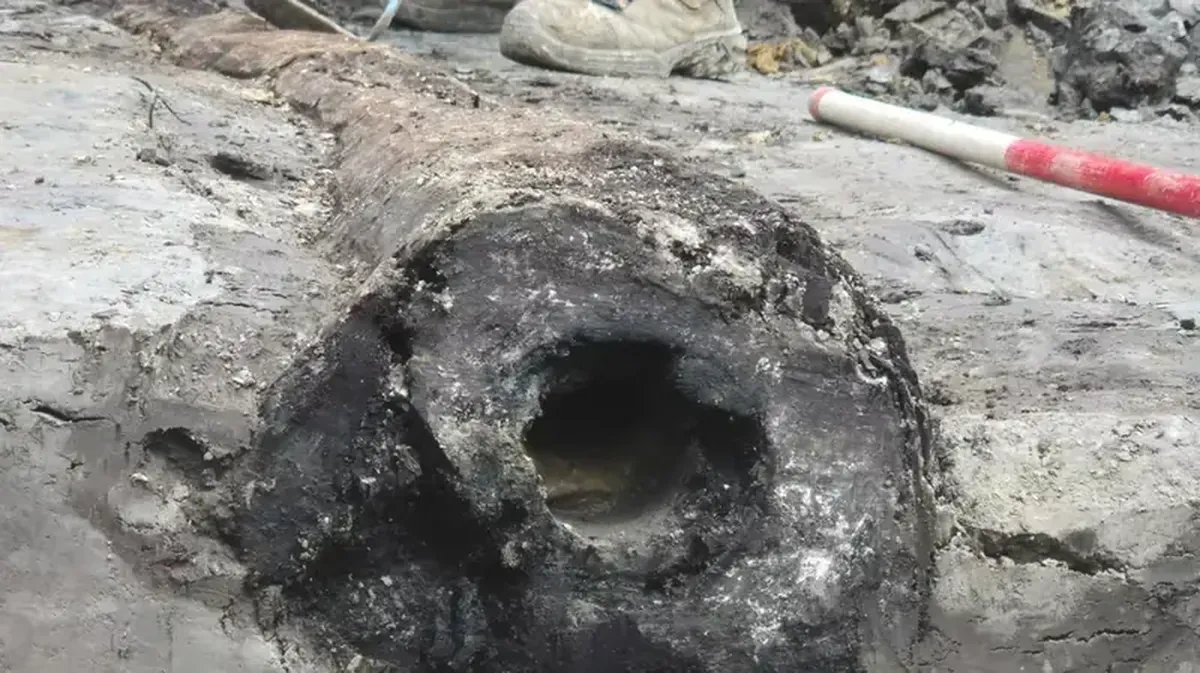
Located in Flanders, just a short drive from Brussels, the charming town of Leuven is known for its prestigious Catholic University (KU Leuven), a lively student scene, and a world-famous brewery. Beneath this modern city, on the site of a future student dormitory on Brusselsstraat, archaeologists uncovered a remarkably well-preserved wooden aqueduct from the Roman era.

The excavation team working before construction was astonished by the discovery, Arkeonews reported. Excavation leader Ben Van Genechten said, “At first we didn’t quite understand what it was, but when we saw other tree trunks nearby, we realized it was a very old water pipe.”
The 30-meter-long water supply system was found four meters below the surface and consisted of interconnected hollowed-out tree trunks, each about 1.75 meters long. Nearby, archaeologists also uncovered remains of an ancient Roman pumping system.
While researchers have found wooden water pipes from the Romans in other Belgian towns like Tienen and Tongeren, those finds usually survived in a nearly ruined state. By contrast, the Leuven pipeline was in excellent condition. Local official Dirk Vancina explained, “We are in a valley, essentially in a swamp. Since the wood was cut off from oxygen, it survived.” The marshy ground created an anaerobic environment that prevented the usual decay of organic material.
Experts dated the aqueduct to the 1st–3rd centuries AD. The team says the find indicates the area was a thriving Roman settlement at the time. The presence of such complex infrastructure suggests a level of prosperity among the inhabitants of ancient Leuven.
Archaeologists will transport the wooden structure to a laboratory for further study. It will likely go on public display eventually, letting residents and visitors connect with Leuven’s distant past.
In addition to the aqueduct, excavations turned up other Roman artifacts, including ceramics and tiles. The site also yielded medieval cesspits, coins, and pottery, showing the area’s development over centuries.
Ongoing analysis of the artifacts should shed more light on Leuven’s ancient history and its role in Roman Belgium.
