
 Gaby
Gaby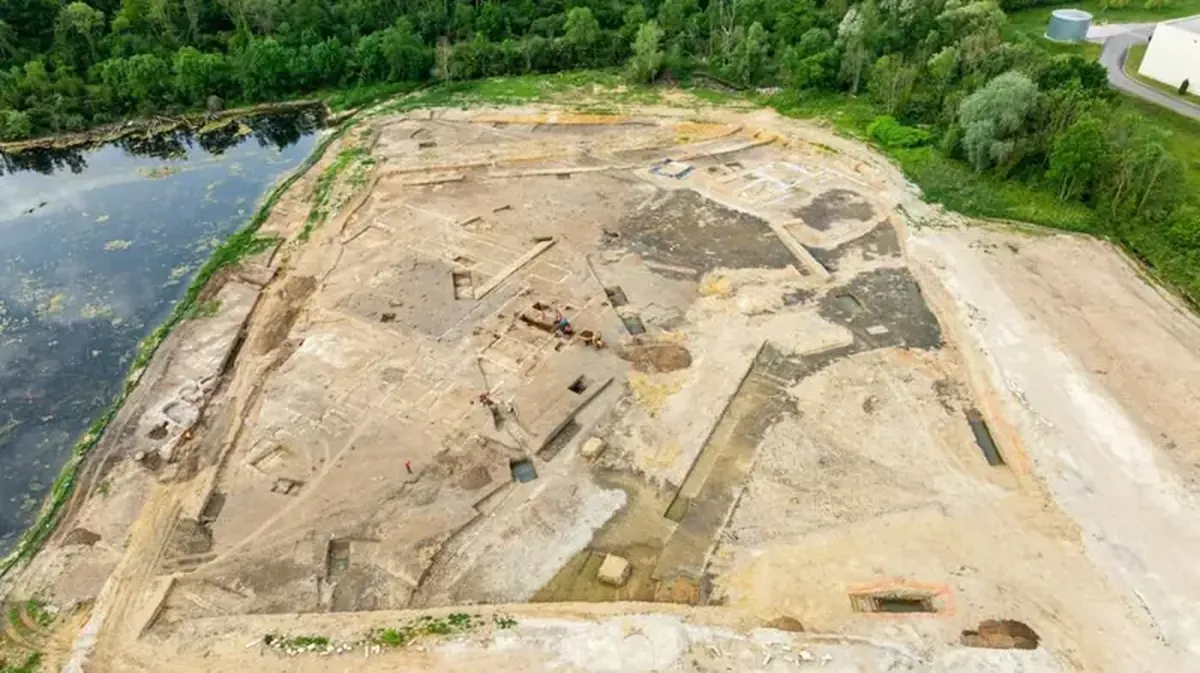
Three kilometers south of Auxerre, archaeologists uncovered a find that changes our picture of Roman estates in ancient Gaul.
A team from the French National Institute for Preventive Archaeological Research (Inrap) was surveying land set aside for a new southern bypass when they came across a massive Roman villa covering more than 4,000 square meters at Saint-Nitard, on the right bank of the Yonne River.
The ruins, which scholars had long assumed were the remains of a modest outpost, turned out to be one of the largest and most complex Gallo-Roman residences discovered in France. Early hints of a Roman presence at the site go back to the 19th century, but systematic digs only began in 1966. During gravel extraction, excavators uncovered part of a rectangular building with ten rooms, richly decorated elements, funerary stelae, and a hypocaust heating system.
It later became clear that the uncovered structure was merely a secondary wing of a much larger complex. Current excavations, overseen by the French Ministry of Culture and the regional environmental authority DREAL Bourgogne-Franche-Comté, have revealed far more: a large central garden, porticoed galleries, private bathing suites, decorative fountains, and other intricate architectural features that go beyond a typical villa.

A Glimpse into Roman Luxury
At the heart of the estate lay a square garden surrounded by galleries, each side extending over 450 square meters. To the north of the villa sat a large pool that likely served both decorative and hydraulic purposes. The southern edge featured a fountain, according to Arkeonews.
Nearby, researchers found reception rooms, technical spaces, and a well-preserved heated bath. These elements show that the complex functioned both as a farm estate (pars rustica) and as a luxurious residence (pars urbana) for a wealthy, likely aristocratic, Roman family.
The excavation team says the villa’s layout and architecture fit the urban growth of Autessiodurum—modern-day Auxerre—which developed from a small settlement into a regional center in the first century AD.
Although excavations have not yet exposed the villa’s entire footprint, archaeologists have identified multiple construction phases and believe the estate changed significantly over time. Analysis of pottery, mosaics, and organic remains should provide more detail about the daily life of the villa’s inhabitants.
This remarkable discovery not only reveals the lavish lifestyle of Romans in what is now France but also raises questions about economic power, land ownership, and cultural exchange in the late Roman Empire.
