
 Gaby
Gaby
Freddie Mercury, Queen’s 45-year-old frontman, died of pneumonia related to AIDS on November 24, 1991—just one day after publicly acknowledging his illness, which he had previously denied. The sudden turn shocked fans and spawned sensational conspiracy theories about the lead-up to his death. Three decades on, his death is as mysterious as the life and persona of the rock idol who became a British national treasure.
How Did He Become Infected?
Several publications suggested the artist may have been deliberately infected years before his death. Writers pointed to the unavailability of his medical records, the rapid progression of his illness without apparent treatment, the lack of an autopsy (the death certificate was based on his personal physician’s account), the small circle at his farewell, the immediate cremation, the secret location of his ashes, and the silence of those close to him. Biographers and conspiracy theorists wove these facts into theories of a “contract killing” that would profit a hypothetical “AIDS industry.”
Some conspiracy proponents also pointed to a mark on Mercury’s body they thought looked like a hepatitis B vaccination scar and suggested it could explain his fatal immunodeficiency. Jim Hutton, Mercury’s partner for six years, said that at the clinic where Mercury was to have an HIV test, staff reportedly took a tissue sample instead of blood — the procedure allegedly required a biopsy. Some suggested the vaccination mark on his shoulder needed to be hidden, which would explain the hurried cremation.

One of the last photos of Freddie Mercury
Hutton also recalled media coverage that began linking Mercury’s name with AIDS well before he publicly announced his illness. Despite recent negative tests, a scandalous tabloid interview claimed he had reflected on promiscuous sexual encounters and drug use. Mercury demanded a retraction, but the paper refused, and some observers read the episode as part of a deliberate smear.
Those who pushed back on the sexual-transmission theory argued that the rumors about the singer’s “bad behavior”—framed by tabloids at a time when earlier tests were negative—didn’t match his life. After the deaths of some former partners, Mercury reportedly stopped putting himself at risk and had not been seen in “promiscuous relationships” since 1985, preferring to spend time at home with his cats and focus on concerts. Some writers concluded he probably did not contract the virus sexually, and they argued medical negligence was unlikely because it would have affected others as well.
The “Secret Agent”
When a reporter asked Mercury in 1974 about his gay experiences, which he rarely discussed, he smiled and deflected: “But you’re a sly one. If you don’t deny it, we won’t talk about the youthful antics that people go through in their school years, alright? I’m not going to delve into this topic.” On another occasion he answered playfully, “I’m as much a gay as I am a narcissist, my dear!”
The ambiguity about Mercury’s private life has kept interest alive. The creators of the Oscar-winning film Bohemian Rhapsody were criticized for softening his relationships with men. And although Mercury was popular in the gay underground, he managed to mix that reputation with the public image of a rock frontman who appealed to largely heterosexual audiences.

A scene from the film “Bohemian Rhapsody”
Insiders pointed to “hints” of nontraditional orientation in the band name Queen and in Mercury’s flamboyant mannerisms. Brian May later said the 1984 video for “I Want to Break Free,” in which the band appeared in drag as a parody of a British soap opera, hurt their U.S. career: “During the American promotional tour, we were explicitly forbidden to perform it due to its homosexual undertones.”
Some commentators even cast Mercury as a “secret agent” introducing queer culture into mainstream consciousness. Ryan Butcher, editor at the LGBT site PinkNews, described the mustachioed singer in bodysuit and tights as so overtly outrageous that the act read like a double bluff.
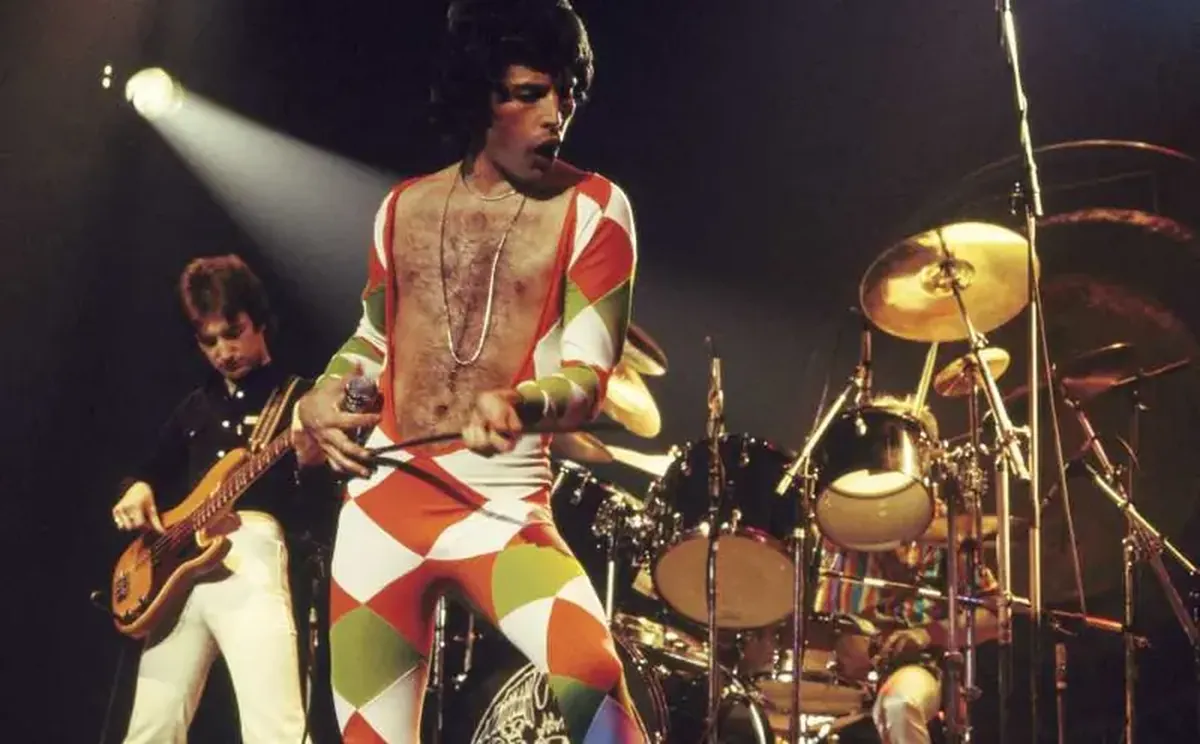
Freddie in a Scaramouche costume
“Married to Love”
While he never publicly labeled his sexual orientation, Mercury openly embraced elements of it in private life. His visits to well-known gay venues like London’s Royal Vauxhall Tavern and Heaven looked, to many, like a deliberate expression of personal freedom. British comedian Cleo Rocos has said she once saw an anonymous visit to the Royal Vauxhall Tavern by a transvestite-clad Princess Diana, escorted by comedian Kenny Everett and Freddie Mercury. Later, Diana led efforts to support people affected by AIDS.
Mercury never became an LGBT activist or publicly declared himself gay, which fuels debate over whether it’s fair to call him a “gay icon.” Ryan Butcher argues Mercury’s life fit the label “queer” more than “gay” or “bisexual,” a description that applied to his sexual life and his personality more broadly.
As Brian May said in 2008, it didn’t matter to Freddie whether people called him gay: “It wasn’t important to him.” Mercury described himself as “married to love,” saying he felt connected to anyone he loved. His art was also rooted in a boundless kind of love that resonated with audiences in concert.
As one of the first prominent Asian figures in Western rock, Mercury brought a different sensibility to 1970s popular music: euphoria, hedonism, emotional freedom, and a joy in living. He drew inspiration from Bollywood singers but rarely spoke about his musical roots or his racial background; he also kept his sexual preferences largely private. He seldom mentioned his education at an Indian school or his admiration for singer Lata Mangeshkar; such personal details were not part of his public persona.

Queen, 1970s
A Brilliant Gift
Farrokh Bulsara was born in 1946 in Zanzibar — now part of Tanzania — to Indian Parsi parents from Gujarat. He started going by Freddie while attending Indian boarding schools modeled on English public schools; he had been sent to boarding school at age eight after his sister was born. By ten he was the best table tennis player at school; by twelve he won youth pentathlon events and earned awards for academic and artistic achievement.

Little Farrokh with his mother
From childhood, Freddie showed talent in music (he played piano and joined a school rock band in 1958) and in painting (creating portraits of relatives and friends). After his family moved to the UK, he studied art at Ealing College, earning a diploma in fine arts and design, and began trying to launch a music career in West London. His early recordings and art-rock experiments were released under the pseudonym Larry Lurex; by then the singer with the unmistakable voice was already feeling his gift.

Freddie with members of his first band, The Hectics
Freddie’s talents reached British music under a new name. Farrokh Bulsara was left behind; Freddie Mercury took the stage. As Brian May put it, “the plans to become a musical deity required the immigrant to shed his old skin.” That rebirth of identity helped Mercury sidestep the racial prejudices of the time. Singer Leo Kalyan has said Mercury recognized that the Western music industry was not geared toward nonwhite artists, so he “masked” parts of his heritage to take his place in the spotlight. As a result, the South Asian side of the Queen frontman was rarely emphasized.
Thus, sexual orientation was not the only facet of Mercury’s life that he kept private.
The End and the Legacy
Many people still puzzle over Mercury’s decisions about his estate. He left half his wealth and his main home not to Jim Hutton but to Mary Austin, who still lives in the Garden Lodge estate. “If life had turned out differently, this would have been rightfully yours as a widow,” he reportedly told her.
Regardless of what people said about his orientation, Mary Austin was the love of Mercury’s life: he proposed to her, gave her a ring, and dedicated “Love of My Life” to her. She handled his ashes and, journalists report, buried them in a London cemetery where a stone with his real name, dates, and a dedication signed “M” was found.

Mary Austin and Mercury
Freddie met Mary Austin in 1970 in a boutique where the 19-year-old saleswoman helped the band pick stage outfits. Brian May courted her first, but Mary was more drawn to Freddie. The two moved in together and at one point planned to marry. When Mercury realized he had rushed into the idea of a traditional marriage, they agreed to remain close friends and collaborators.
Mary later married and had children; Freddie became godfather to her firstborn. She stayed close to him and was one of the first to learn about his illness. “People normally fell for my flashy packaging, and only Mary loved me for who I was,” he said.
Where the Soul Lives
In recent years, Mary Austin put 1,500 personal items belonging to Freddie Mercury up for auction, including stage costumes, manuscripts of hits, and artworks from the collection he assembled over more than thirty years. The initial estimate for the Sotheby’s sale exceeded £6 million. “There are works by Picasso, Matisse, and Chagall,” the curator said of the pieces that remained in their places in Mercury’s home. “This is the collection of a brilliant and sophisticated person; you can try to grasp the depth of his soul through these items.”
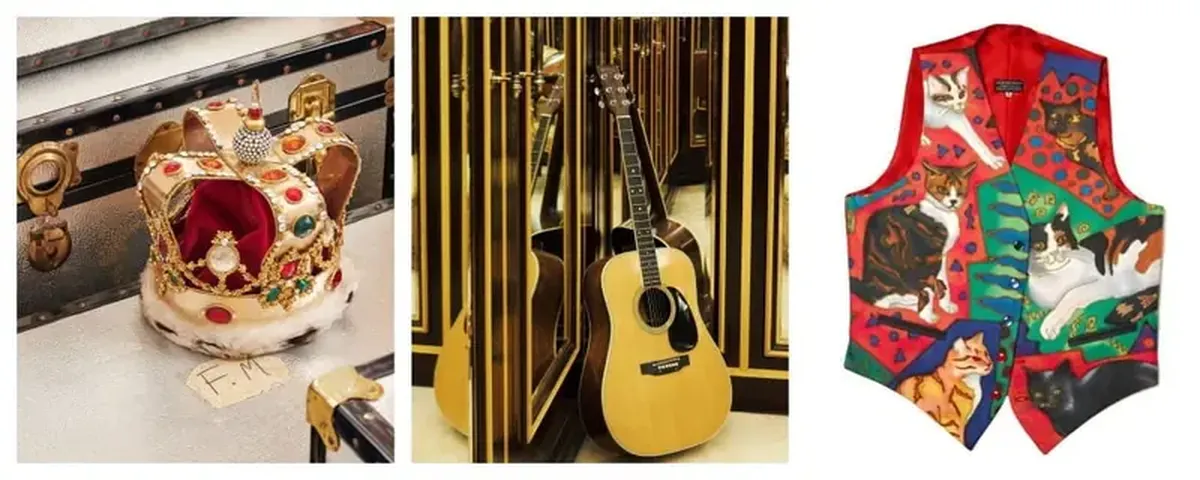
Freddie Mercury’s items displayed at Sotheby’s auction
Biographers say the mystery Freddie Mercury cultivated around his persona only added to his allure. More than 30 years after his death, he remains a carefully guarded secret—and that keeps people wanting to know more than they ever will…
