
 Gaby
Gaby
Henry Ford’s life reads like a handbook for management and a study in corporate social responsibility. Behind the achievements and contradictions of one of the founders of the automotive industry were fierce self-belief, an unwavering commitment to his dreams, firm principles, and admitted mistakes. Scholars have debated the fate and philosophy of Detroit’s “automobile king” for decades, and Ford himself told his story in a bestselling autobiographical overview. What technological, business, and social innovations did this complex American—industrialist, urban planner, maker of cars and planes, factory owner, media mogul, pacifist-turned-arms manufacturer, Freemason, and a figure Adolf Hitler admired—leave behind? Six books by Henry Ford about his achievements and views still fuel historical debate a century later.
The Engine of Progress
The son of Irish immigrants William and Mary Ford, Henry was born on July 30, 1863, in a suburb of Detroit, Michigan. His father worked hard to support five children (three sons and two daughters) and was disappointed that his son saw no future in the family business. From an early age, Henry showed that farming wasn’t for him. He didn’t drink milk and later adopted a vegetarian diet, had no interest in tending cows and chickens, and disliked manual labor—by his teens he believed work could be done more efficiently. He would later sum up his approach with a principle: “Successful people rise by using the time wasted by others.”
Even if his father scolded him for laziness, Henry overcame that charge through a driving curiosity. After taking apart and reassembling a clock his father gave him, the intrigued teen picked up a useful skill that let him earn money while satisfying his curiosity. He liked “animating” moving mechanisms, so he began studying how devices worked and repairing farm equipment. At age 12 two events marked his life: the death of his mother and the sight of a self-propelled traction engine, which helped steer him toward a career in machines.
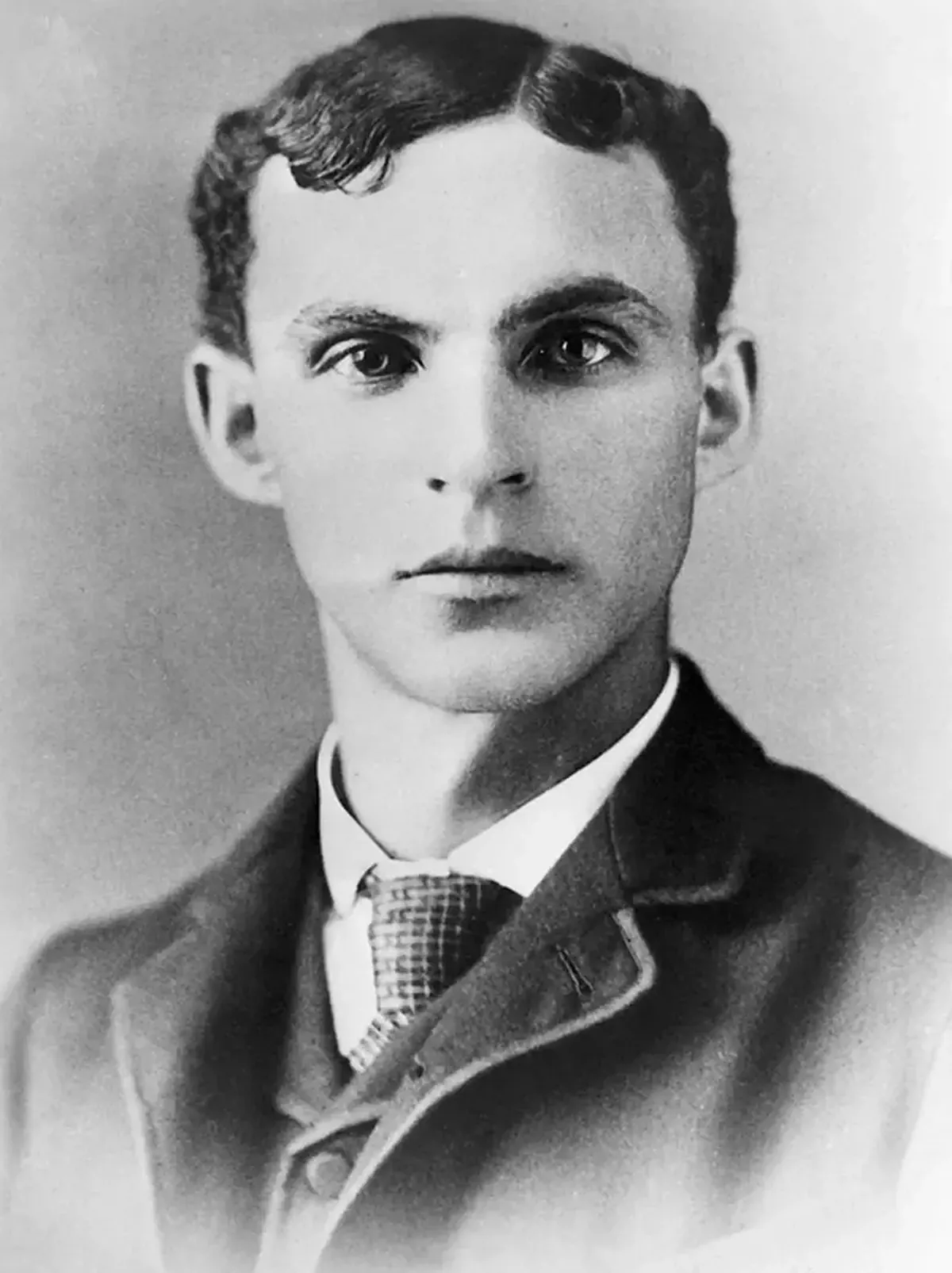
Henry Ford, 1888
Worker vs. Farmer
Farming income didn’t match the effort; working with machines at least exercised his mind. Barely finishing church school, 16-year-old Henry ran away from home to a nearby industrial city in search of a different life. People later claimed that his books contained mistakes because he never mastered reading and writing, and that he sometimes relied on staff to interpret contracts and blueprints. Ford had two replies: “It’s more important for an entrepreneur to be able to think than to know how to spell,” and “Success comes not from what you know, but from surrounding yourself with knowledgeable and skilled people.”
Gaps in formal education didn’t stop him from winning more than a hundred patents, the first of which he sold to an early employer. After trying various jobs in Detroit, Ford made parts for streetcars at an industrial plant, later worked at a shipyard, and repaired clocks in his spare time. When his father offered him forty acres to return to the farm, Henry accepted the land but kept pursuing engineering. He developed a gasoline-powered grain thresher and sold the patent to Thomas Edison.
When Geniuses Feel Constrained
Thomas Edison recognized the young inventor’s potential and invited Henry Ford to work for him, offering a mechanical engineer position that soon became chief engineer. At the Edison Illuminating Company, which installed lighting for American cities, Ford worked from 1891 to 1899 and used breaks to build an experimental automobile. In 1893 he completed his first quadricycle, a four-wheeled vehicle built on bicycle wheels—but that project cost him his job.
Edison discouraged employees from pursuing personal inventions; Ford and another bright mind there, Nikola Tesla, were both urged to drop their “crazy projects” and stick to company work. Both left to follow their own paths. Ford, lacking support at Edison Illuminating, left in 1899 and became a co-owner of the Detroit Automobile Company until 1902. After failing to agree with other owners on management and production, he resigned from that company too. It would be years before he would fully realize his vision under his own roof.
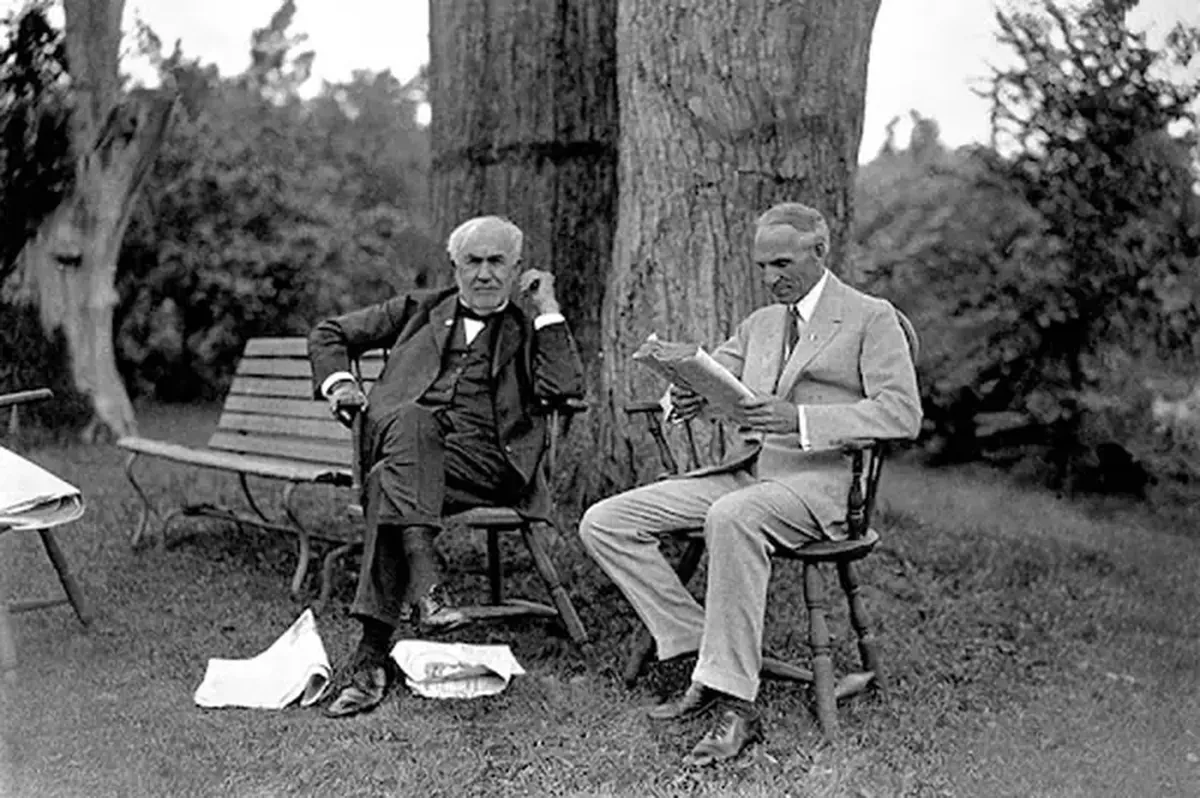
Thomas Edison and Henry Ford
If I Had a Second Life
Ford left the Detroit Automobile Company because his own developments mattered more to him than holding a position. Freed from those ties, he could pursue inventions—and he found a steadfast ally in his wife. Clara Bryant shared risks and supported her husband’s relentless experimentation. She became his muse long before he became one of the world’s first dollar billionaires. They met at a country dance; he impressed her with his dancing and a flashy pocket watch.
They married in 1887; Clara, like Henry, had grown up on a farm. In November 1893 they welcomed their only son, Edsel. As an adult, Edsel helped run the business but did not inherit the empire—he died of stomach cancer at 49. Henry lived through the rise of the Ford automotive conglomerate, astonishing Americans with his homemade “iron horse” and nurturing plans for a car factory.
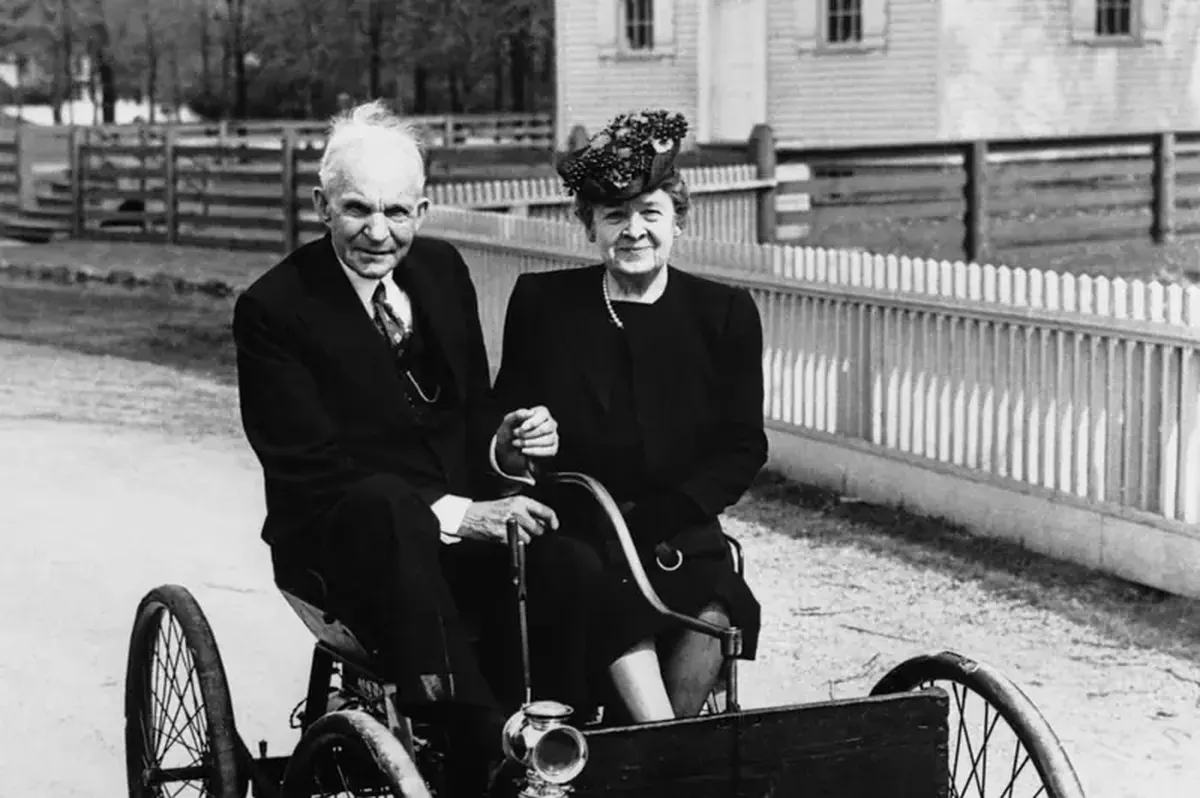
Henry Ford with his wife Clara Bryant
Aspiring Goals
Some mocked the dreamer daring to compete with established manufacturers, but Ford framed his ambition as a public good: he wanted to make cars affordable and push the industry toward competition so vehicles would be common, not a luxury. He aimed to build a reliable, economical vehicle for every American by simplifying bulky designs and standardizing parts. But first he had to sell the idea of the automobile.
To show conservative audiences what his machine could do, Ford in 1902 modified his design and raced it. He beat the reigning American speedway champion—an achievement by a man who held his city’s first driver’s license—and the stunt helped captivate the public. After that success, Ford was ready to start his own factory. In 1903, with five investors, Henry Ford founded the Ford Motor Company (which still exists today) and produced its first model, the Ford A.
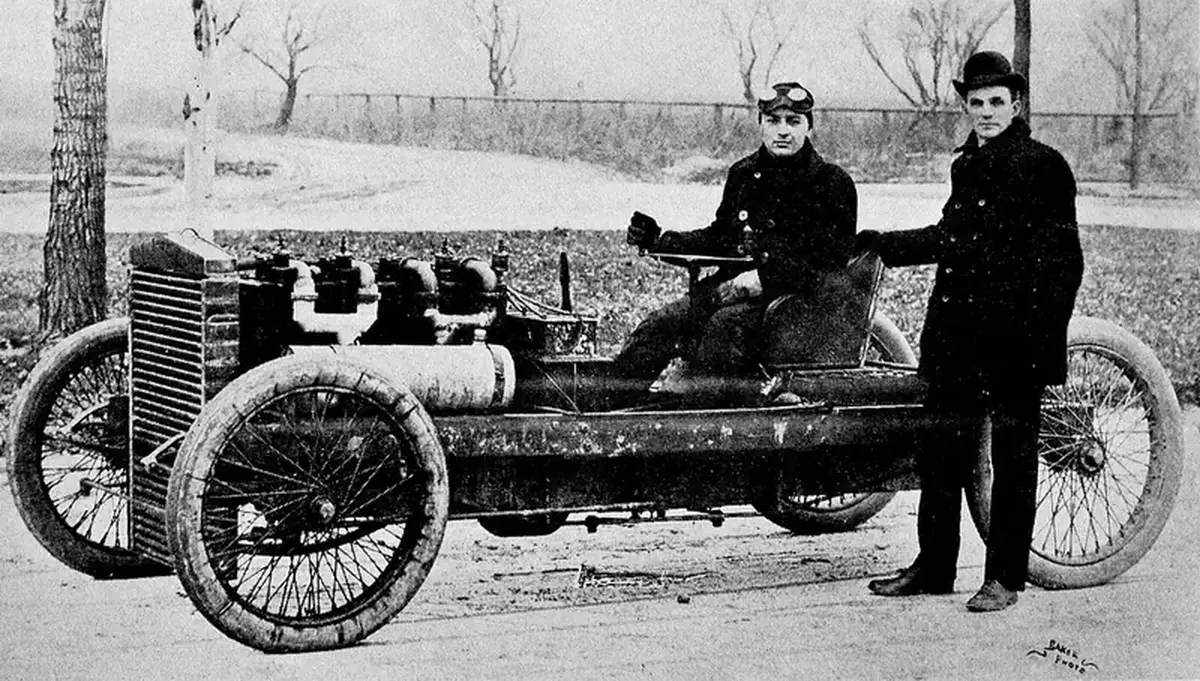
Henry Ford and racer Barney Oldfield in 1902
Increasing Productivity
Ford’s innovations multiplied year after year. In 1908 he introduced the Model T. In 1910 he opened the Highland Park plant with advanced lighting and ventilation. In 1913 he began experimenting with the moving assembly line—first assembling a generator, then applying the method to car production. The next year he raised the line to waist height and ran two parallel lines, one for shorter workers and one for taller workers. Better ergonomics and working conditions cut the Model T’s assembly time from twelve hours to two.
Ford also pushed “full-cycle” production, bringing everything from smelting iron ore to final assembly into his enterprises. In 1914 he introduced a then-unheard-of $5 daily minimum wage, which helped reduce the industry’s chronic turnover; employers had previously hired three times as many workers to cover shortages. The company moved to round-the-clock production with three shifts, each reduced to eight hours, and Ford’s methods created thousands of jobs.
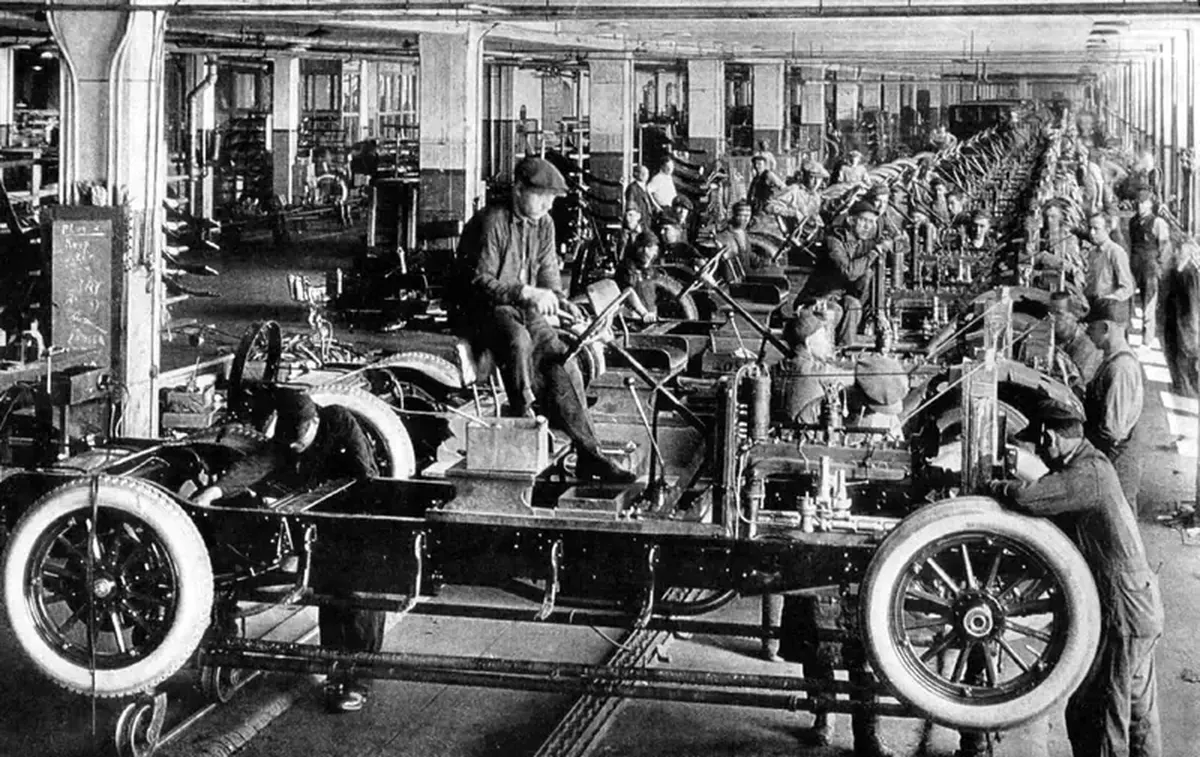
Henry Ford’s Assembly Line
“The Plane Takes Off Against the Wind”
A man with a Puritan outlook, Ford promoted healthy living among his employees, demanding sobriety and banning alcohol and tobacco at work. Workers who violated company standards rarely lasted long—thanks to high wages and decent conditions, there were always applicants ready to take their places. Ford fired not only poor performers and drunks but also employees who neglected their families or failed to pay child support; later the company relaxed that level of personal scrutiny. He also built a model workers’ village and was among the first industrialists to let workers share in company profits.
There was little offense to people in Ford’s view of workers as “cogs.” He considered himself a cog too, building a production empire that ran like a powerful machine where every part had to keep the whole running. Only Ford’s steely will made his dream of affordable middle-class transportation possible. Many find motivation in his saying: “The plane takes off against the wind.”
For Peace and War
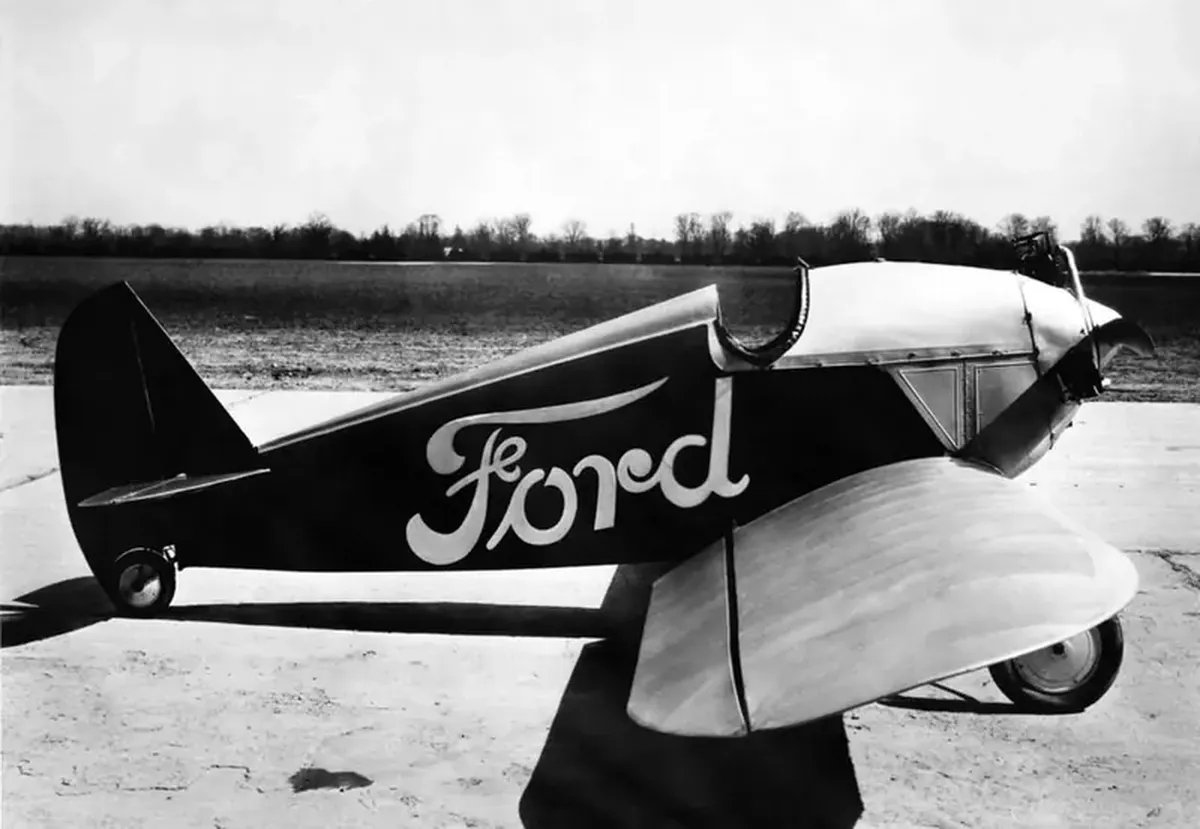
Henry Ford also moved into aircraft production. In 1925 he founded Ford Airways and purchased William Stout’s design and manufacturing operations for airliners. The first product was the three-engine Ford 3-AT Air Pullman. In 1927 he began mass-producing the Ford Trimotor, nicknamed the “Tin Goose.” By 1933 nearly two hundred of those planes had been built, and the Trimotor remained in service for decades. In 1928 Ford received the Franklin Institute Medal for his achievements in automotive and industrial production.
Ford’s factories did not make only civilian goods. When the United States entered World War I, he set aside pacifist instincts to win military contracts. His plants produced cars for military use, cylinders for aircraft engines, gas masks, helmets, light tanks, and even components for submarines. Ford managed his businesses into the 1930s, but disputes with partners and unions pushed him to hand day-to-day control to his son Edsel. After Edsel died in 1943, Henry returned to the company briefly before transferring control to his grandson Henry Ford II in 1945.
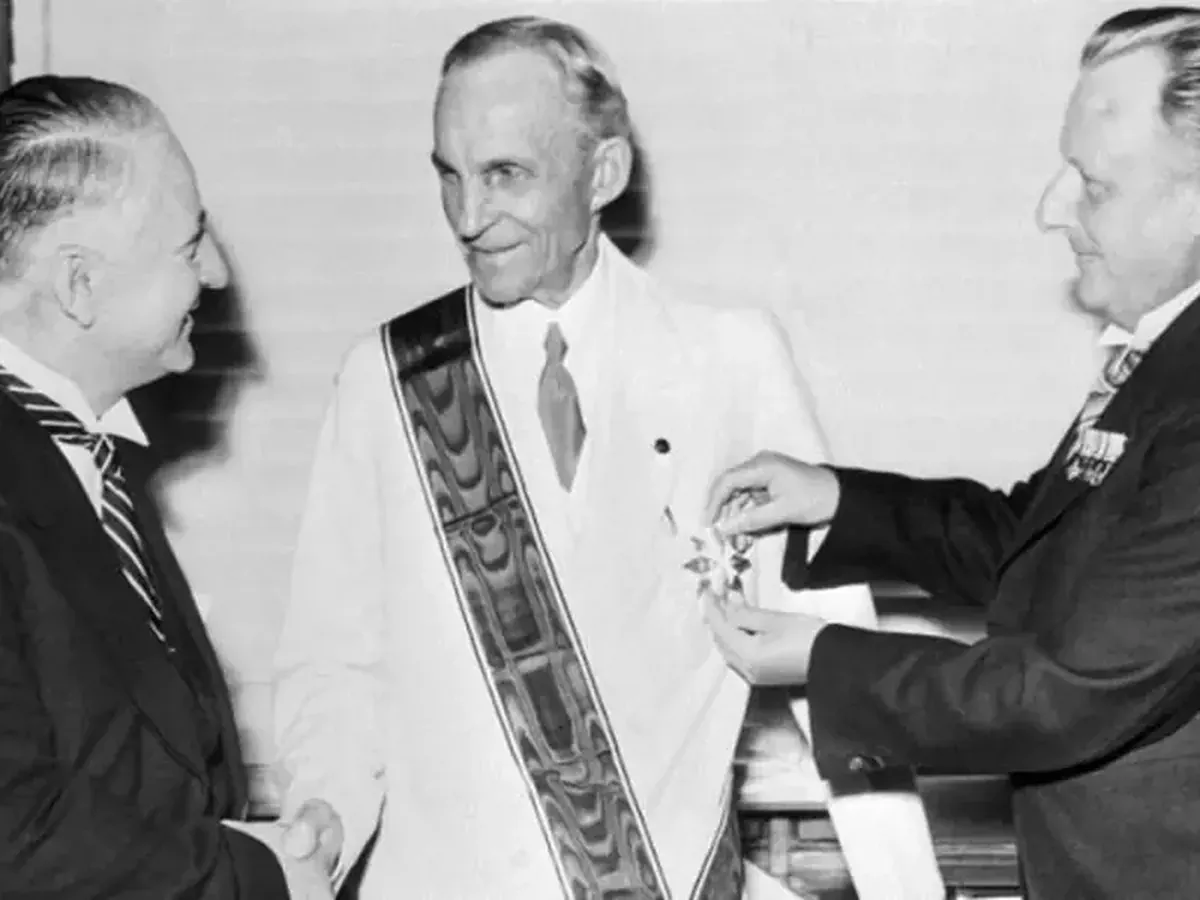
Ford Receives an Award
Henry Ford and Hitler
Ford faced accusations of anti-Semitism that threatened his reputation. In 1918 he bought the newspaper The Dearborn Independent, which beginning in 1920 ran material based on the “Protocols of the Elders of Zion.” A selection of those pieces appeared in Ford’s book The International Jew, which contributed to the spread of anti-Jewish ideas in the 1920s. Although Ford and Adolf Hitler never met, Hitler hung a portrait of Ford in his Munich residence and wrote about Ford admiringly in Mein Kampf.
Even later honors did not erase the controversy. Ford was accused of financially supporting the National Socialist German Workers’ Party and of producing goods in occupied France that served the Wehrmacht (the Ford plant in Poissy was not confiscated). In 1927 Ford publicly apologized “for the unfounded harm caused to the Jewish community,” renounced the inflammatory accusations published in his paper, and pledged future loyalty.
Henry Ford on Success
To understand a figure often called the ideologue of “welfare capitalism,” read his works. Ford’s autobiography My Life and Work (also titled My Life, My Achievements) details labor organization in his enterprises. Secrets of Success collects Ford’s vivid maxims on achievement. Moving Forward lays out his vision for society’s future. Today and Tomorrow and Time Is Money (the latter co-authored with John D. Rockefeller) examine wealth, material life, and moral values for entrepreneurs.
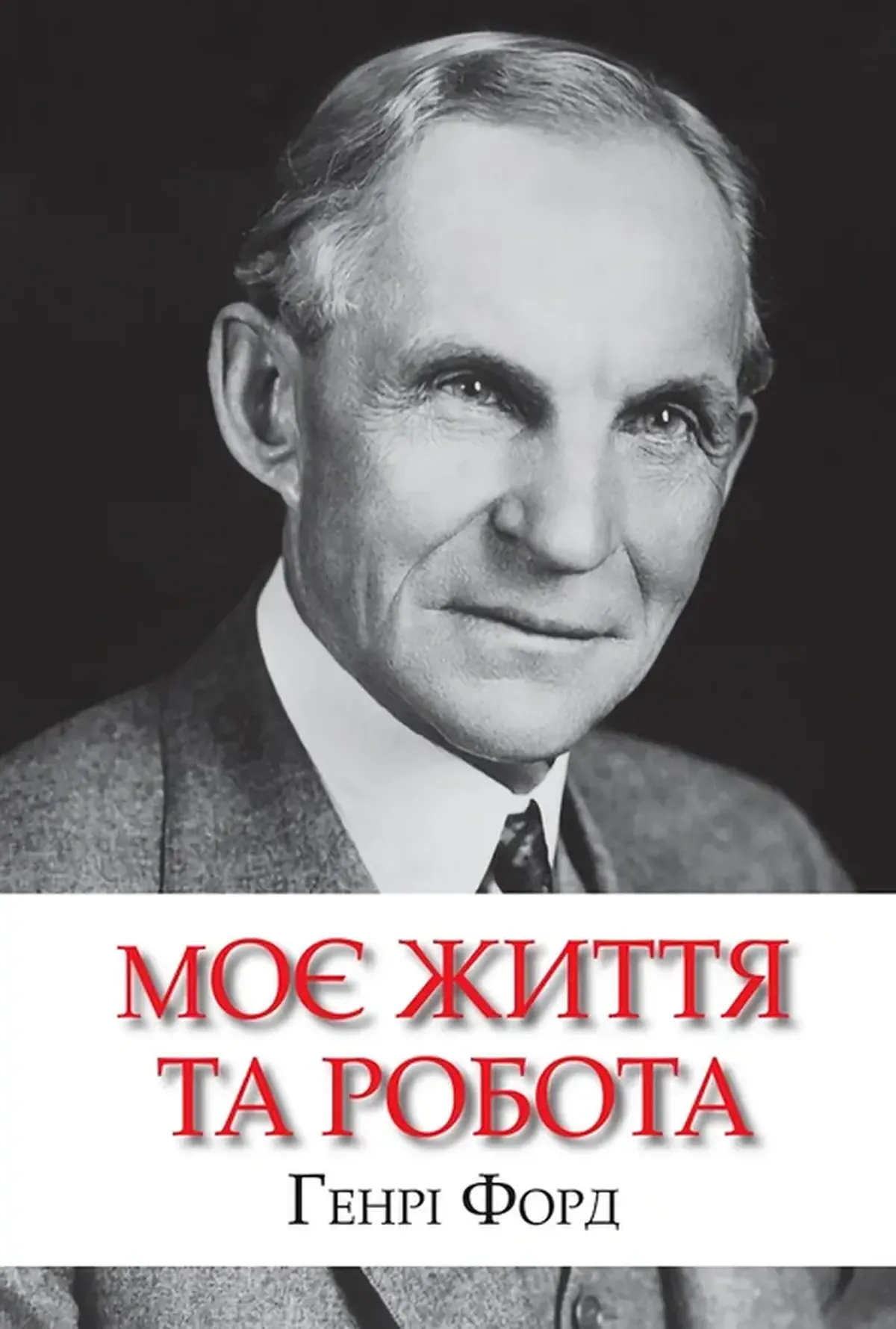
One surprising fact about Henry Ford is that personal wealth was not his main priority. He concentrated on building the business. Starting with charter capital of $100,000—only $28,000 of it cash—he ultimately earned at least $1.16 billion (about $40 billion in today’s dollars). He donated roughly $37 million to charity. Ford was a member of a Masonic lodge and called Freemasonry “the best balancing wheel in America.” At the gates of his factories he posted an aphorism: “A man has no spare parts.” And when assigning tasks he often asked, not “Do this,” but “I wonder if you can do this?”
