
 Gaby
Gaby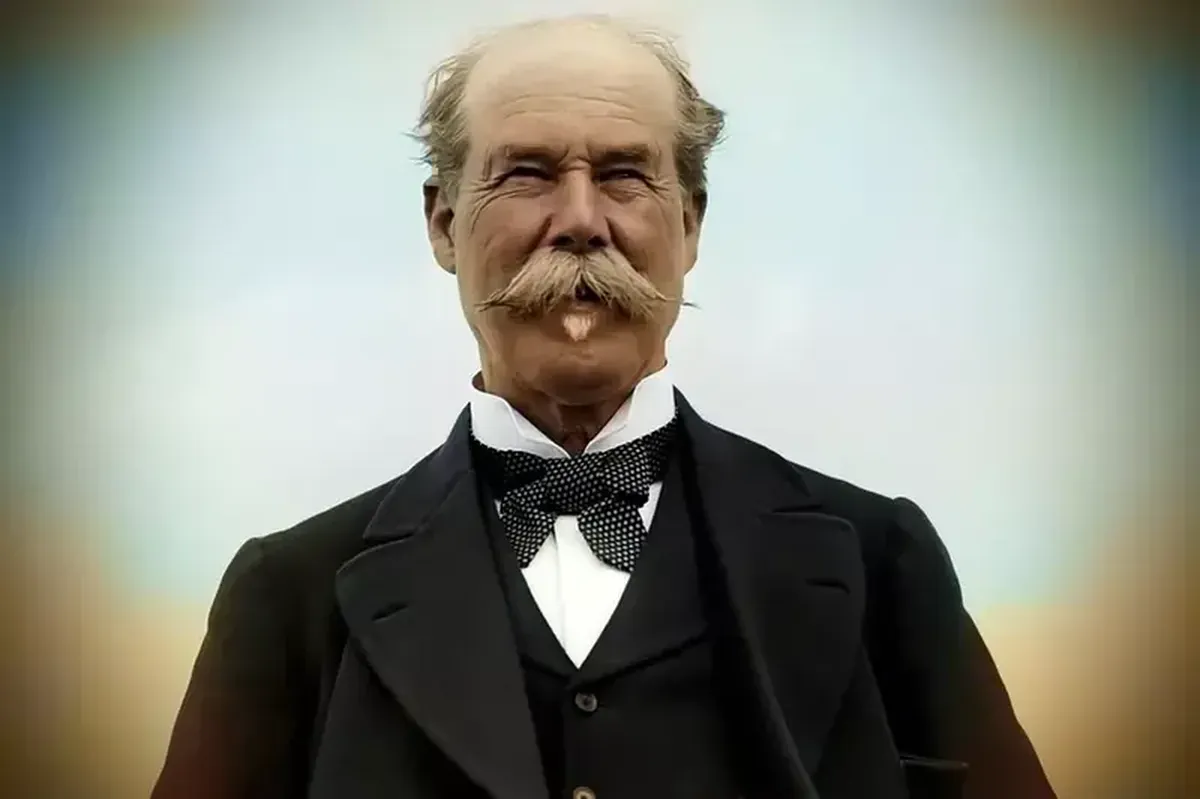
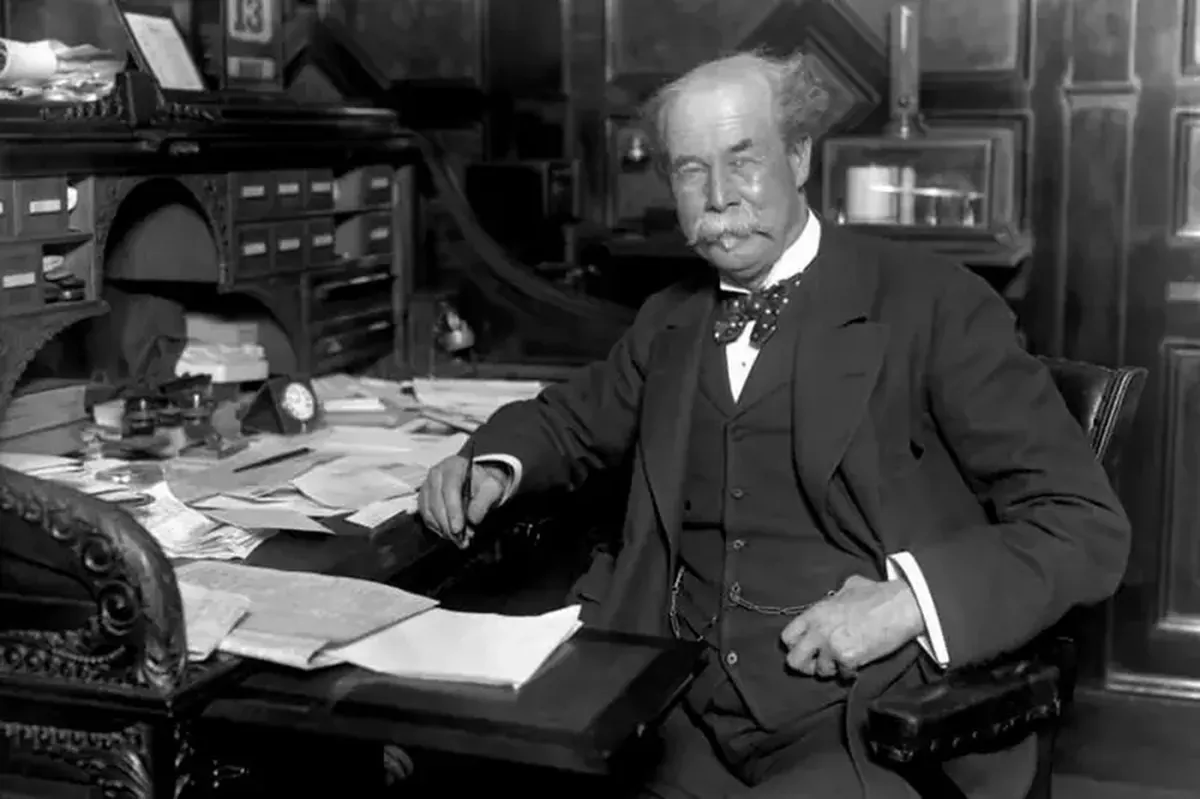
A creative businessman who introduced fresh approaches to retail built his famous tea empire after he was already a well-known millionaire. Raised in Glasgow’s poorest neighborhood, he amassed huge wealth, royal attention, and public acclaim through entrepreneurship, personal charm, and a life fueled by risk and big ideas.
Life Lessons
The journey to success for the creator of Lipton tea began in the Gorbals, the poor district of Glasgow where Thomas Lipton was born on May 10, 1848, to Irish immigrants from Ulster. The Scot who would make Ceylon tea an English staple learned the trade from age five, helping his father in the family grocery. By ten, Tommy Lipton was unloading goods from ships onto carts and delivering them from the port to his father’s shop. After the deaths of his brother and sister, he left school. At 15 he took a job as a cabin boy on a steamboat, and a year later he found himself in the United States working on rice and tobacco plantations in Virginia and South Carolina.
The most important schooling for this aspiring entrepreneur came from a later job at a vast marble palace of a department store on Broadway. Working as a grocery clerk in that temple of consumption taught him how a leading store operated. The owner of A.T. Stewart & Co., one of the largest stores in the world at the time, was Alexander Turney Stewart, an Irish-Scottish immigrant like Lipton. Stewart’s innovations included fixed pricing and low markups paired with very high sales volume. Thomas Lipton would later adopt that approach in his own business.
Affordable Luxury
Five years in America taught the young Scot how to build a business back home. After returning to Glasgow in 1871, the 23-year-old entrepreneur opened his first grocery store, spending the £100 he had earned overseas — the start of his path to millions. At Lipton’s Market on Stobcross, the young merchant was supplier, seller, and manager. He offered locals a new shopping experience: not just groceries but affordable luxury. People willingly spent money in a bright, spotless shop with well-dressed staff. Customers were drawn by elegant displays, fair prices, and showy promotions that sold the experience as much as the goods.
His success was helped by original publicity stunts. Lipton advertised his stores with giant cheeses and theatrical “pig parades.” In 1881 he ordered what was billed as the largest cheese in the world from America for Christmas: it measured four meters around and was more than 60 centimeters thick. A crowd of shoppers followed the unusual cargo from the port of Glasgow to his High Street shop. When the wheel wouldn’t fit through the doors, hundreds of passersby trailed Lipton to another of his stores on Jamaica Street, where the cheese — made from the milk of 800 cows — became a centerpiece in a display that resembled a museum exhibit.
The Art of Selling
For two weeks the public gathered around that extraordinary product, but that was only the start of a remarkable advertising campaign. Lipton had hidden numerous gold sovereign coins inside the giant cheese. When the man in white began slicing the “cheese with a surprise” the day before Christmas, long lines formed at the display as shoppers hoped to win a coin, and police had to maintain order for several hours. After that one-man show, giant cheeses in Lipton’s windows became a Christmas herald across Britain. In Nottingham, the store even rented an elephant to transport the giant cheese to the shop.
By the mid-1880s Lipton’s chain had expanded across Scotland. New locations opened with great fanfare and mysterious teasers about an approaching spectacle. Butter sculptures in windows and pig parades in city centers were examples of his unforgettable tricks that drew attention to new store openings. Those theatrical stunts were the public face of a concrete business plan to expand the chain and boost profits. The key innovation behind the growth was cutting out middlemen and shifting to direct purchasing from producers.
Onward with Music
Lipton first used a direct-supply model when he pawned his gold watch to pay Irish farmers. Later he bought back most of his suppliers and closed the loop on production, packaging, and distribution inside his own company. His next step in expansion was to tackle America. There he also cut out middlemen by purchasing a meatpacking plant and naming it after his mother. In addition to the Chicago meatpacking plant and British pork businesses, Thomas Lipton acquired tea, coffee, and cocoa plantations in Ceylon.
Looking for new opportunities, Thomas Lipton turned to the industry that would become his signature: tea. When his chain topped three hundred stores, the 40-year-old millionaire began investing in tea. After buying his first plantation in Sri Lanka in 1890, he quickly outpaced competitors. Lipton tea benefitted from a streamlined supply chain: the company owned trading, production, and logistics operations — even its own fleet. The arrival of the first shipment from the Ceylon plantation to a Lipton store was celebrated with a parade of bagpipers and an orchestra.
The English Way of Life
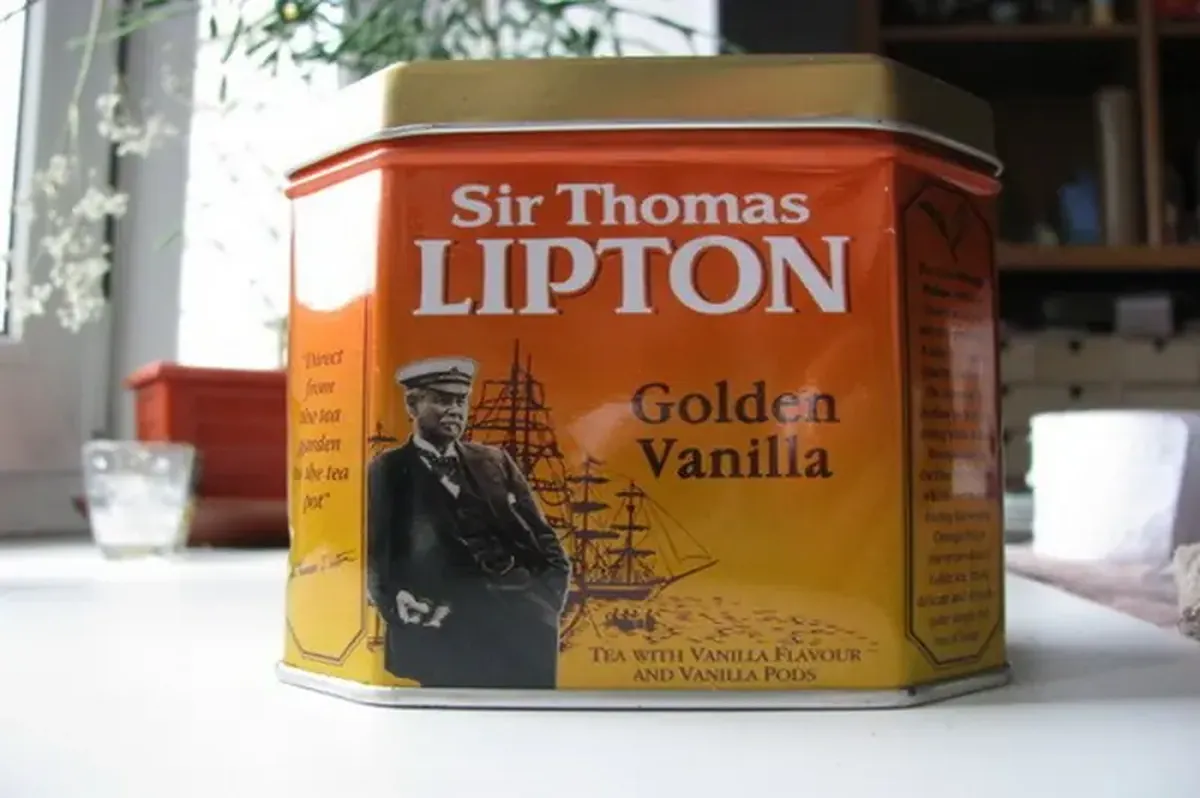
On the five plantations he bought in Ceylon, Thomas Lipton experimented to reach high quality at low prices. By the time Lipton entered the tea business, blends sold in a London shop on Minchin Lane were mixed in ad hoc combinations and their quality varied. The new tea baron standardized the blends so Lipton tea — both green and black — would have consistent freshness and flavor. The Lipton brand was among the first to package tea in bright yellow wrapping. Lipton sold tea in small packets of half and quarter pounds rather than in large boxes. Where tea once cost 50 cents per pound, Lipton could offer tea from the producer for 30 cents.
That lower price made a commodity that had once been more valuable than gold until the mid-19th century affordable not only to the Victorian middle class but to ordinary workers as well. Queen Victoria herself became an admirer of Lipton tea. After entering high society, Lipton donated £25,000 (more than £2 million today) to a charity banquet for Queen Victoria’s Diamond Jubilee in 1897. That same year he was knighted for his contributions to British life. Eyewitnesses said his easy manner, sense of humor, and charm helped make him a celebrity among the upper classes.
The “People’s Star”
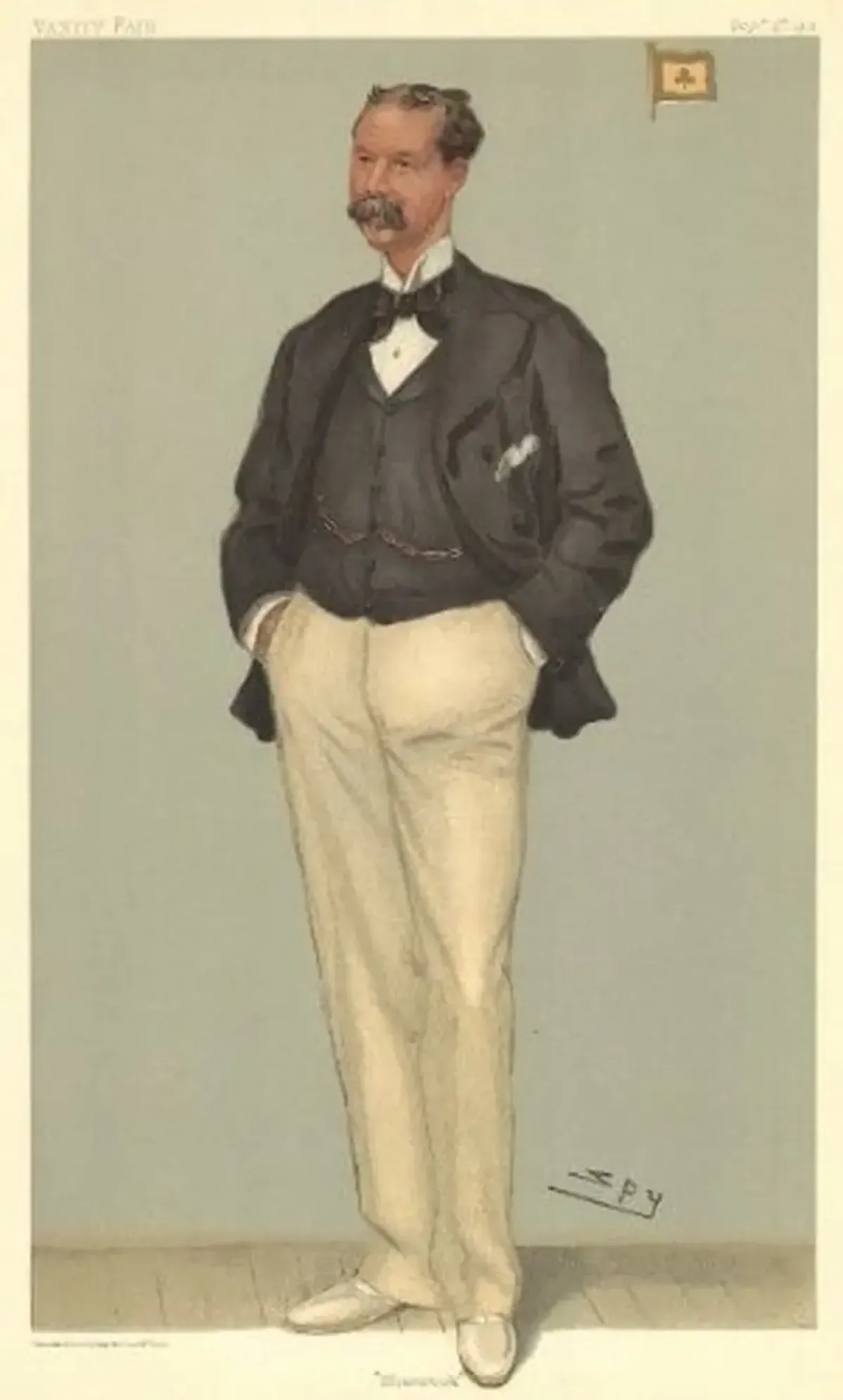
In 1898 the capital of this member of Masonic Lodge Scotia No. 178 in Glasgow was estimated at £120 million (about $1 billion today). At that time the founder and owner of Lipton offered shares on the stock exchange while retaining majority control. After his 50th birthday, Thomas Lipton pursued another long-held ambition: yachting. As a boy watching ships in the Glasgow port, he had made and launched model vessels on the city’s waterways. Now Sir Lipton could afford to enter elite yachting and compete for the oldest trophy in the sport — the America’s Cup. His toughest rival was a professional yachtsman.
As a member of the Royal Ulster Yacht Club in Bangor, County Down, Northern Ireland, Lipton won Irish hearts even in his first competition in 1899, which he lost. His yacht Shamrock, named for the Irish symbol, drew support from locals and visitors alike, and Lipton made new friends while the Lipton brand grew more popular as images of Lipton the yachtsman appeared on tea packaging. Fans clamored for photos and autographs. At his peak, Thomas Lipton’s popularity could be compared to figures like Steve Jobs or Elon Musk — a beloved millionaire whom many considered a people’s star.
The Cup of Love
Guests aboard Lipton’s luxurious yacht Erin included U.S. President Franklin Roosevelt, German Emperor Wilhelm II, and inventors Thomas Edison and Guglielmo Marconi. Witnesses reported that Thomas Lipton forbade discussions of politics or religion on board, and no one broke that rule. When World War I interrupted the 1914 races, he converted the Erin into a floating hospital and donated it to the Red Cross. The following year the vessel was sunk by a German submarine. “If I could save people, I would give everything I had for it,” Sir Lipton said at the time. He stepped away from the America’s Cup campaign without regret.
After coming close to victory in 1920, Lipton again fell short and joked that the coveted trophy was “an old mug slipping through my fingers.” His humor and dogged determination earned public sympathy and admiration. After his fifth unsuccessful bid for the cup in 1930, the mayor of New York presented the cheerful loser with a prize for perseverance and sporting spirit — the golden “Cup of Love,” funded by donations from Americans. The beloved businessman died on October 2, 1931, leaving most of his fortune to his hometown. Although the brand later changed hands (now part of Unilever), the name of its founder lives on in Lipton tea.
