
 Carlos Solis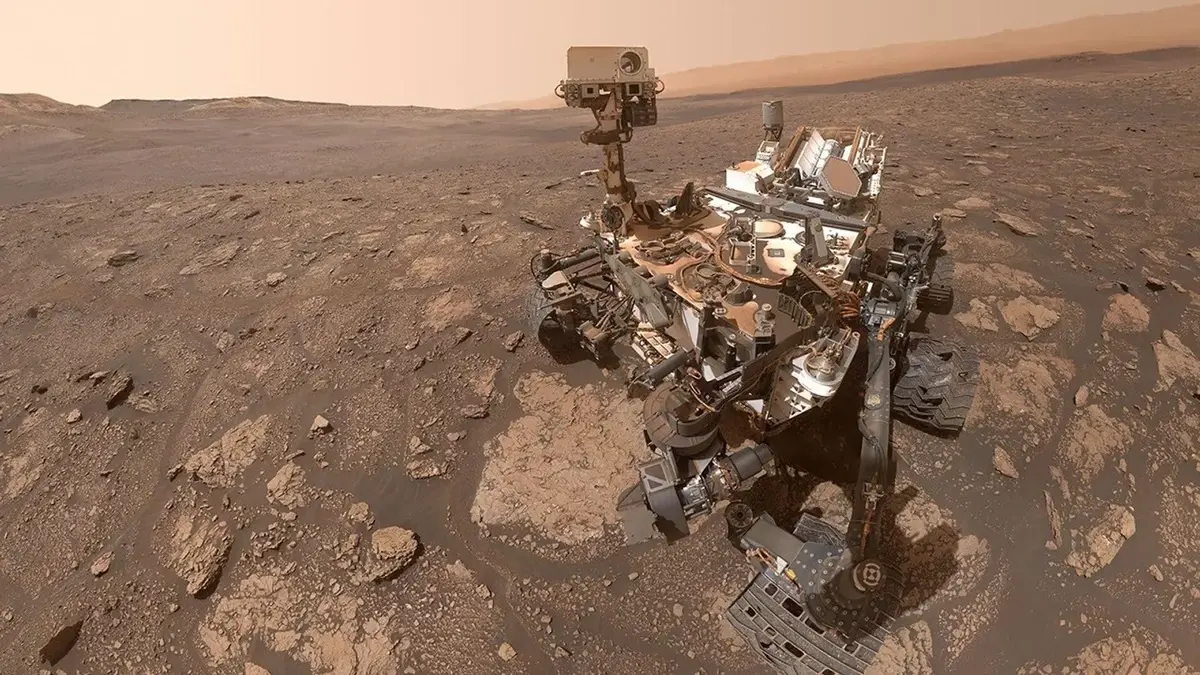
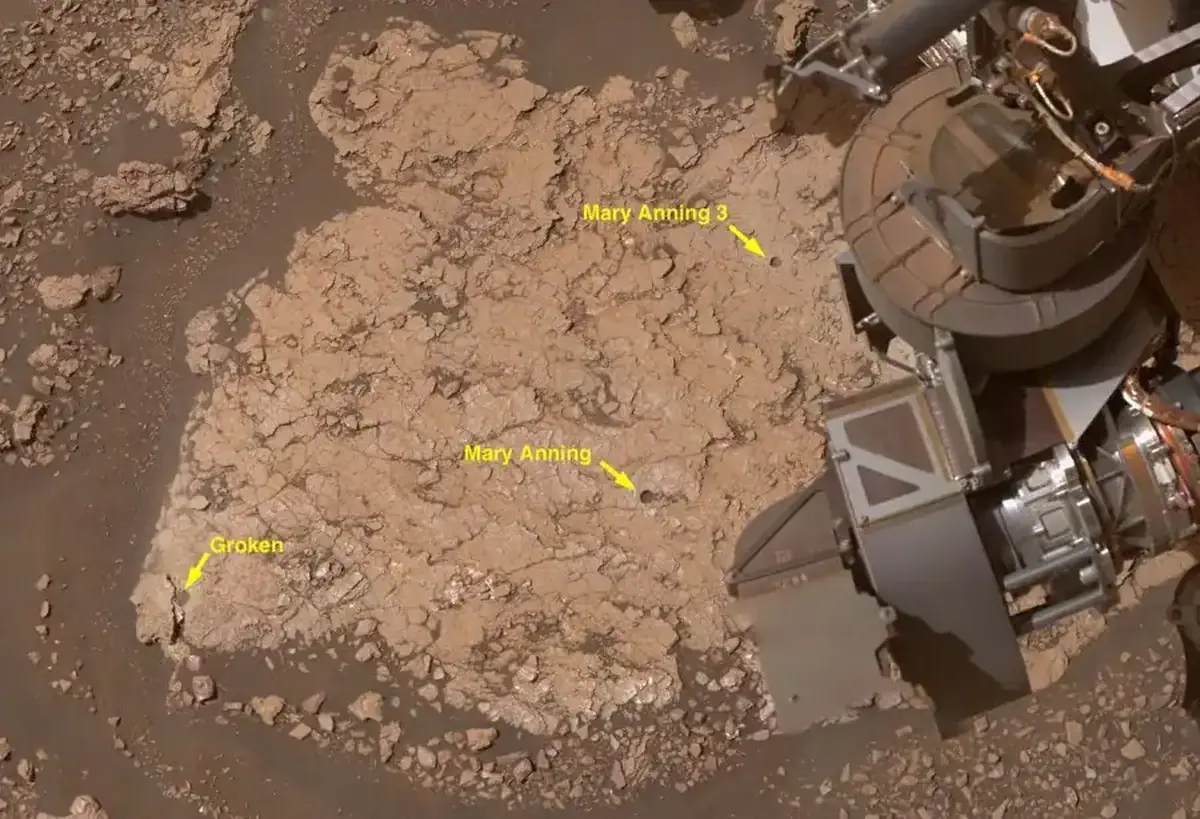
The samples were collected in 2020 at a site called “Mary Anning 3,” an area that once hosted lakes, streams, and marshy shores. The site sits in Glen Torridon on Mount Sharp, inside Gale Crater. Billions of years ago, water repeatedly flooded and dried this location, forming clay minerals that are excellent at protecting and preserving organic matter.
A new study identified 21 organic molecules in a clay-rich sandstone about 3.5 billion years old. Seven of those molecules had never before been detected. NASA called this “the most diverse collection of organic molecules ever found on the Red Planet.”
What “organic molecules” are — and where they might have come from
Organic molecules are carbon-based compounds. Living things use them, but they can also form without biology: through ordinary chemistry, geological processes, or delivery by meteorites and interplanetary dust. That makes the discovery exciting, but it does not constitute direct evidence of life.
Mars has already offered plenty of clues: Curiosity has found evidence of ancient lakes and streams, layered mudstones, and previous studies in Gale Crater have detected organic material. In 2025, researchers reported the largest long-chain hydrocarbons on Mars — such as decane, undecane, and dodecane. The new sample from “Mary Anning 3” expands the variety of molecules known there.
The rover’s built-in mini lab
Curiosity carries a miniature laboratory inside its body — the Sample Analysis at Mars (SAM) instrument. The rover drills into rock, grinds the rock into powder, and delivers that powder to SAM. The instrument heats the sample and analyzes the gases released.
“The fact that we were able to perform this type of chemical experiment on Mars for the first time was itself an achievement,” said Charles Malespin, SAM’s principal investigator at NASA’s Goddard Space Flight Center and a co‑author of the study. “But now that we have gained experience, we are ready to run similar experiments on future missions.”
SAM detected a number of cyclic (ring-shaped) organic molecules, including trimethylbenzene, tetramethylbenzene, methyl benzoate, dihydronaphthalene, naphthalene, benzothiophene, and methylnaphthalene.
Some of those compounds showed up in tiny amounts. But on Mars, even a trace can be a treasure.
Recognizable molecules — and hints of nitrogen
One of the most intriguing signals pointed to a nitrogen-containing heterocycle — a ring of atoms that includes nitrogen. Similar structures appear in molecules important for life on Earth, including components of RNA and DNA.
“This discovery matters because such structures can be chemical precursors to more complex nitrogen-containing molecules,” said Amy Williams of the University of Florida, the study’s lead author. “Nitrogen-containing heterocycles have not been previously found on the Martian surface or confirmed in Martian meteorites.”
The authors of the study are cautious, because the rover cannot confirm whether these molecules came from biology, from nonbiological chemistry, or from meteorites. The data point to complex organic chemistry, but not to life.
Did meteorites deliver the organics?
Another notable molecule is benzothiophene, which contains carbon and sulfur. Compounds like this have been found in carbon-rich meteorites. Some scientists think meteorites seeded young planets with the raw ingredients for chemistry that could help lead to life.
To check the rover’s results, the researchers ran comparative experiments on Earth using a well-known carbon-rich meteorite that fell in Australia in 1969 and is more than 4 billion years old. The compounds found in that meteorite resembled those detected at “Mary Anning 3,” including benzothiophene.
That match does not prove Martian organics must have come from meteorites. But it shows another possibility: Curiosity may have uncovered fragments of ancient macromolecular organic material that survived in the rock.
The study’s authors suggest that the detected molecules are likely breakdown products of ancient macromolecular material — large organic substances trapped in the sedimentary rocks of Gale Crater.
“For me, the revelation of this mission was not only that Mars was habitable,” said Ashwin Vasavada, the Curiosity project scientist at NASA’s Jet Propulsion Laboratory. “It was how incredibly favorable the environment was.”
Bringing samples home is the priority
Still, Curiosity cannot yet answer the biggest question: Did life ever exist on Mars?
The rover can detect organics and find rocks that formed in habitable conditions. But it is difficult for the rover to distinguish organic matter produced by life from organic matter unrelated to biology.
“To fully answer whether these organic molecules are linked to life on Mars, we need to return samples from Mars and study them in our laboratories on Earth. Returning samples collected by Perseverance remains the planetary community’s top priority,” said Briony Horgan of Purdue University.
That is why sample-return programs are central to Mars science. Instruments on Earth can analyze such samples far more powerfully than any rover can.
The study was published in the journal Nature Communications.
Based on material from ZME Science
Photo: NASA
