
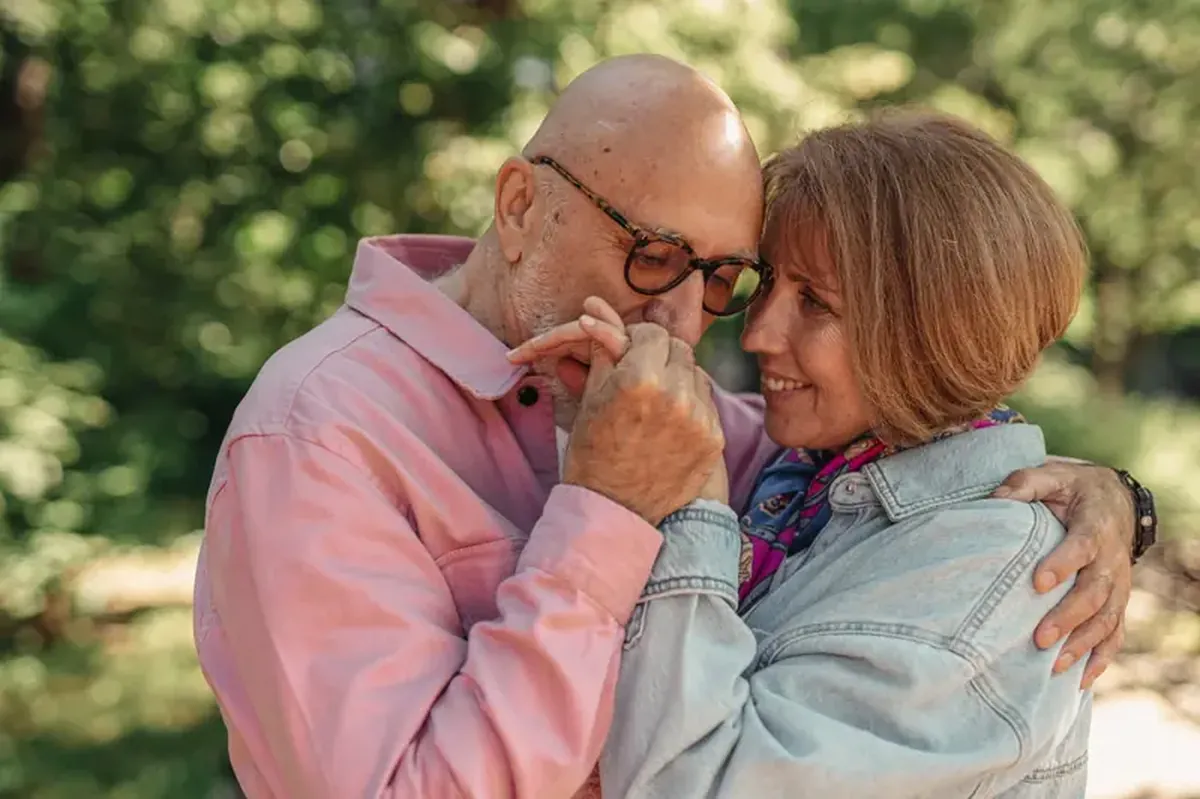
How to maintain relationships over the years, when to let go of a partner, and what to strive for: a rational approach and inspiring examples.
Synchronizing Heartbeats
Every person might dream of such a fate: an American couple lived together for 65 years, passing away just 88 minutes apart. “I love you, death won’t separate us,” the devoted husband told his dying 87-year-old wife — and then he died soon after. The story of Pennsylvania retiree James Landis made headlines beyond local papers: he passed away an hour and a half after his wife, succumbing to a heart attack. “Grandpa’s heart was broken by Grandma’s death; they were one,” their granddaughter said.
Closely timed deaths after many years together are not uncommon. Older adults often struggle to cope with the loss of a long-term partner. One hypothesis suggests that partners’ heart rhythms become linked over time, and when that link is broken by one partner’s death, the other’s heart may stop as well.
Is Love Possible in Later Life?
Many people who reach a “golden” wedding anniversary say that growing old together is a great blessing. Love in later life isn’t found so much as it is created. As people age, communication with a partner can become as essential as sleep and food: it’s hard to live without it. In mature love, partners worry less about themselves and more about each other: if one falls ill, the other provides support.
Researchers have collected evidence about the benefits of touch: physical contact improves the health of older adults. A British study found that handshakes and hugs boost seniors’ physical and emotional well-being, helping to ease the pain of loneliness. Even a pat on the shoulder from someone nearby can reduce the likelihood of depression. Loneliness in old age can be deadly: it complicates chronic conditions and often increases the need for additional medications.

Sex in Later Life – Is It Appropriate?
From a medical standpoint, sexual activity among older adults is normal. Desire and intimacy matter at every age: studies show that sex helps maintain mental health. Retirees who continue to have sex at age 70 are less likely to suffer memory problems and other age-related cognitive issues. Regular sex improves blood flow to the brain and boosts hormones linked to cognition. Psychologists say retirement can offer couples extra time to reconnect and even revive their sex lives.
In the Netherlands, one retired civil servant, Klaas Bruin, sued the government for seven years to defend his right to sexual services. He won compensation from the state for expenses related to hiring sex workers. Bruin supported his claim with medical documentation: his therapist testified that after sexual intimacy, the patient needed fewer medications, while a psychiatrist reported that interaction with a woman improved the man’s mental state. Because Bruin had been a civil servant, local rules required the government to cover health-related expenses.
Researchers at the University of Rostock found that 57% of participants aged 60–70 reported being satisfied with their personal sexual relationships, and 70% of those aged 75 felt the same. Those figures suggest sexual satisfaction doesn’t simply vanish with age.

Love Knows No Age
Marriages between partners of the same generation are often seen as more harmonious, but there are no hard rules in matters of the heart. People tend to condemn “unequal marriages,” yet such unions are not necessarily mismatches. Even marriages of convenience can have positive meaning for both partners.
The age gap between writer Volodymyr Korolenko and his partner didn’t stop them from building a happy family. Charlie Chaplin’s marriage to 18-year-old Oona O’Neill, when he was 60, produced a long partnership: they lived together for 34 years, had eight children, and left a lasting cinematic legacy.
There are many such examples. Young women who don’t find peers who meet their expectations sometimes gravitate toward older men who are emotionally mature, experienced, and ready for stability. But a late romantic impulse can bring both joy and risk. New feelings in later life can test relationships. Losing a first love may hurt but is rarely catastrophic; mistakes in later love can be harder to undo.
Late Love
Not everyone enters the “third age” with a life partner. Some are widowed; others are left for new families. Late-life relationships often carry a bitter aftertaste, especially when one partner feels guilty toward the person they left behind after many shared years. More often, it is the man who leaves the family. If he abandons his partner for someone else, the emotional damage for the person left behind is usually deeper than if a partner simply drifts away. Some hurt spouses later avoid relationships and never fully recover. Self-esteem can plummet, because many blame themselves for the breakup. That mindset can be harmful.
The most common reason for men’s infidelities while their wives are still alive is the desire to prolong youth by forming a new union — the old saying about “gray hair and the devil in the ribs” captures that impulse. Not all couples survive the hormonal changes of andropause unchanged. Some partners take back the wayward spouse: the frenzy of a midlife crisis often lasts three to five years. Repentance and forgiveness must be sincere and forward-looking; returning to the past rarely helps. Others choose a definitive end: you cannot step into the same river twice.
Don’t blame yourself for the end of a relationship. Even if you think the reason was that you weren’t a good housekeeper, didn’t feel attractive, couldn’t hold his interest in conversation, or didn’t meet his sexual needs, adapting to a partner at the cost of your identity is damaging. Trying to keep someone by breaking yourself is worse. Let go, learn the lesson, and aim for future happiness. A spouse may be responsible for caring for an ill partner, but caregiving is not the same as love.
Don’t Separate from Your Loved Ones
Sometimes old hurts resurface. After 77 years of marriage, a 99-year-old Italian filed for divorce from his 96-year-old wife after finding letters in an old dresser that revealed a 60-year-old correspondence with a lover. In those letters, the lovers discussed their desire not to destroy their families. Despite the passage of time, the husband felt deceived and went to court. The wife’s long-ago betrayal became the reason for ending a marriage that had produced five children, 12 grandchildren, and one great-grandchild. The previous record for oldest divorcing couple belonged to 98-year-old Britons Bert and Jessica Wood, who divorced after 36 years of marriage.
Be prepared for family relationships to change with age. A “threshold” often appears around 60–65. While both spouses worked, each lived much of their life separately and the couple mainly shared evenings and weekends. Retirement can bring tensions. One way to reduce that tension is to divide interests into shared and personal ones. Each partner should keep the freedom to choose activities. Without personal pursuits, spouses can grow tired of each other. A husband may be frustrated by no longer doing his usual work or socializing with his old circle, while a wife may feel burdened by extra household duties and lose the freedom she once had. If the couple finds activities they both enjoy, their relationship often warms. Shared interests and joint projects — working in the garden, running a family business, or mutual hobbies — can bring them closer together.
Love for Life in Later Years
Many wives report that their health improves a few years after retirement. For men, the opposite can be true: leaving work may cause them to “fall apart.” A man’s well-being often improves when he retires alongside his wife. If a married man retires first while his wife continues working, he may lose the daily care that once supported him and soon feel worse. Sociologists advise married men to consider retiring after their wives have done so.
“It is in a woman’s nature to care more about the health of loved ones than about her own well-being, which is why retired women become true guardians of their husbands’ health,” says Professor Angela Curl of the University of Missouri.
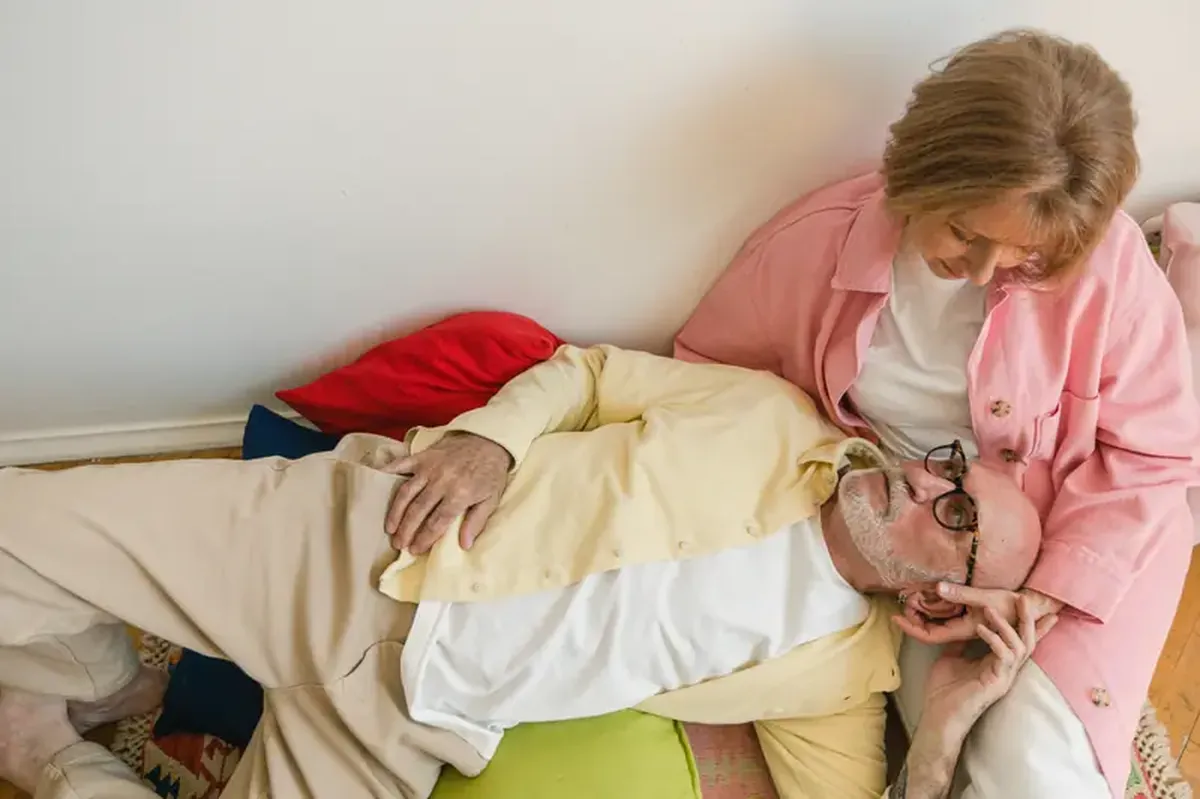
Love in later years is sustained by feelings for spouses and children. Balancing marital and parental love is one of the complexities of mature relationships. Therapists warn against giving yourself over entirely to your children, dissolving into the cares of a son, daughter, or grandchildren at the expense of your partner. Relationships with children should not crowd out the personal happiness of parents. It’s never too late to care for your own life and its meaning — love remains one of the most reliable protections against the negative effects of aging.
