
 Carlos Solis
 For decades, scientists believed that consciousness arises in the newest areas of the brain. However, neuroscientist Peter Coppola now claims that it is primarily governed by the oldest, most primitive structure.
What’s the story?
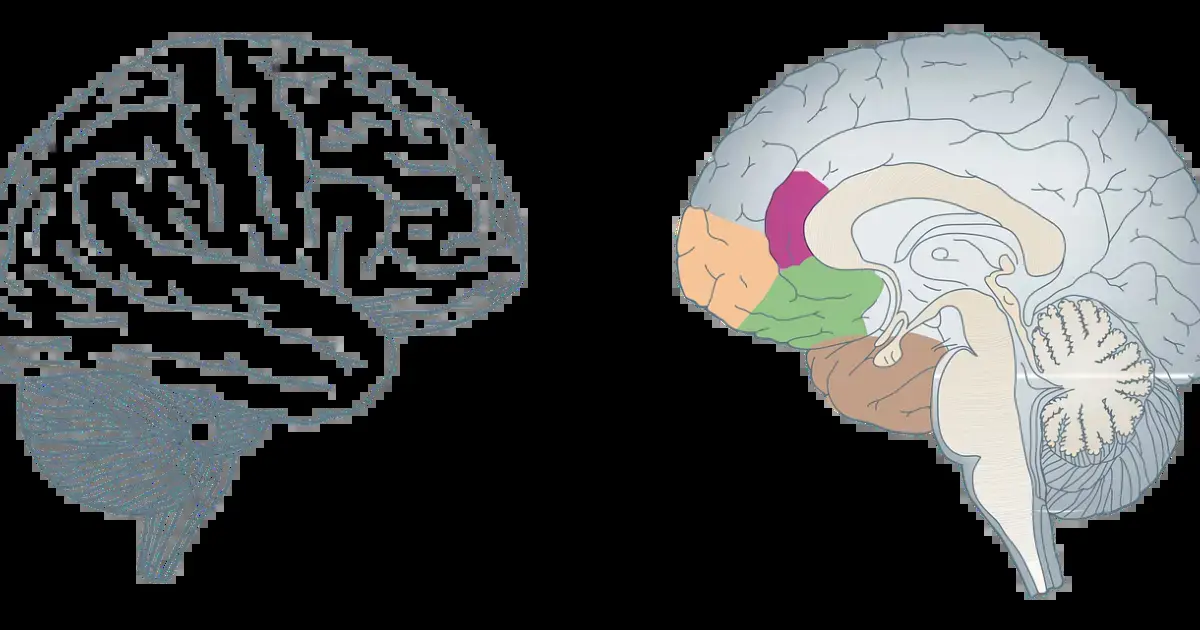
It is known that the parts of the brain that developed most recently are located on the outside, while the oldest, foundational structures are closer to the center.
The outer part of the brain, known as the cortex, is responsible for complex functions such as memory, thinking, learning, reasoning, and problem-solving. Meanwhile, the inner region, known as the subcortex, has not undergone significant changes in over 500 million years of evolution. It controls basic instincts and sensations like thirst, pain, pleasure, and fear.
Previously, scientists believed that the most likely source of consciousness were the recently developed areas of the cerebral cortex. They viewed the subcortex as insufficient for generating consciousness. However, Dr. Coppola says researchers have underestimated the significance of the brain’s most ancient parts.
How did the scientist reach this conclusion?
The neuroscientist analyzed data from previous studies collected over the past century. He specifically examined the results of experiments where electricity or magnets were used to influence areas of the brain. Interventions in the cortex produced powerful effects, such as hallucinations or changes to judgment. However, interventions in the subcortex led to even more striking effects, as reported by Daily Mail.
This provided significant evidence that ancient areas are crucial for consciousness. However, it was not enough to demonstrate that the subcortex could independently generate consciousness.
To determine the importance of this deep area of the brain in forming consciousness, Dr. Coppola studied cases where parts of the brain were damaged or removed in humans and animals. Damage to the cortex resulted in changes in conscious experience, but damage to the subcortex and other deep areas led to a complete breakdown of consciousness, often resulting in coma.
Even more astonishing are the rare cases of children born with so-called hydranencephaly, where they lack most of the cerebral cortex. According to Dr. Coppola, such individuals are expected to remain in a vegetative state; however, there is evidence that “they can feel distressed, play, recognize people, or enjoy music.”
Thus, Coppola believes that the subcortex is sufficient to create a basic level of consciousness. However, this does not mean that the cerebral cortex does not contribute to its formation.
He says newer parts of the brain, along with the cerebellum, likely expand and refine human consciousness. These areas take the basic building blocks of consciousness and add language, moral reasoning, a sense of self-worth, and creative potential. In other words, everything that makes human consciousness unique.
Photo: pixabay
