
 Gaby
Gaby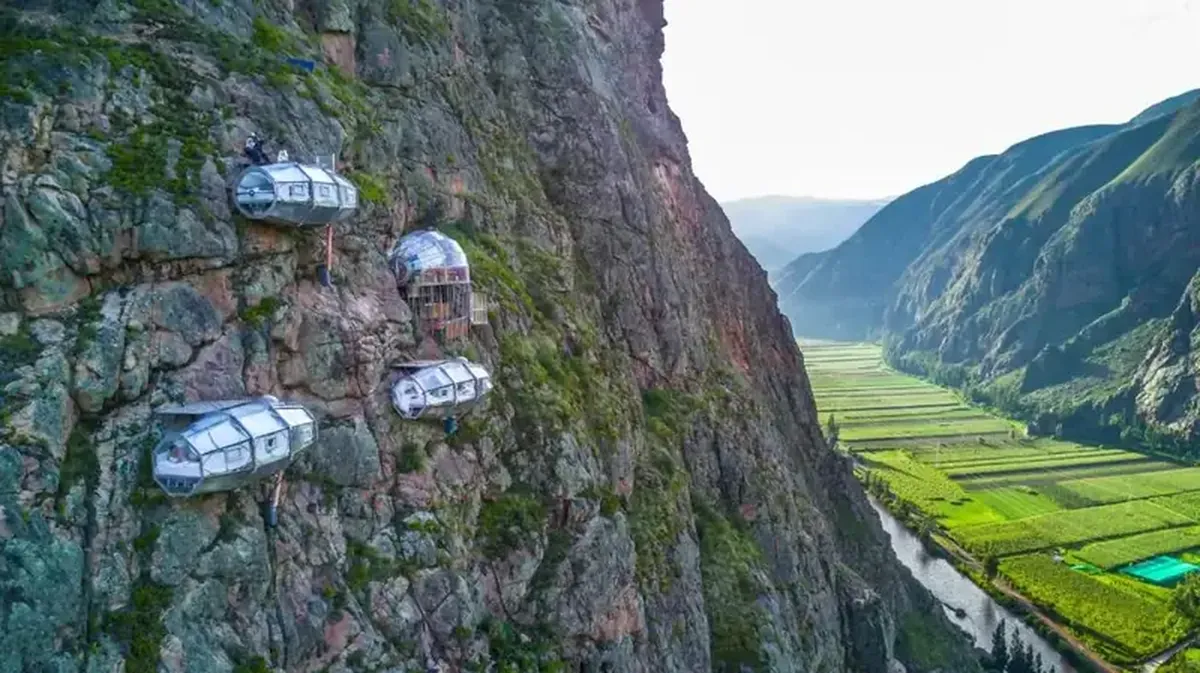
After nearly half a century, capsule hotels are being completely reimagined. It’s not budget alone that draws travelers — in some cases these tiny rooms can be surprisingly pricey. Many guests come for the novelty: a chance to sleep somewhere unconventional, often in an exotic setting.
The world’s first capsule hotel opened in Osaka, Japan, in 1979. It looked, for lack of a better comparison, like a morgue lined with neat sleeping capsules. Businesspeople who worked late and didn’t have the energy to go home were the hotel’s earliest regulars; after a night’s rest in a capsule, they’d return to the office.
Over time tourists started to embrace the concept, intrigued by compact, tech-friendly rooms that were affordable—though sometimes pricier than a hostel—and offered a comfortable, safe stay.
Demand from adventurous travelers has pushed capsule hotels into radical redesigns. They’re popping up in unexpected places around the world, taking on new forms and adding fresh features. By 2031, experts predict we’ll see entirely new variations on the capsule hotel—hybrids that could top the five compact, quirky rooms the BBC highlighted.
Nine Hours Sleep Lab, Japan
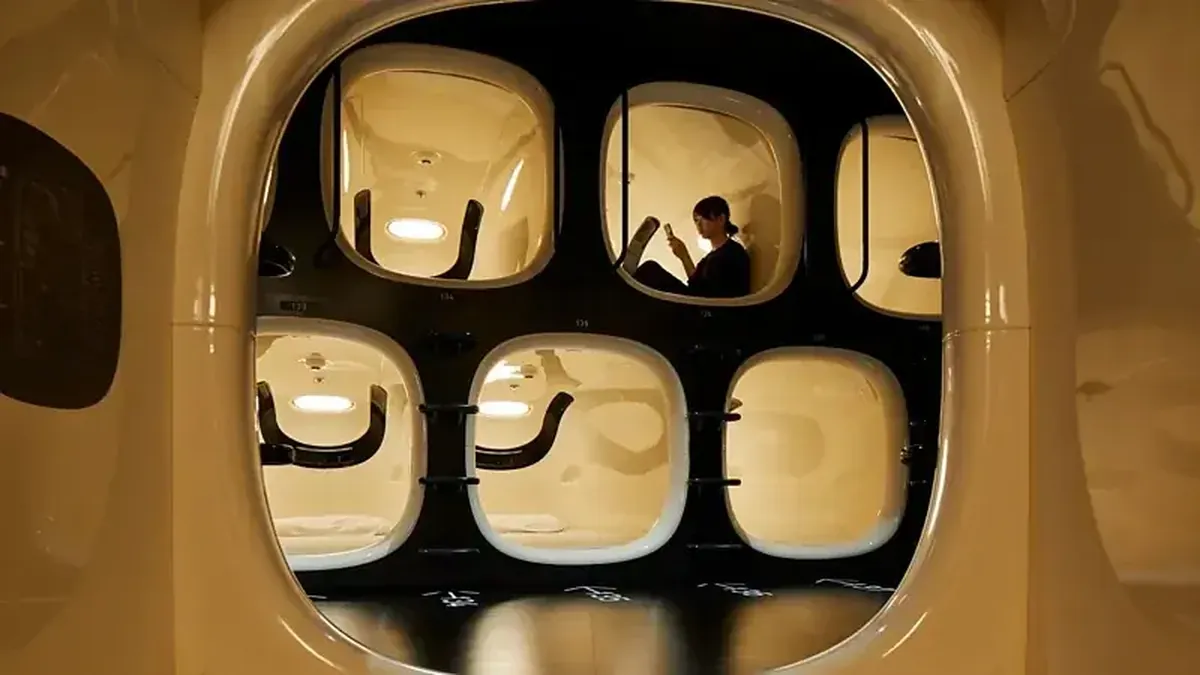
Nine Hours, a chain of 13 hotels across Japan (from Fukuoka in the west to the northeastern island of Hokkaido), collects data on guests’ sleep. Guests don’t seem to mind this intrusion: they are fitted with sensors that monitor everything from breathing to facial expressions, track heart rate, detect apnea, and even help control snoring. The hotel’s name reflects its concept: visitors rent a room for an ideal nine hours—seven for sleep, plus an hour at the start and end of the stay for washing and dressing. Guests who want more time can pay by the hour.
Relaxation at Skylodge on a Steep Cliff, Peru
Spending a night in a transparent capsule clinging to a cliff above Peru’s Sacred Valley isn’t exactly relaxing for most people. For thrill-seekers, though, it’s an unparalleled getaway: imagine 300-degree panoramas of the surrounding mountains.
The only way to reach your bed at Skylodge Adventure Suites is a nearly vertical climb of about 400 meters. The founders say rock-climbing experience isn’t required. The descent is faster, thanks to a series of zip lines.
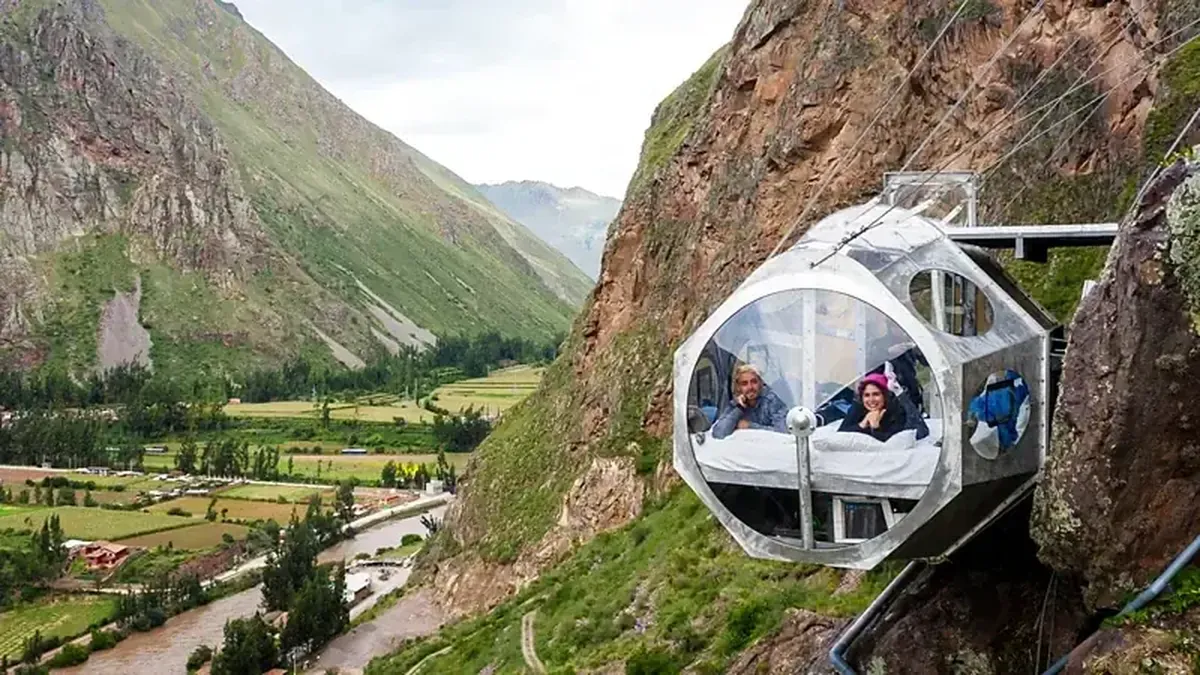
At sunrise, guests can sip tea or coffee on what serves as a tiny terrace. Now that’s luxury.
Oasis in the Tatacoa Desert, Colombia
La Tatacoa Hotel takes its name from Colombia’s second-largest desert, where it’s located. The property offers 37 capsules made from concrete drainage pipes and painted in warm caramel tones. Despite their compact appearance, the rooms fit a double bed and have air conditioning. There’s also a swimming pool, a shady garden, a bar, and a restaurant.

Free Spirit Spheres, Canada
Suspended among the conifer trees like giant Christmas ornaments, the spherical rooms at Free Spirit create a “feeling of flying among sleeping birds,” owner Tom Chadli says. He launched the first sphere on Vancouver Island 25 years ago to promote ecotourism and protect Canada’s old-growth forests.

The design of each of the three spheres follows biomimicry: the rooms resemble giant seed pods or a nutshell—light yet sturdy. The Eryn sphere, made of Sitka spruce, includes a dining area, a sink, and a double bed. The newer Melody and Luna spheres are fiberglass; their full-size double beds fold away during the day to create more space. Guests reach the rooms via spiral staircases that wind around the trees.
Hyper-Functional Resol Poshtel in Tokyo, Japan
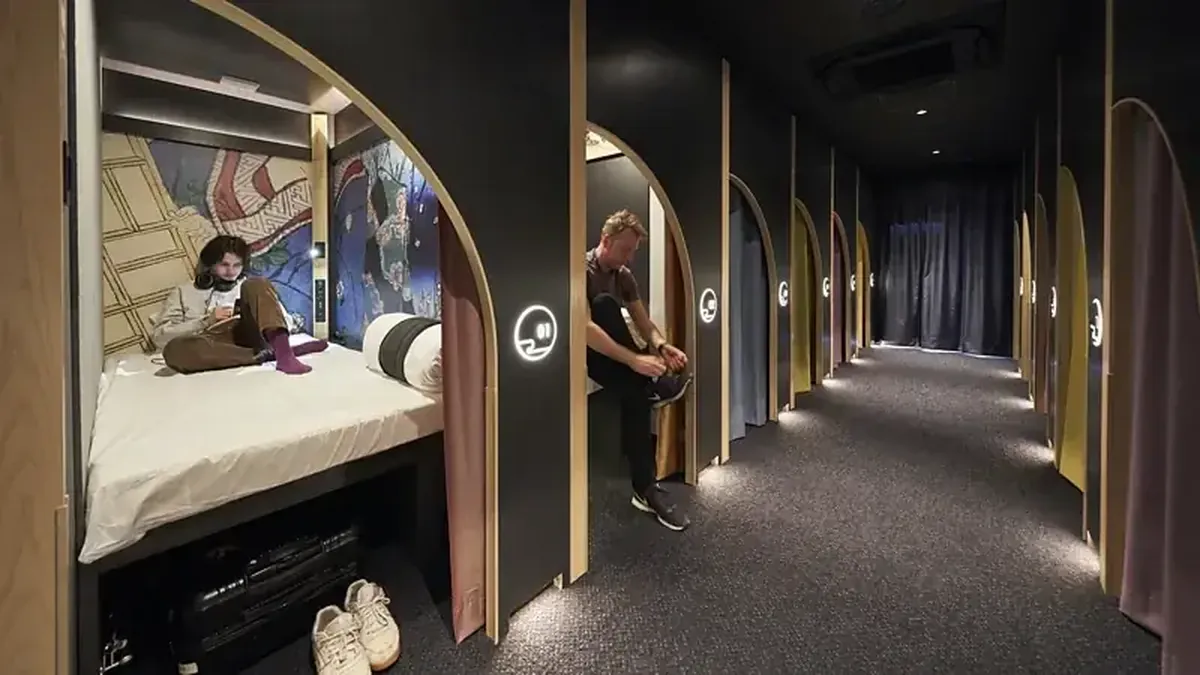
Resol Poshtel in Tokyo’s Asakusa district is the Resol Hotel chain’s first project dedicated to capsule sleeping. Rumor has it the rooms are scented with orange, chamomile, and neroli to help guests relax. The capsules are divided only by curtains, but the hotel owners say few one-star establishments can match Resol Poshtel’s cleanliness and functionality.

The city’s oldest Buddhist temple is just a five-minute walk away, as is the lantern-lined Nakamise Street, which is dotted with shops selling souvenirs and street food.
