
 Gaby
Gaby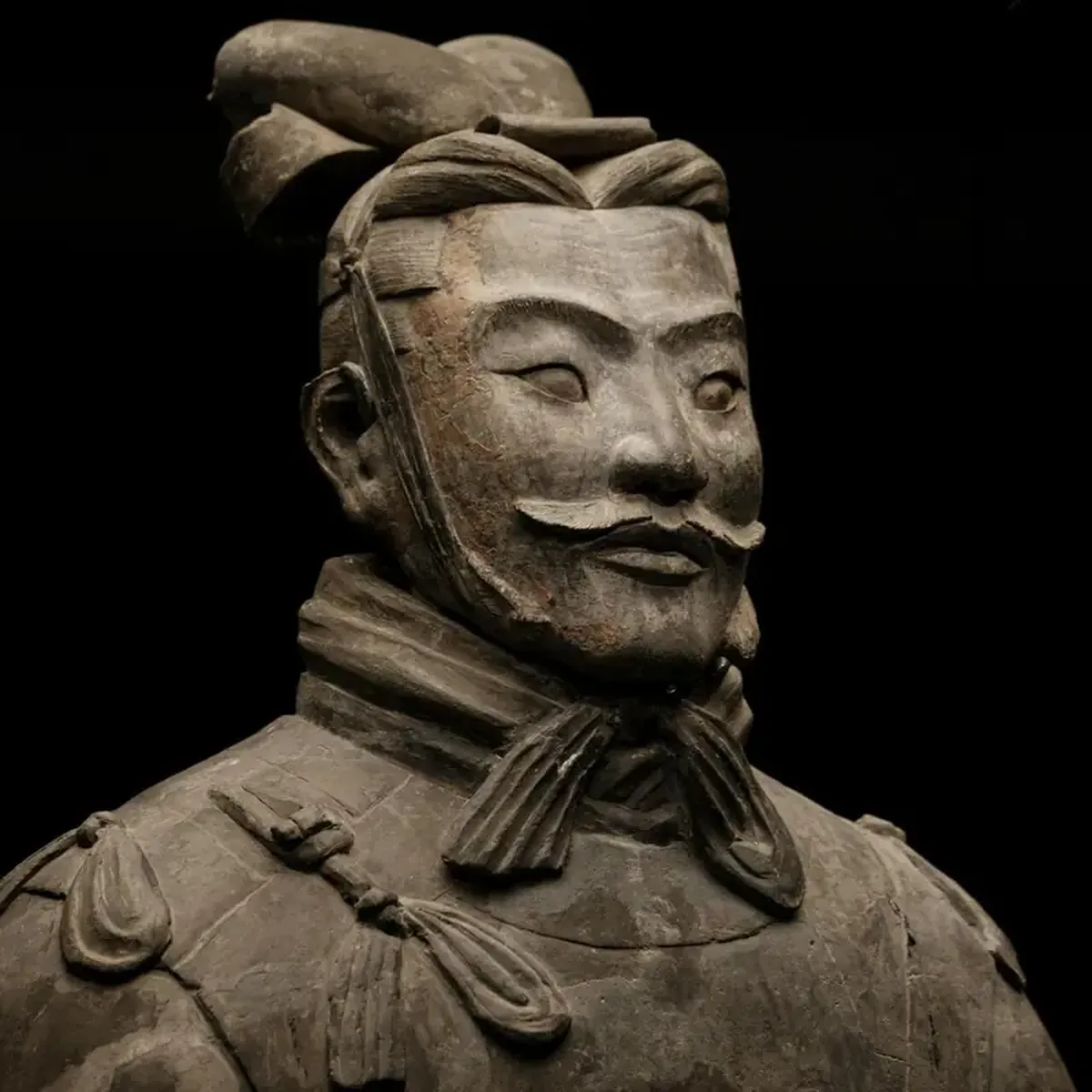
Despite 50 years of excavations, archaeologists continue to uncover surprises about the Terracotta Army.
Researchers discovered a richly adorned figure in the mausoleum of Emperor Qin Shi Huang in Shaanxi province, where the Terracotta Army was first excavated half a century ago. Of the roughly 2,000 figures unearthed so far, only about 10 are high-ranking officers, so this new find is especially rare.
This massive clay army, dating to the 3rd century BCE, was meant to guard the emperor in the afterlife. The life-sized figures have given scholars new insight into how the Chinese army was organized more than 2,000 years ago.

What Did Archaeologists Find?
Unlike ordinary soldiers, the newly found general figure was elaborately decorated, Live Science reported. Archaeologist Janice Lee of the University of Oxford said, “The decorations on high-ranking officers signaled their special status. The style and color of the adornments reflected their aesthetic tastes and social rank.”
The statue was excavated alongside the remains of two chariots, three clay horses, and two warrior figurines, shedding light on the ancient army’s organization.
“The positioning of senior officers in formation reflects military strategy and hints at the command system used during the Qin dynasty,” Lee explained.

What Else Should You Know About the Terracotta Army?
The Terracotta Army was discovered in 1974 during the construction of a well in northwestern China. It has become one of the largest archaeological finds of modern times.
The army, consisting of thousands of life-sized clay figures, is arranged in three pits. Over the past 50 years of excavation, archaeologists have uncovered around 2,000 terracotta warriors, although experts estimate there may be as many as 8,000 in total.
The figures were buried with crossbows, spears, and swords. Scholars believe the figures were meant to protect China’s first emperor, Qin Shi Huang (259–210 BCE), in the afterlife.
The general’s statue was found in Pit No. 2, which is thought to be dedicated to cavalry.
Military officers are marked by distinctive headgear and colorful, intricate armor. Their shoulder guards and other pieces of armor are decorated with ribbons.
After 50 years of excavation, many questions remain. “The main question is: who was the chief general who commanded the entire army?” Lee asked.
