
 Gaby
Gaby
Archaeologists have uncovered a brightly painted tomb in the Saqqara necropolis that dates to about 4,100 years ago. It belonged to a court physician named Tetinebefu.
Who Was Tetinebefu?
Hieroglyphic inscriptions in the tomb identify Tetinebefu as a physician who treated the pharaoh.
The tomb had been completely looted, and no human remains were found. Still, archaeologists were able to study numerous wall paintings, carvings, and hieroglyphs, which revealed the physician’s rank and skills. The team also examined depictions of objects that may have been used in medical practice.
Inscriptions show Tetinebefu held the title of “magician” or “conjurer” of the goddess Serket, who was associated with scorpions and believed to protect against their stings. That title for a physician indicated he was “a specialist in poisonous bites,” said Philip Collombier, the head of the archaeological team and an Egyptologist at the University of Geneva, in an interview with Live Science.
The inscriptions also call him the “chief of medicinal plants” — a title archaeologists have encountered only once before in Egypt. He is also named as the chief dentist.

“Evidence of ancient Egyptian dentists is extremely scarce,” said Roger Forshaw, an honorary lecturer at the Center for Biomedical Egyptology at the University of Manchester, who was not involved in the study.
Taken together, the titles suggest Tetinebefu reached the top of his profession. Collombier said the inscriptions point to him being the chief physician at court who treated the pharaoh.
What Surprised Scientists About the Tomb?
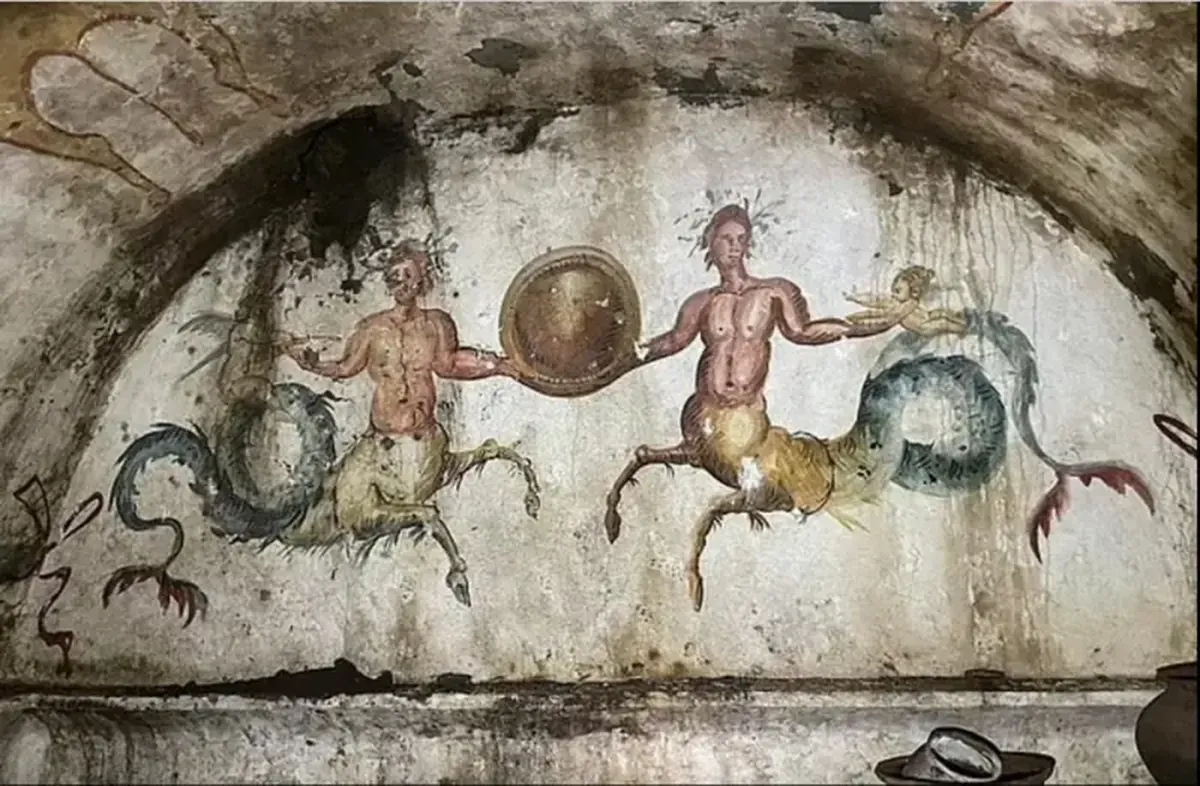
Photos from Egypt’s Ministry of Tourism and Antiquities show colorful wall paintings inside the tomb. They depict containers — jars and vase-like shapes — along with vivid abstract and geometric patterns.
“The walls are covered from top to bottom with drawings in bright, fresh colors! It’s hard to believe they are over 4,000 years old!” the team wrote on their blog.

Archaeologists have not yet identified which pharaoh or pharaohs Tetinebefu served. He may have served Pepi II (also spelled Piopi II), who ruled around 2246–2152 BC, or one or more rulers shortly thereafter, Collombier said. During Pepi II’s reign, Egypt remained unified and pyramids were still being built. After his rule the state began to break apart, ushering in the First Intermediate Period (roughly 2150–2030 BC). Analysis of the tomb is ongoing.
