
 Gaby
Gaby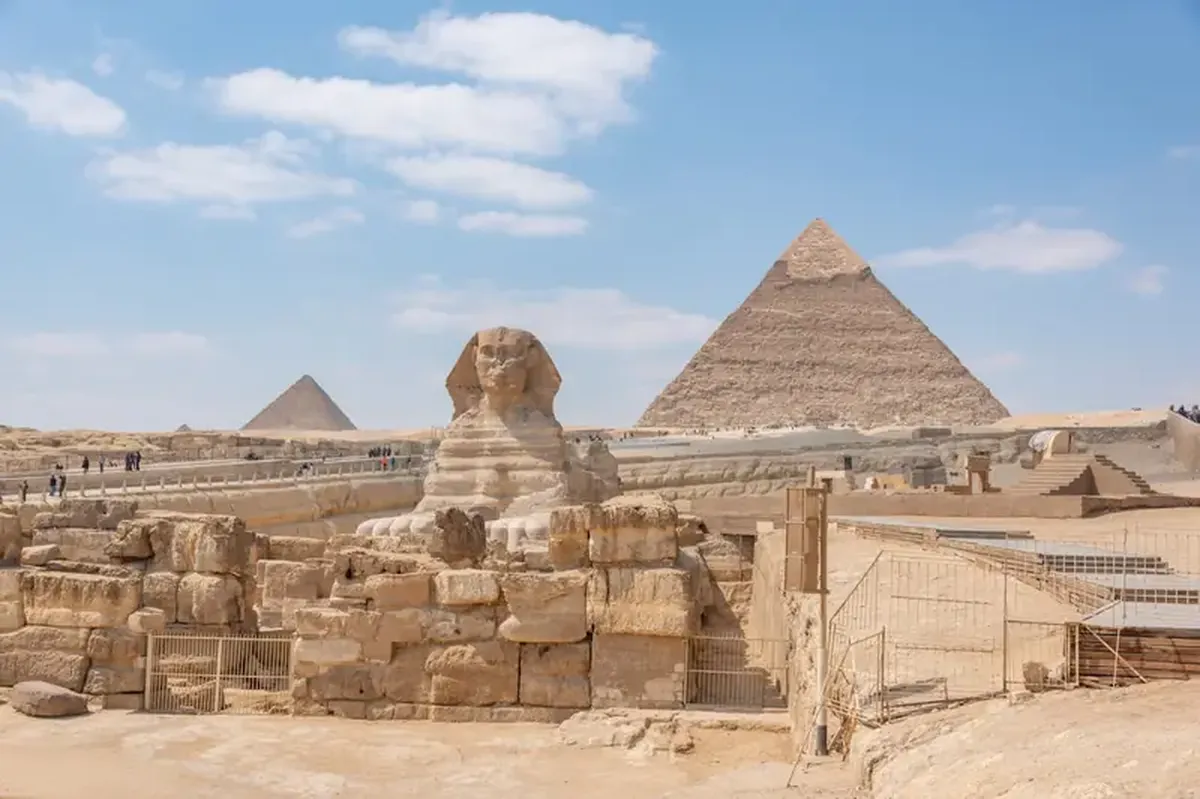
Located just 25 kilometers from Cairo, the Saqqara necropolis holds countless secrets that researchers continue to uncover. During recent excavations, Japanese and Egyptian archaeologists stumbled upon a series of tombs dating back 1,800 to 4,800 years. The team also discovered a wealth of intriguing artifacts, including colorful mummy masks and a small statue of the god of silence.
According to Egypt’s Ministry of Tourism and Antiquities, some of the masks likely date to the Roman period, from 29 B.C. to A.D. 641.

What Archaeologists Learned
Nozomu Kawai, director of the Institute for the Study of Ancient Civilizations and Cultural Resources at Kanazawa University in Japan, who led the excavations, said the team also found a stone stele with an inscription. It commemorated a person named Heroides.

Kawai said the researchers were particularly intrigued by a statuette of Harpocrates, the ancient Greek god of silence and secrets. The artist depicted him as a child riding a goose. Kawai said the goose symbolizes “the evil spirit over which the divine child triumphs.”
The first find of the dig wasn’t the statuette but the grave of “a worthy woman named Demetria,” who is depicted on the tombstone alongside her ward. The team found her grave at the start of their work in 2019, but the coronavirus pandemic forced them to pause excavations, as reported by Live Science.

When the archaeologists returned, they unearthed many previously unknown tombs and artifacts from various periods of ancient Egyptian history. The oldest tombs discovered, Kawai said, are around 4,800 years old and belong to the Second Dynasty. The team also found tombs from the Eighteenth Dynasty (1550–1295 B.C.) and later periods (712–332 B.C.). Among the burials were ones that date back to the time of the Ptolemies (Hellenistic Egypt) and Ancient Rome.
In one of the oldest tombs, the team uncovered an Egyptian alabaster slab from the Second Dynasty. They also found a burial inside a wooden coffin that had been damaged by termites, Kawai said. In the tomb from the Eighteenth Dynasty, archaeologists discovered a mummy, according to a statement from Egypt’s Ministry of Tourism and Antiquities.
The Saqqara necropolis, a UNESCO World Heritage site, is famous for its grand pyramids and smaller burial sites. The new excavations added tombs from multiple periods to Saqqara’s known treasures.
Kawai said excavations and analysis of the tombs are currently ongoing.
