
 Gaby
Gaby
Looking back at our primate ancestors, one might assume that modern humans have reached the final stage of their evolution. However, many researchers believe that the current form of humanity is just the beginning of the story.
MailOnline examined predictions from leading scientists and, using the AI-based image generator ImageFX, illustrated what humans might look like in the year 3025.
Shorter in Stature
In the past, natural selection was largely driven by individuals dying before they could reproduce and pass on their genes. But thanks to modern medicine, more people are living long enough to have many children.
As noted by Professor Mark Thomas, an evolutionary geneticist at University College London, those who have more children are more likely to pass on their genes. That could lead to shorter stature in the future.
The reason, Thomas explained, is that early sexual maturity—which allows for more children across a lifetime—is associated with shorter height. Over time, the genes for early maturation and shorter stature may become more common in the population.

More Attractive
As life expectancy rises, the biggest factor shaping evolution may be how many children a person has. Strangely, one potential outcome is that men could become more attractive.
Professor Thomas said, “Typically, women choose their mates. But in patriarchal societies, as is the case in many parts of the world, the choice and control often remain with men.” As societies liberalize, women will have more opportunities to choose their partners.
“Fortunately, we are entering a world where women make the choices, and they will select men they find appealing for various reasons,” Professor Thomas believes.
He thinks women will pay attention to a man’s intelligence and success as well as his looks. Over the next few thousand years, more attractive men may be more likely to pass on their genes, nudging humanity toward a generally more attractive appearance.

Similar in Appearance with Darker Skin
One of the most significant changes scientists anticipate is that humans will become more homogeneous in appearance.
Historically, distinct populations stayed relatively isolated from one another. In the future, people from different ethnic groups are likely to intermingle much more.
Dr. Jason Hodgson, a bioinformatics expert at Anglia Ruskin University, noted, “Interracial marriages are becoming more common.” He said this means the average person of the future will be genetically more diverse, inheriting traits from a larger number of populations. As a result, people may look more alike and tend to have darker skin.
Technologically Enhanced
Dr. Hodgson doubts that human evolution will proceed entirely naturally in the distant future. “We already have the technology for targeted gene editing using CRISPR-Cas9. This allows us to significantly alter the genome as we wish,” the scientist said.
While many scientists consider such editing unethical today, future generations may not be as concerned about the ethics. With some intervention, people might, for example, develop darker skin with higher melanin levels to protect against harmful ultraviolet radiation.
Technology may also give individuals more control over their appearance, letting people choose changes based on fashion and cultural trends, the Daily Mail reported.
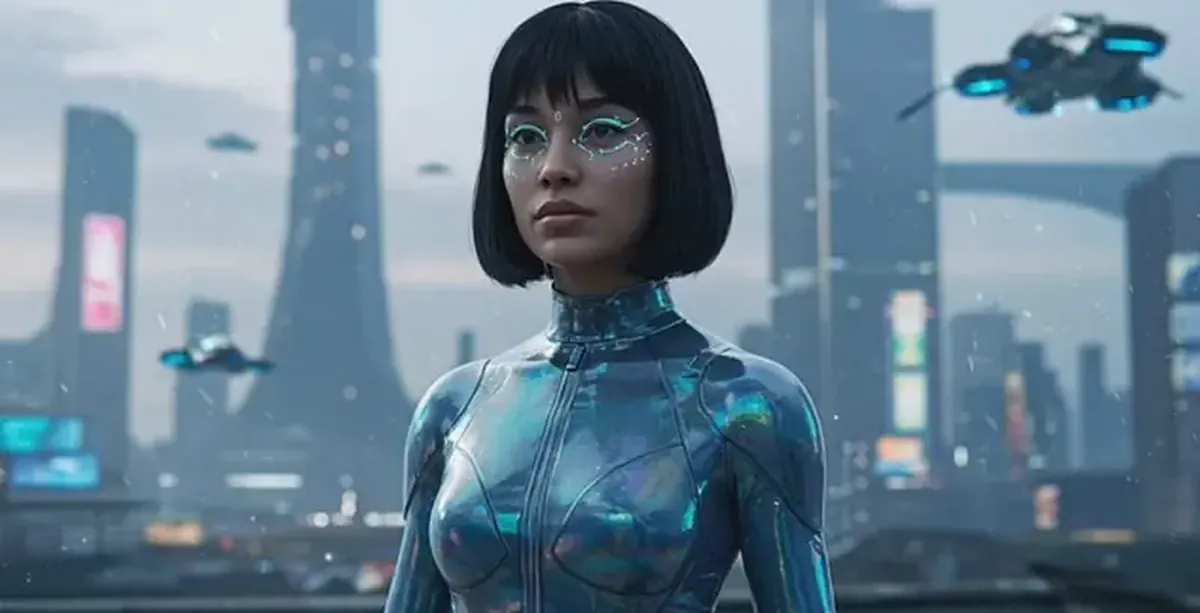
Smaller Brains
Robert Brooks, a professor of evolutionary biology at the University of New South Wales in Australia, believes the human brain will eventually shrink. His argument is that as computers take on more computational and social tasks, the need for a large brain will decrease.
Dr. Nicholas Longrich, a paleontologist and evolutionary biologist at the University of Bath in the UK, compared human brain evolution to that of domesticated animals: “As a result of domestication, sheep lost 24 percent of their brain mass, cows lost 26 percent, and dogs lost 30 percent.”

Adapted to Space
If part of humanity ventures into space, those people could become separated from Earth’s population and evolve differently.
Dr. John Hawks, an anthropologist at the University of Wisconsin–Madison, explained, “Creating a sustainable population of humans in another star system after a journey of thousands of years will be a challenging task. But such a scenario would create the possibility of speciation.” For example, on Mars humans would receive only about 66 percent of the sunlight and 38 percent of Earth’s gravity.
To adapt to low-gravity conditions, people living off Earth are likely to become taller, and their arms may lengthen.

NASA reports that astronauts grow about three percent taller during their first few days in space because their spines stretch in low gravity.
Space settlers may also become paler to maximize vitamin D absorption in low light. Their eyes could become larger and more sensitive so they can distinguish objects in poor visibility. But it’s also possible that, thanks to unforeseen technological developments, humans will evolve in entirely different ways.
