
 Gaby
Gaby
Alfred Hitchcock’s spy thriller “The Lady Vanishes” (1938) was one of the last films he made in England before moving to Hollywood. A decade later he made his first color film, “Rope.” In 1948 he began producing projects independently. The director’s career expanded further with “Vertigo,” one of the great detective films, and a few years after that “The Birds” brought his signature suspense fully into view.
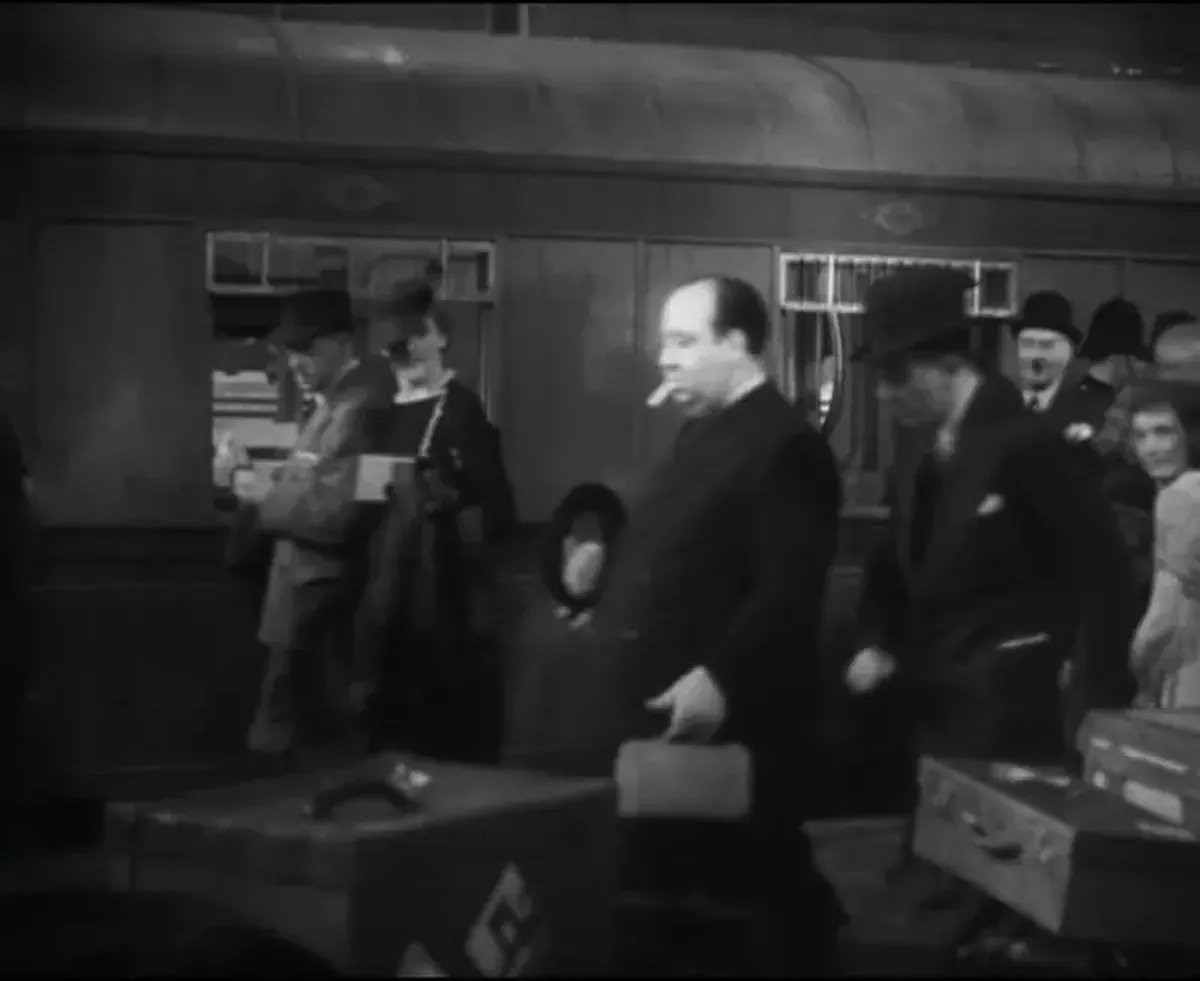
Hitchcock’s cameo in “The Lady Vanishes” (1938)
Suspense is the tension that builds before a shock, the feeling that pulls at the back of your neck. It’s a tool Hitchcock used to control an audience, leaving viewers teetering on the edge of dread. The roots of that Hitchcockian suspense go back to St. Ignatius’ Jesuit College in London, where the future master of thrillers arrived as a seven-year-old and first met the harsher sides of life.
His mature persona wasn’t “maniacal” or “crazy.” His sharp, piercing stare—set in a round face—often seemed to reflect the world’s response to his own fears, fears that kept resurfacing throughout his long, vividly lived life.
Some biographers point to his father, a grocer, as an early influence on Hitchcock’s anxieties. One anecdote has the young Alfred locked in a police cell by his father as punishment, a humiliation that left a lasting mark on the boy’s developing personality.

Father and young Alfred on a pony
While Hitchcock was at the Jesuit college, studying engineering and navigation, working at a telegraph company, writing short stories, studying painting, and creating visual advertising, he never forgot that first unjust punishment. Through his early years of proving himself, it often seemed he was trying to convince the world of his innocence.
Could his father’s cruelty have pushed Hitchcock to succeed? Maybe. It seems likely that those early wounds helped shape the way he arranged his life and work.
Hitchcock arrived in Hollywood at 40, already a major figure in British cinema after directing the first British sound film, “Blackmail.” In many ways he remained an English director at heart; his tendency to probe psychological themes on screen was less common in mainstream American filmmaking. That probing, often dark and unsettling, runs through the films he made in both Britain and the United States.
He came of age at the dawn of modern cinema. Hitchcock started in the early 1920s at the English branch of an American studio that would later become Paramount Pictures, designing title cards before moving into directing. In 1925 he worked with German filmmakers on his first full-length film, “The Pleasure Garden,” and a year later made his first thriller, “The Lodger.” He directed at a furious pace—releasing several films a year at times. In 1930 alone he made five films, and by the end of his life his filmography totaled 55 feature films.
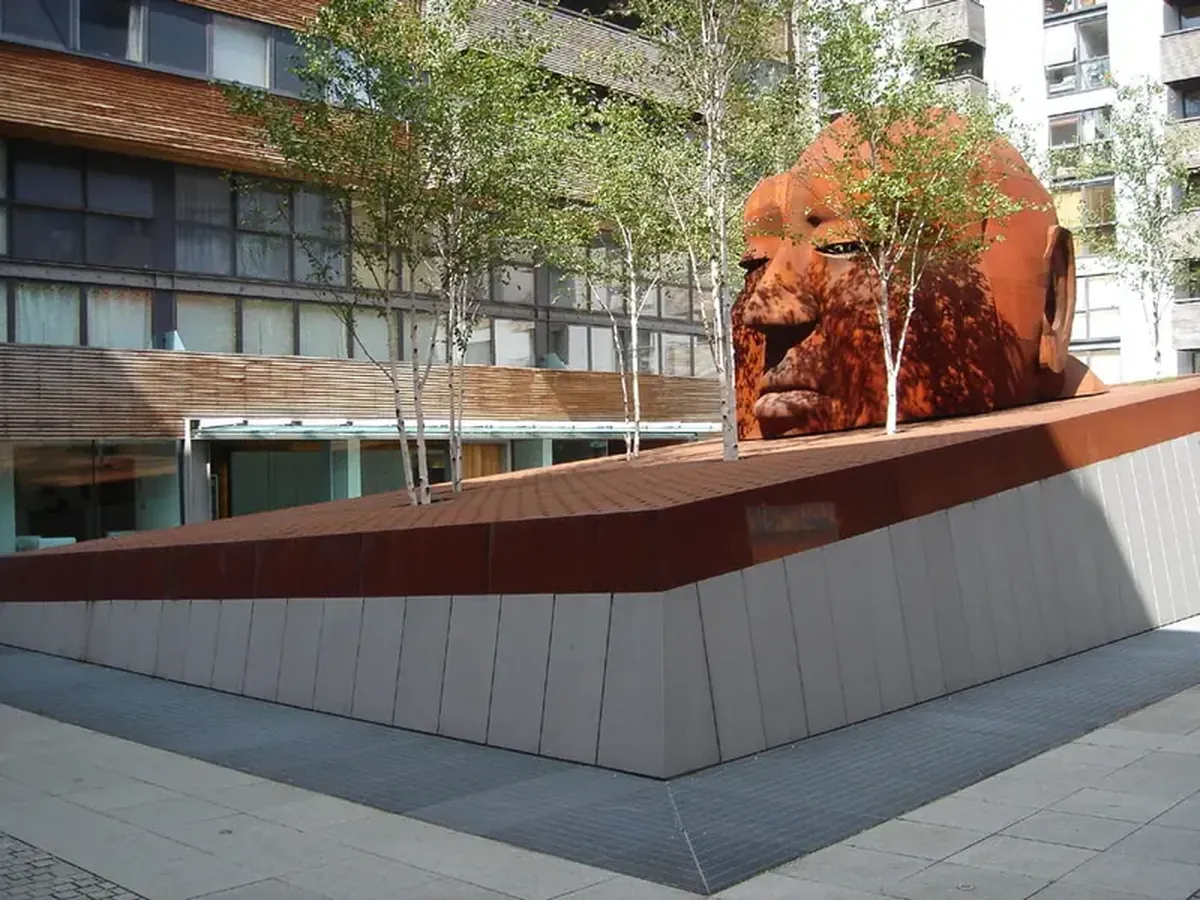
A sculpture dedicated to Hitchcock at Gainsborough Pictures in London.
Hitchcock stayed in the U.S. for the rest of his life and easily attracted top-tier stars. He was a connoisseur who could pick from the best actors, and they were drawn to his brand of suspense. Marlene Dietrich, Gregory Peck, Ingrid Bergman, James Stewart, Tippi Hedren, Cary Grant, Grace Kelly, Anthony Perkins, and Vera Miles were among those who worked with him.
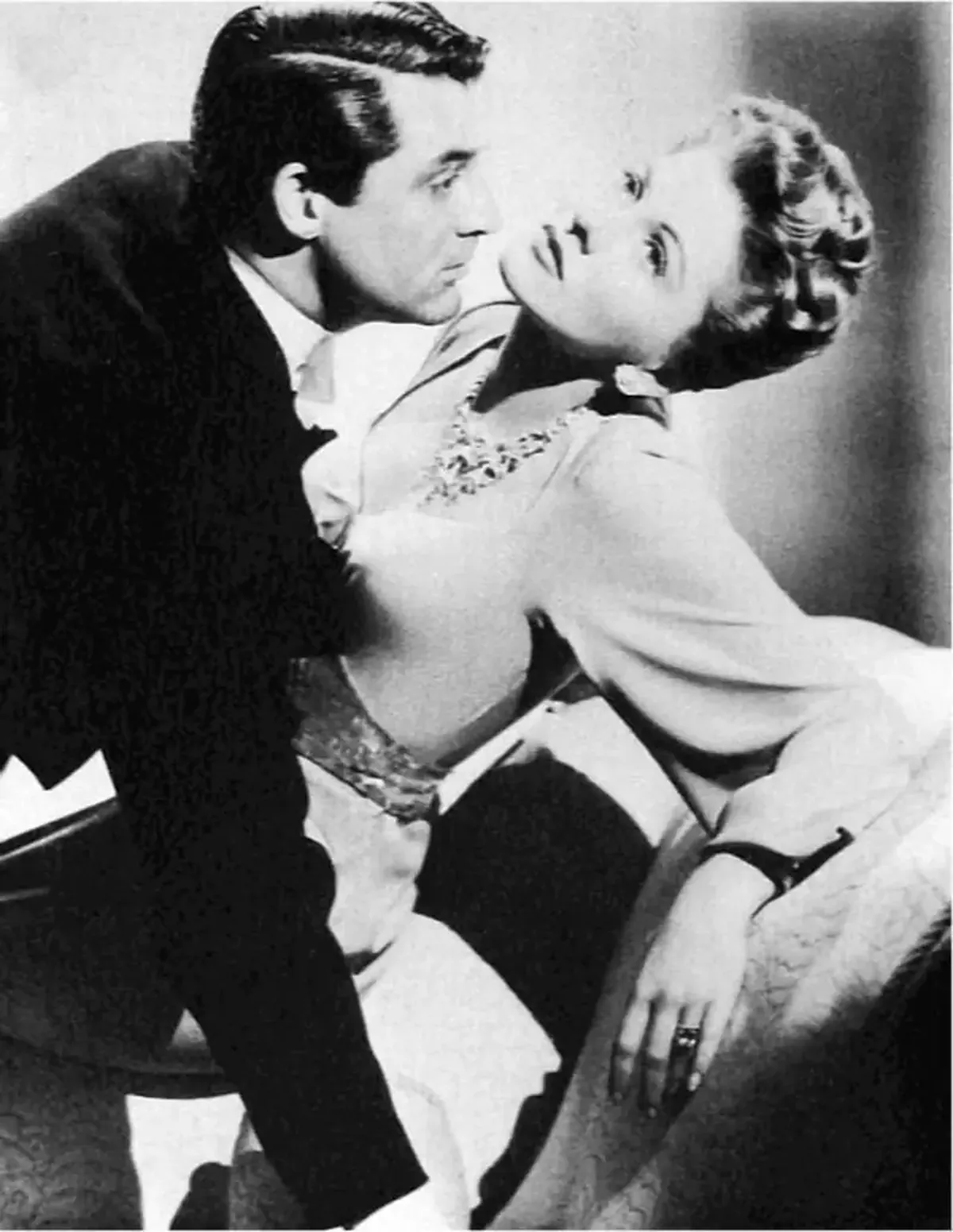
Cary Grant and Joan Fontaine in “Suspicion” (1941)
By the 1960s, at the peak of his career, Hitchcock had become both a theorist and a practitioner of cinematic paranoia. He extracted personal fear incrementally and turned it into movies. Each film marked a milestone in screen art.
“The 39 Steps” (1935) is still a benchmark for the comic thriller. His first American film, “Rebecca” (1940), won an Academy Award. After “Psycho” (1960) he became recognized as a master of cinematic horror. He shot “Psycho” with television-style techniques on a modest budget—about $807,000—and many predicted it would fail because of its then-unconventional material. Those predictions were wrong: the film grossed roughly $32 million, far surpassing its budget, and turned Hitchcock into a Hollywood millionaire.
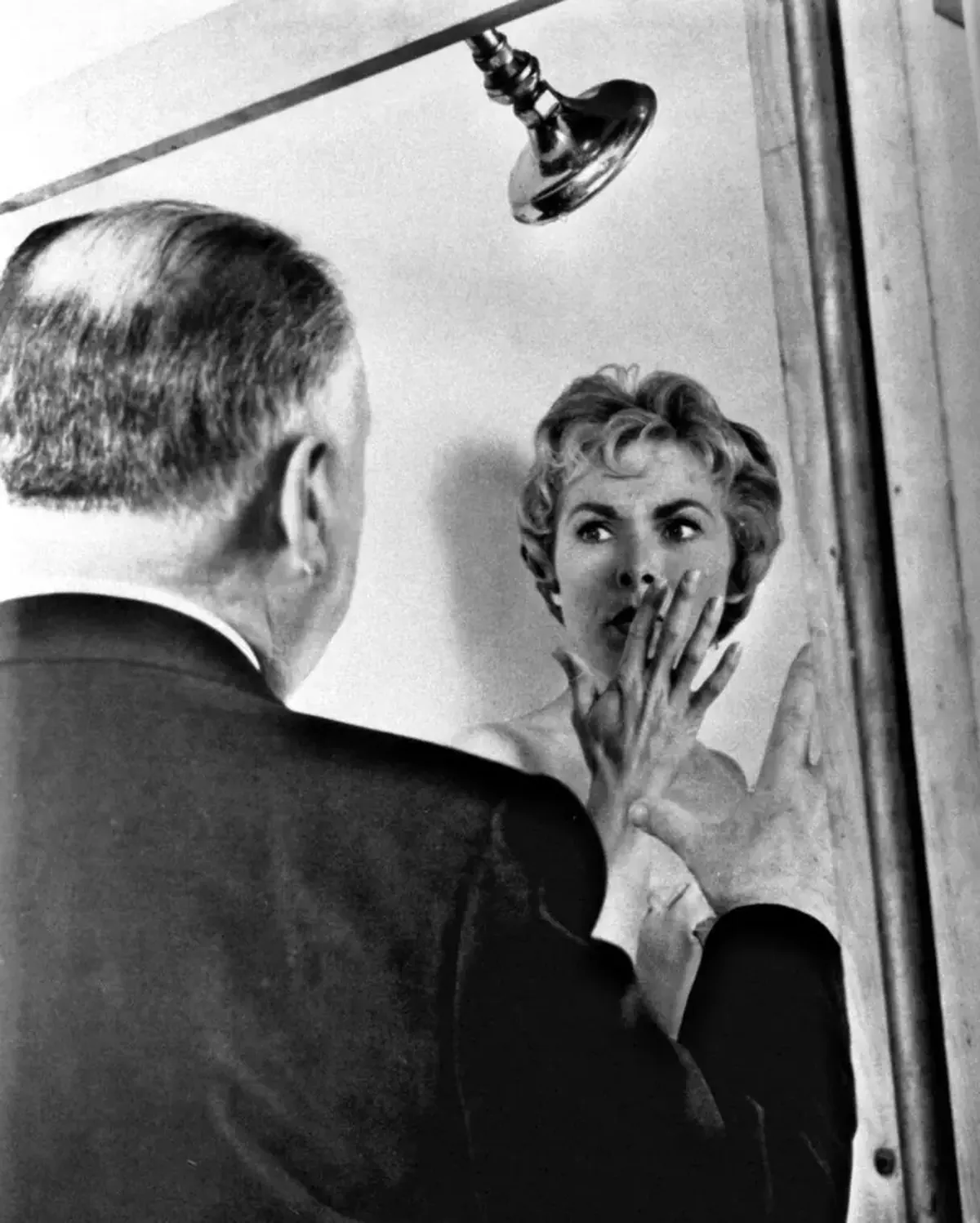
Hitchcock during the filming of the legendary shower scene. “Psycho” (1960)
“The Birds” was made for about $3.3 million and earned more than three times that amount. Like “Psycho,” it forces viewers to stare into the unknown and confront the sudden, unavoidable arrival of tragedy.
He lived through most of the 20th century and died in 1980, leaving behind a body of work that testifies to his fascination with life. Fear of death, it seems, was simply the flip side of a deep love of life.
After Hitchcock, the film landscape filled with cheap parodies of thrillers—low-quality, morbid products churned out by B-movie studios.
Ignoring those imitators, we return to Hitchcock. His films help us confront and defang our anxieties; over time they stop feeling frightening. After all, you can’t be afraid of something you recognize as true cinema.

A mural on the building that stands where Alfred Hitchcock was born.
Selected Filmography: “The Pleasure Garden” (1925), “The Man Who Knew Too Much” (1934), “Young and Innocent” (1937), “The Lady Vanishes” (1938), “Foreign Correspondent” (1940), “Saboteur” (1942), “Suspicion” (1946), “The Paradine Case” (1947), “Rope” (1948), “Stage Fright” (1950), “Strangers on a Train” (1951), “Rear Window” (1954), “To Catch a Thief” (1955), “Vertigo” (1958), “Psycho” (1960), “The Birds” (1963), “Marnie” (1964), “Torn Curtain” (1966), “Topaz” (1969), “Family Plot” (1976).
