
 Gaby
Gaby
A new study suggests climate change helped our ancient ancestors evolve larger brains. Ice Age hardships tested early humans’ ingenuity and sped up natural selection. The study suggests cold temperatures encouraged parental cooperation and improved early language skills.
Climate Change Challenges Accelerated Human Brain Evolution
Researchers found evidence of increased brain size in ancient hominins (our ancestors) that corresponded with glacial phases more than 600,000 years ago. The team developed a computer simulation to show how new mating habits and the parental cooperation required to survive the inhospitable Ice Age sped up brain evolution.
The simulation indicated that hominins chose partners based on the growing importance of needs such as fire, food, and shelter for surviving the deadly cold. Those mating habits, known as “positive assortative mating,” may have helped develop key abilities like language and fire-making. The study also suggests that greater ingenuity and a willingness to cooperate among parents helped ancestors avoid deaths from cold exposure, including hypothermia.
Sexual Selection Played a Role in Human Evolution
Bruce Petersen, the study’s lead author and an economist, says climate change — and especially glacial phases — has long been considered a major driver of hominin evolution.
Charles Darwin was one of the first to emphasize sexual selection in hominin evolution. For more than a century his ideas were largely ignored. In essence, the Ice Age improved the odds for parents who were smart, got along with each other, and could effectively teach their children.

Charles Darwin
Petersen used anthropological and climate data to build the simulation. He found that periods of major climate change — starting with the glacial freeze 676,000 to 621,000 years ago — led to greater sexual selectivity. That’s when positive assortative mating emerged.
Petersen says this meant partners became less specialized, because compatibility mattered only when they cooperated. He adds that an effective mating system became even more crucial as dependence on offspring increased during the harsh glacial phases.
The models tested three types of early humans against each other: the smartest but physically weak; an intermediate group; and the strongest but least intelligent. The models showed that pairs from the smartest group not only produced the fittest offspring but were often the only pairs with enough surviving children to pass on their genes during the glacial freeze.
An Economic Approach to Evolutionary Theory
Petersen says the huge advantages of language and fire would have created strong selective pressure. Using economic models, he describes them as “home-produced family public goods” — things like fire, language, shelter, and child-rearing that families must produce.
The Daily Mail reports the study also suggests survival pressures from climate change could have driven physical changes in height, weight, and strength, reducing sexual dimorphism, or differences between male and female bodies. The study’s authors say family economics, particularly assortative mating, could help future studies of sexual dimorphism in other early human ancestors.
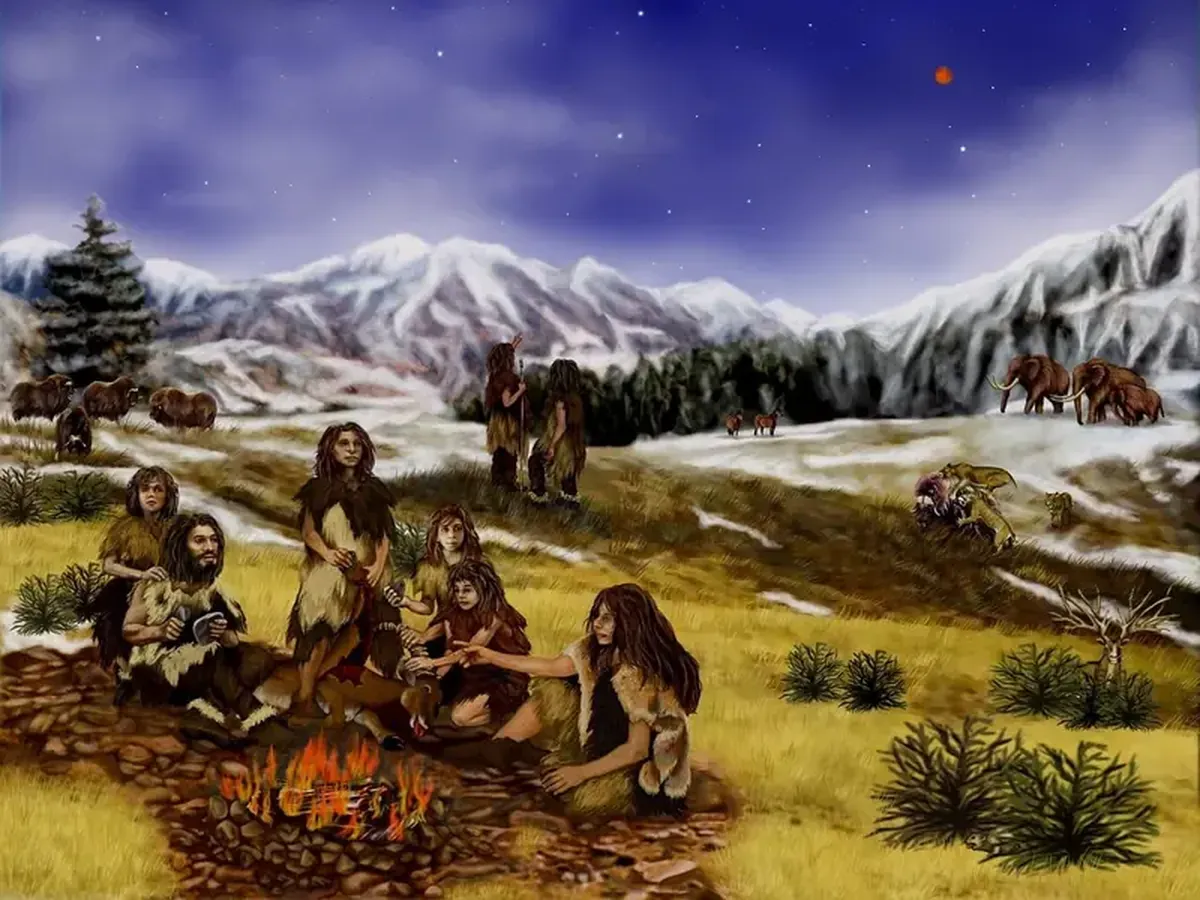
Petersen argues that the extraordinary challenges of the Ice Age are a clear example of how “positive” natural selection — the choice of shared parenting — had a bigger impact on human evolution than “negative” natural selection through deaths and competition.
He says the study applies basic economic principles that are rarely used to explain human evolution. Petersen suggests sexual selection and parental cooperation, combined with severe glacial phases, helped boost hominin intelligence during the Middle Pleistocene.
