
 Gaby
Gaby
The man we call Confucius was born Kong Qiu; his students called him Kongzi or Kong Fuzi—”Master Kong.” By age 22 he had already made a name for himself as a teacher, running his own private school. He helped systematize historical records, founded an early model of higher learning, and left a guide for living in harmony and pursuit of happiness. His moral and ethical system had such a deep social impact that his ideas are often treated like a religion. What began as one intellectual current during the Warring States period eventually evolved into Confucianism and became the state ideology across China and much of East Asia. Who was the man who set the standards for officials, warriors, peasants, and princes?
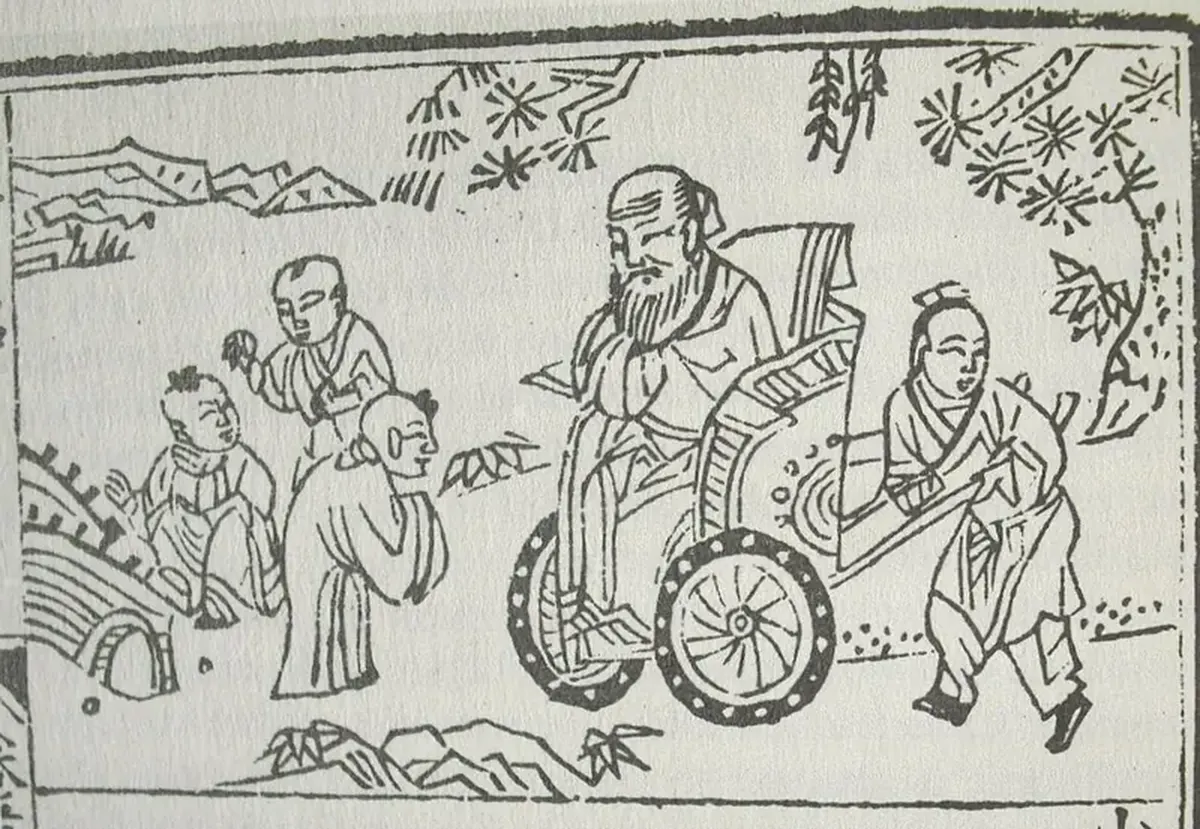
“Confucius and the Children” — an illustration from a children’s reading book (1680)
Biography of Confucius
Confucius was born on September 28, 551 B.C.E. His mother was a 17-year-old concubine and his father a 63-year-old military officer from a declining aristocratic family. From his father’s two older wives, the family already included several daughters and a disabled son. The father died soon after Confucius was born: some accounts say the philosopher was three years old, others say he was only one and a half. Raised by his mother in poverty, he was taught to keep his dignity and a sense of noble lineage. From childhood he pursued self-education to find his place in life. His first job was managing the granary and overseeing pastures and livestock.
At 17, Confucius lost his mother. By 19 he was married, and by 20 he had a son (a daughter came later). Early fatherhood may have pushed the young man—who never knew his own father—toward a life in education. In his own school he taught literature, language, morality, and politics, and his students came from all social backgrounds.
Later, Confucius worked as an assistant in the public works department, and in 567 B.C.E. he accompanied the ruler of the Lu state, Duke Ding, to peace negotiations with the state of Qi. At about age 50 he became chief advisor to the Ji clan in Lu, in eastern China, and he served the duke for four years. At 52 he took on the role of sikou—often translated as minister of justice—and during that time he ordered the execution of a popular leader and orator, Shaozheng Mao, in Lu.
In the ruins of a patriarchal society, the king’s power had become largely nominal, and officials who gathered around regional rulers filled the void left by noble families. These were years of broken institutions, internal conflicts, greed among officials, and suffering for ordinary people. Confucius’s career in public service was difficult, and disagreements over state policy forced him to resign. After leaving office—by then having lost his wife and son—he traveled the country with his students for 13 years. He visited many provinces, studied their histories through records, and spread his ideas about just organization of life.

Confucius’s Cave on Ni Hill
The most pressing issues of his time were political stability, effective governance, and the struggle for state power—concerns that feel familiar to modern societies. The model of relationships and governance Confucius promoted treated the state like a family, with political power analogous to the authority of a household head: “A father should be a father, a son a son, a minister a minister, and a ruler a ruler.”
In later years he returned to Lu to teach. He summarized his life with a famous self-assessment: “At 15 I set my heart on learning; at 30 I established myself; at 40 I had no doubts; at 50 I knew the will of Heaven; at 60 I knew what was ordained by Heaven; at 70 I could follow my heart’s desire without overstepping the line.” In his spiritual testament he emphasized respect for the collective experience of the past and urged that people versed in traditional moral norms take part in solving present problems. He presented his ideas to more than 70 rulers but could not fully put his philosophy into practice.

Philosophy of Confucius
Confucius is associated with the Spring and Autumn Annals (Chunqiu, 722–481 B.C.E.), and his students later compiled his sayings into the Analects (Lunyu). Confucius had about 3,000 followers—only 26 of whom are known by name—and because of the centuries-long influence of his teachings he is often called “the teacher of ten thousand generations.” Confucianism rests on humanity’s search for harmony and happiness. Its ideal is a society in which everyone fulfills their role and relationships are ordered by loyalty and respect for elders and leaders. The central moral rule is: “Do not do to others what you would not want done to yourself.”
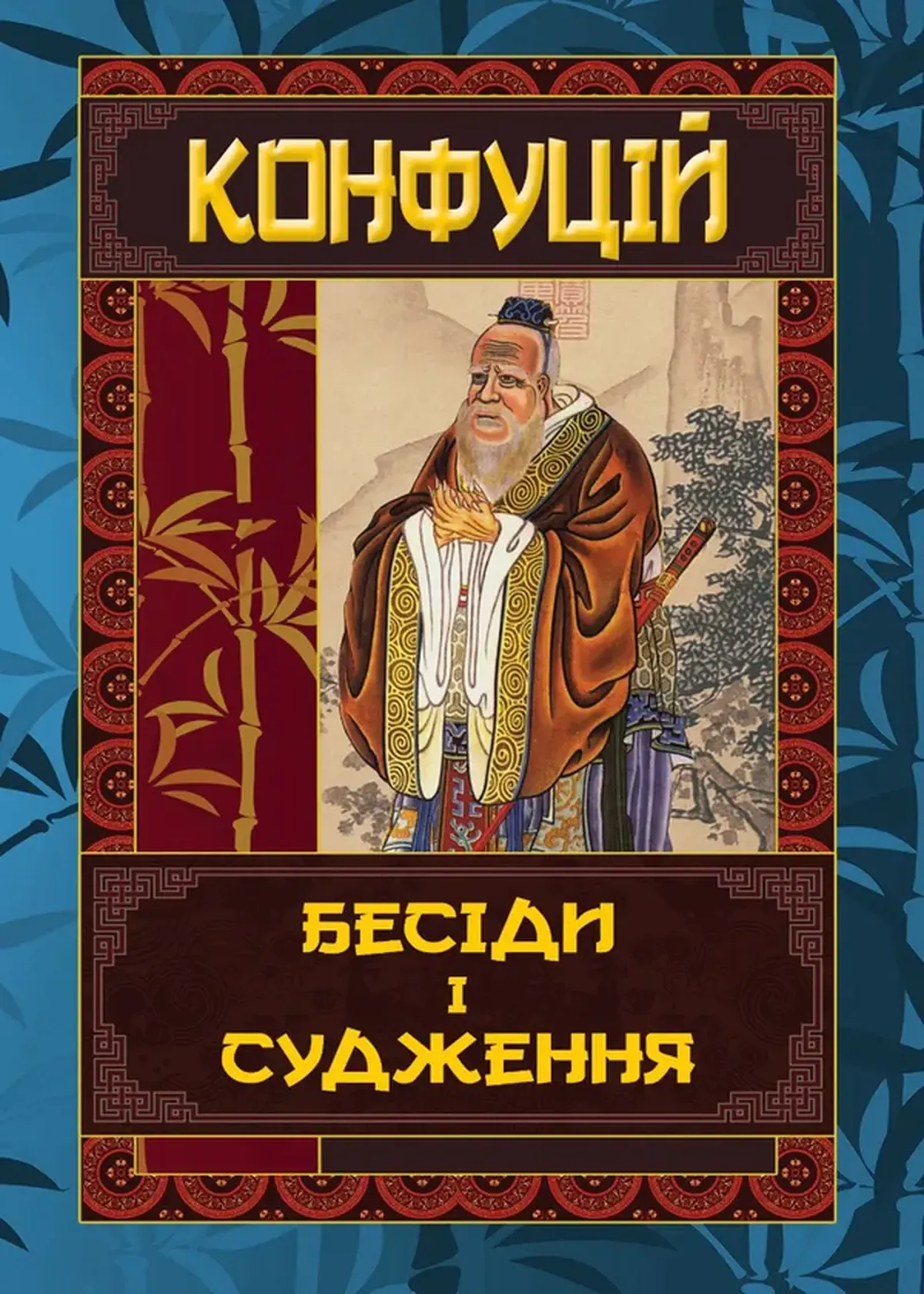
Confucius’s teachings are not a religious system—organized religion and theology did not interest him—though his philosophy is sometimes treated like a religion. He described a set of moral qualities for a righteous person: ren—humaneness, compassion, love for others (linked to Wood); yi—righteousness and justice (Metal); li—etiquette, rituals, and customs (Fire); zhi—wisdom and discernment (Water); xin—integrity and sincerity (Earth); and wen—cultivation, education, and culture (associated with literary refinement).
How do the qualities of a righteous person relate to a prosperous society? Confucius answered: “Your honesty, diligence, kindness, courtesy, generosity, and politeness will prevent you from offending anyone. Such a person attracts others, earns their trust, achieves success, and benefits society.” He also said: “Do not be upset that you do not hold a high position; be concerned if your abilities do not match your position,” and “Do not worry that you lack fame: people will learn about you when you improve your abilities.”
Confucius introduced the concept of junzi, the “noble person”: “A noble person sets standards for themselves, while a low person sets standards for others,” and “A noble person seeks truth, while a low person seeks profit.” The junzi is an ideal to strive for. By contrast, xiaoren—literally the “small person” or “low person”—acts only for personal gain and forgets gratitude after receiving favors. The model person is honest and resilient, and therefore easy to follow: just and reasonable, they do not demand the impossible.

Confucius and his Students (engraving from the Ming Dynasty)
Regardless of background, the junzi upholds moral values, fulfills duties, and serves society. “Anyone can become noble; they just need to dare,” Confucius said, stressing the role of education and upbringing. A noble person values others not for the services they provide but for their selfless service to the Great Way—a key Confucian concept often interpreted as destiny.
Confucius believed that nothing is more natural than the righteous Way and that walking it is not difficult: “The true path in life is determined by human nature and shown in well-ordered relationships between people.” His writings offer a layered view of how people find purpose: “Three ways lead to knowledge: imitation is the easiest, reflection is the noblest, experience is the bitterest.” In his words, “A person makes their path great, not the path that makes a person great.”

The Tomb of Confucius in Qufu
Aphorisms of Confucius
- In a well-ordered country, be bold in speech and action. In a country without order, be cautious in speech and bold in action.
- Before seeking revenge, dig two graves.
- If you hate, you will have been defeated.
- Impatience over small things can ruin a great undertaking.
- Do not instruct everyone who displays ignorance, only those who seek knowledge.
- We accept advice drop by drop, yet we dispense it by the bucketful.
- Just as a precious stone cannot be polished without friction, a person cannot succeed without effort.
- Happiness is being understood; great happiness is being loved; true happiness is loving.
- Life is simple, but we insist on complicating it.
- Three things cannot be taken back: time, words, and opportunities. Do not waste time, choose your words wisely, and do not miss opportunities.
- Choose a job you love, and you will never have to work a day in your life.
- Be kinder, and you will find you cannot commit a bad deed.
- In the past, people learned to improve themselves. Nowadays, they learn to impress others.
- When misfortune arrives, a person has given birth to it; when happiness arrives, a person has nurtured it.
- A noble person is free in spirit, while a low person is always troubled.
- You can curse the darkness your whole life, or you can light a small candle.
- I do not get upset if people do not understand me, but I feel sad when I do not understand people.
