
 Gaby
Gaby
For a third of his life, the notorious French aristocrat and free thinker—who escaped the guillotine twice—spent his days in prisons and asylums. A rebel and provocateur, regarded as an anti-humanist of the Enlightenment, he rejected the moral, religious, and legal limits placed on human freedom. He denied reason’s supremacy over feeling and left a legacy so extreme that a disturbing behavioral phenomenon now bears his name. Today, the country that once banned the controversial writer and politician’s books has spent an unprecedented sum to acquire his works, which are now treated as a national treasure.

Noble Roots
A representative of the third generation of marquises, Donatien Alphonse François de Sade was born on June 2, 1740, in a Parisian château; by birth he belonged to the so-called “nobility of the sword,” where titles passed from father to son.
The family’s first aristocrat was his grandfather, from whom the boy’s father inherited noble status – Jean-Baptiste Joseph François, Count de Sade, a hereditary viceroy in four provinces and an envoy at the court of the Elector of Cologne.
Donatien’s mother, Marie-Éléonore de Maillé-Brézé de Carman, served as a lady-in-waiting to the Princess of Condé. Family lore traced the dynasty back to Laura de Noves, known to history as the muse and beloved of the poet Francesco Petrarch.
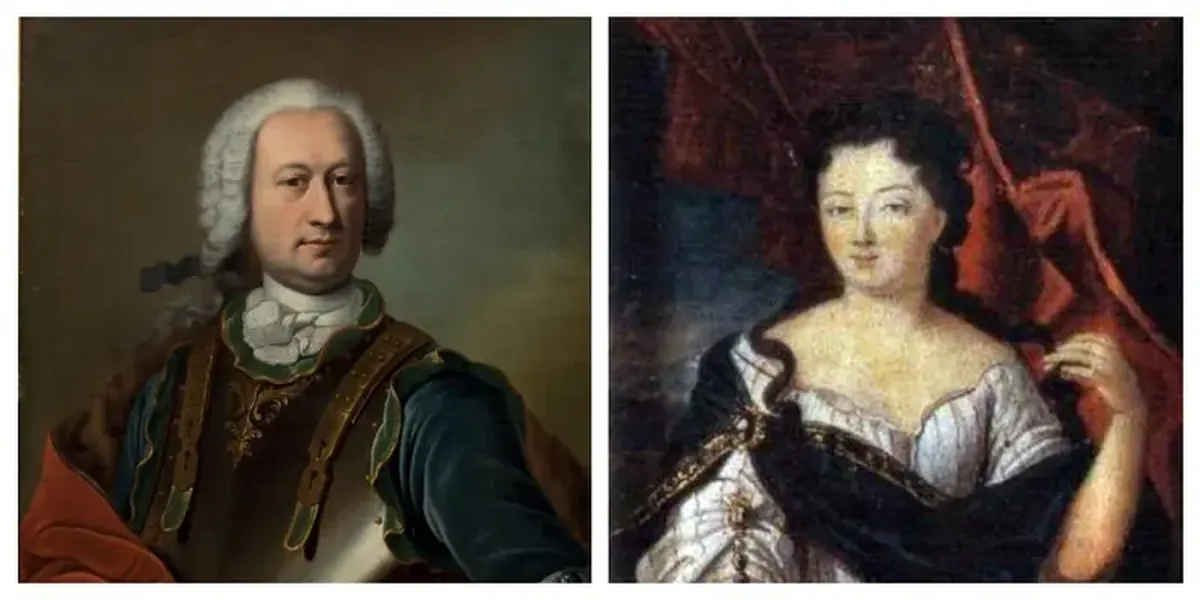
The parents of the Marquis de Sade
Those were the glittering credentials of a man who would end his far-from-pious life in the Charenton psychiatric hospital. Many unpredictable events would unfold before December 2, 1814, including a shift in the social order and de Sade’s renunciation of noble status during the French Revolution.
The Taste of Pain
What led to the “exile” of young Donatien from the family palace may never be known. His biography mentions a childhood fight with a friend, the young heir to the Condé title; after that incident, the five-year-old was sent by his parents to live with relatives in Provence.
From 1745 his parents left the boy in the care of his uncle, the Abbé d’Èbre-de-Sade. Donatien felt most at home in the large cellar of his uncle’s ancient castle, where he liked to spend time alone. For the next five years, his mother’s presence was effectively replaced by a new acquaintance, Madame de Saint-Germain.
By the time he attended the Collège d’Arcueil in Paris, Donatien had not returned to his family home. After his parents’ separation and his mother’s move to her family estate, the Jesuit student lived in the apartment of his tutor, Jacques Abbe, who later became his steward.
Eager for a military career, the 14-year-old joined a cavalry school, became a second lieutenant in the royal infantry regiment within a year, a cornet in the carabiniers at 16, and a captain of the regiment at 19. After showing bravery on the battlefields of the Seven Years’ War, the cavalryman left military service at 23 (though not permanently) and discovered the pleasures of high society in the capital.

New Experiences
From 1763 the young retiree set his sights on the daughter of the president of France’s tax chamber. Instead of the younger sister, his father married him off to the older one. With royal blessing, Donatien de Sade married Renée-Pélagie Cordier de Montre in 1763.
Six months later he found himself at a brothel, embroiled in a scandal and punished for inappropriate behavior. The guest of the establishment served his first two-week imprisonment. That was the beginning of many such incarcerations, and his pursuit of pleasure through pain and humiliation would later lend its name to “sadism.”
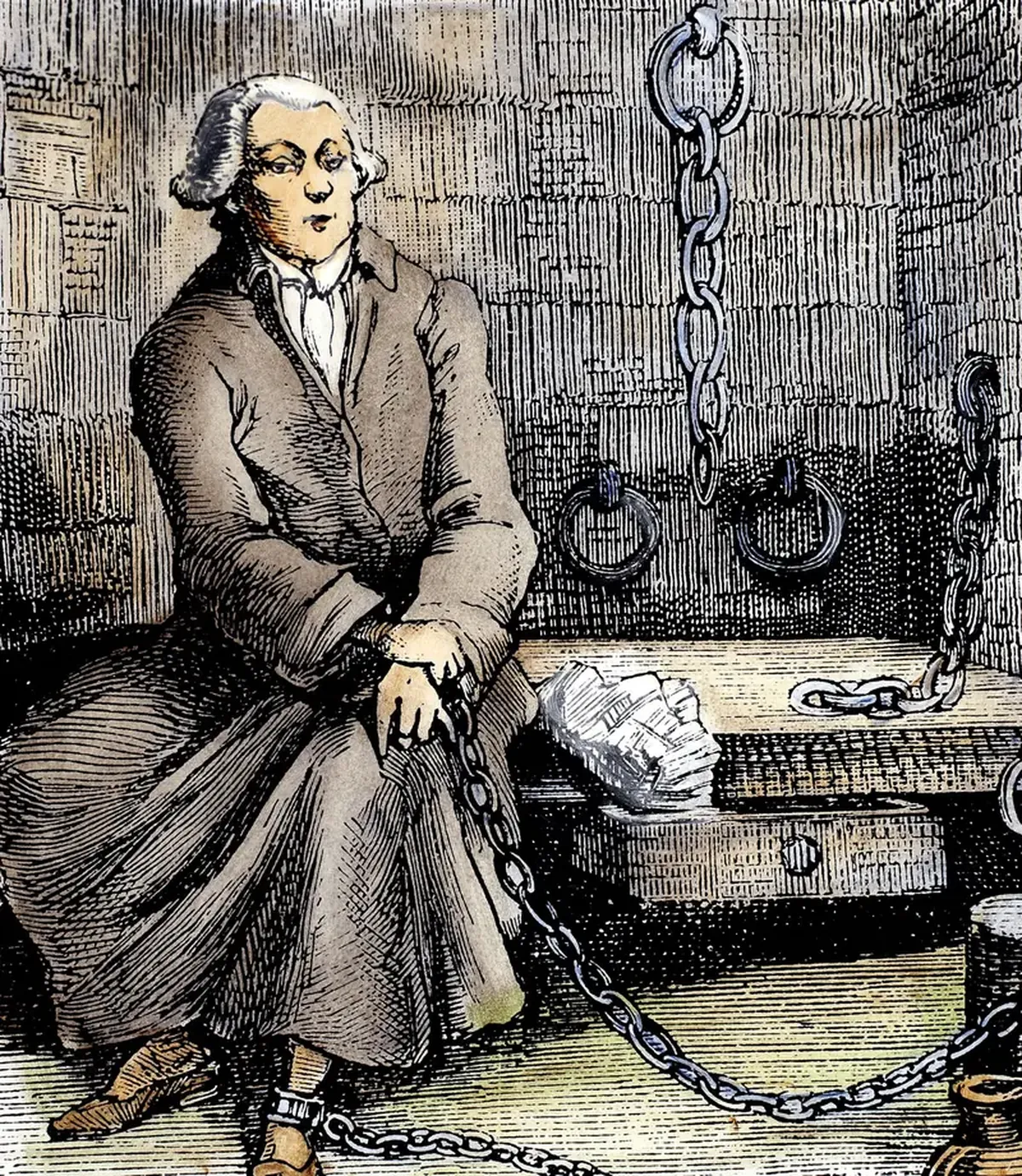
Overall, a man whose guiding principle was to push the limits of lust spent more than thirty years in custody: specifically, about ten years in the Bastille and thirteen years in asylums. Most of his literary output, both pornographic and philosophical, was written during those periods of confinement.
Besides his adventures and immoral experiments, Donatien de Sade also handled ordinary affairs. His career advanced after his father’s death, when he assumed his father’s position in 1764. Around the same time he became a father himself: his wife gave birth to their first child. That did little to stabilize their marriage.
To Love or to Fight
“Accept me with my flaws, for I will not change,” he told his unfortunate wife—and he kept his word. A Burgundy inspector, Marais, warned in a report that one should expect new “horrific deeds” after de Sade attempted to seduce an opera singer with offers of support. The singer refused, but a scandal followed.
In 1768 de Sade was convicted of raping another Frenchwoman. After time in custody and transfers between three prisons, the marquis was released by royal decree after paying a fine of 100 louis d’or. Free from prosecution, the 30-year-old resumed military service and was promoted to colonel of cavalry the next year.
In 1772 the “Marseille Affair” erupted: a raid on his Provençal château of Lacoste, accusations of sodomy, and the arrest of two participants in the orgy – de Sade and his servant. Several women who took part complained to police that they had been poisoned by so-called “stimulation candies,” and the accused were condemned to death for deliberately harming their victims’ health.

An engraving depicting de Sade’s amusements
The libertines avoided execution only because they fled. The court had ordered de Sade beheaded and his servant hanged; in their absence, executioners burned effigies in the square. The fugitives fled into the Alps, and de Sade soon began an affair with his wife’s sister.
The School of Debauchery
News of the forbidden romance prompted de Sade’s mother-in-law to seek a Lettre de cachet for him – an extrajudicial royal order that allowed detention without trial. The marquis and his servant were arrested in Chambéry, the Savoy capital, and imprisoned in a fortress; they escaped five months later with the help of the marquis’s legal wife.
For the next year Donatien kept a low profile at the family estate in Lacoste, trying not to draw attention for fear of another arrest. But his patience didn’t last. After his wife’s secret departure, he abducted three local girls for sexual purposes. The disappearances were quickly reported, and he was accused of attempting to seduce them.
Not waiting for another arrest, the Marquis de Sade fled to Italy, where he spent a turbulent period studying occult topics. Returning to Lacoste in 1776, he hired young girls as servants; most fled his household quickly. Only Catherine Tréille, whom he called Justine, stayed. Her father publicly demanded her release and even fired a shot at her tormentor.
Before his next imprisonment, de Sade visited his dying mother, accompanied by his wife. The woman who had failed to give love to her prematurely separated son spent her last days alone. Donatien’s life then continued in the same pattern: accusations followed by prisons, again and again.

The Marquise and Marquis de Sade
The Misfortune of Virtue
In 1781 the imprisoned Marquis de Sade was finally allowed to see Madame de Sade, but the visit ended in jealousy and aggression on his part. That pattern repeated until the visits stopped. Exhausted by the toxic relationship, his wife took vows as a nun and prayed at the convent for the salvation of the soul of the incorrigible sinner.
In 1785 the Bastille prisoner began writing his most notorious work, “120 Days of Sodom,” finishing it in just 37 days. He wrote it on a long roll of paper hidden in his cell, as he did his later works: the 1787 novella “Justine, or The Misfortunes of Virtue” and the 1788 short story “Eugénie de Franval.” When popular unrest swept France in 1789, the Marquis de Sade shouted from his cell window for the release of prisoners, accusing jailers of tormenting inmates. He was punished for the outburst by being transferred to an asylum, and the manuscripts left in prison were taken by guards and a crowd of revolutionaries during the storming of the Bastille.

The lifetime edition of the novel “Justine, or The Misfortunes of Virtue,” 1791
In 1790 Madame de Sade divorced her husband, who, under the name Louis Sade, converted to Protestantism. His later lovers included President de Flerier and the young actress Marie Constance Renel, who stayed with the mentally ill marquis until his death. The Revolution led to the dropping of some charges against de Sade and opened a new chapter in his life.
Another Reality
In 1791 de Sade published “Justine, or The Misfortunes of Virtue.” That year his first play, “The Count Oxtiern, or The Consequences of Debauchery,” was staged in Paris, and the Comédie-Française invited him to present his play “Jean Lene, or The Siege of Beauvais.” His books provoked society, and the 1792 production of the comedy “The Seducer” was jeered by the Jacobins.
After the proclamation of the First Republic, Donatien de Sade was named commissioner of cavalry, even as his ancestral estate was looted. In 1793 the revolutionary government overthrew the monarchy and executed King Louis XVI; de Sade served as a juror on the revolutionary tribunal and used his position to secure the acquittal of relatives who might otherwise have faced persecution. Despite that, he did not escape repression under the new regime.
The Paris police ordered his arrest, and he was taken from his home to prison. The revolutionary tribunal again sentenced him to death, but the sentence was not carried out because the Thermidorian reaction followed soon after. De Sade survived those upheavals. At the start of 1800 he was granted citizenship, but facing the threat of arrest over debts he chose to hide from persecution in a hospital.

In 1801 the writer was arrested for his pornographic works. In prison he was accused of corrupting fellow inmates, transferred to another correctional facility, and then sent back to be treated for his mental illness. The 74-year-old libertine died in the asylum of an asthma attack. In 2021 France purchased the original manuscript of the Marquis de Sade’s “120 Days of Sodom” for 4.55 million euros.
Read the story of another extraordinary historical figure whose name has become synonymous with the archetype of the lover-hero in our article about Giacomo Casanova.
