
 Carlos Solis
Crab sticks are a popular imitation of crab meat made from surimi (fish paste). The fake crab is easy for the body to digest. But it also has contraindications and red flags in its ingredients, so aim for products with natural components. Why don’t crab sticks contain any crab, and what does a high-quality imitation of crab meat look like?
“Washed” fish paste: what crab sticks are actually made of
By shape and color, the imitation product resembles the meat of a crab claw, but that impression is misleading. If you look closely at what crab sticks are actually made of, you’ll find they don’t contain crab meat at all despite the name, although they do include processed fish protein. In the best case, the product is made from ground white fish fillet, or surimi. Surimi literally means “washed chopped fish” in Japanese. The Japanese company Sugiyo introduced the culinary novelty called kanikama in 1973. But the raw material itself wasn’t a technological breakthrough — Japanese cooks have been “washing” fish paste for almost a thousand years.
An archaic recipe for washed chopped fish similar to modern surimi was known in Japan long before 1115. By the 14th century, dishes made from washed paste of white cod-family fish were already common across Japan. The exact origin of the popular fisherfolk dish remains unclear. Given the circumstances under which surimi was probably first created, it’s reasonable to assume people sometimes washed the ground fish mass many times in fresh water and then squeezed it well — for example, to salvage accidentally soiled raw material. In the end, that washed paste produced culinary items with unexpectedly pleasant flavors.

An optical illusion: why crab sticks contain no crab
Those early surimi balls differed from ordinary fish cutlets by their unusual whiteness, firm even texture, and lack of a fishy oil smell. The absence of that odor proved especially valuable in Japan because fish was one of the primary protein sources. Surimi took on a role in local cuisine almost as important as rice: both products let cooks vary flavor with spices or vegetable add-ins. Steamed surimi sausages took local names like kamaboko and narutomaki. Japan even celebrates a kamaboko festival every November 15.
A barrier to mass industrial production of surimi products was the short shelf life of prepared paste, since freezing destroyed refined protein structures and formed ice crystals. Manufacturers solved that problem in 1959–1960 when they developed an “edible antifreeze” made from the sugar sucrose combined with the six-carbon alcohol sorbitol. Those components helped the fish mixture’s taste approximate crab meat. In the first crab sticks released in 1973, the maker Sugiyo even used an extruder to mimic crab muscle fibers, which strengthened the illusion of authenticity.
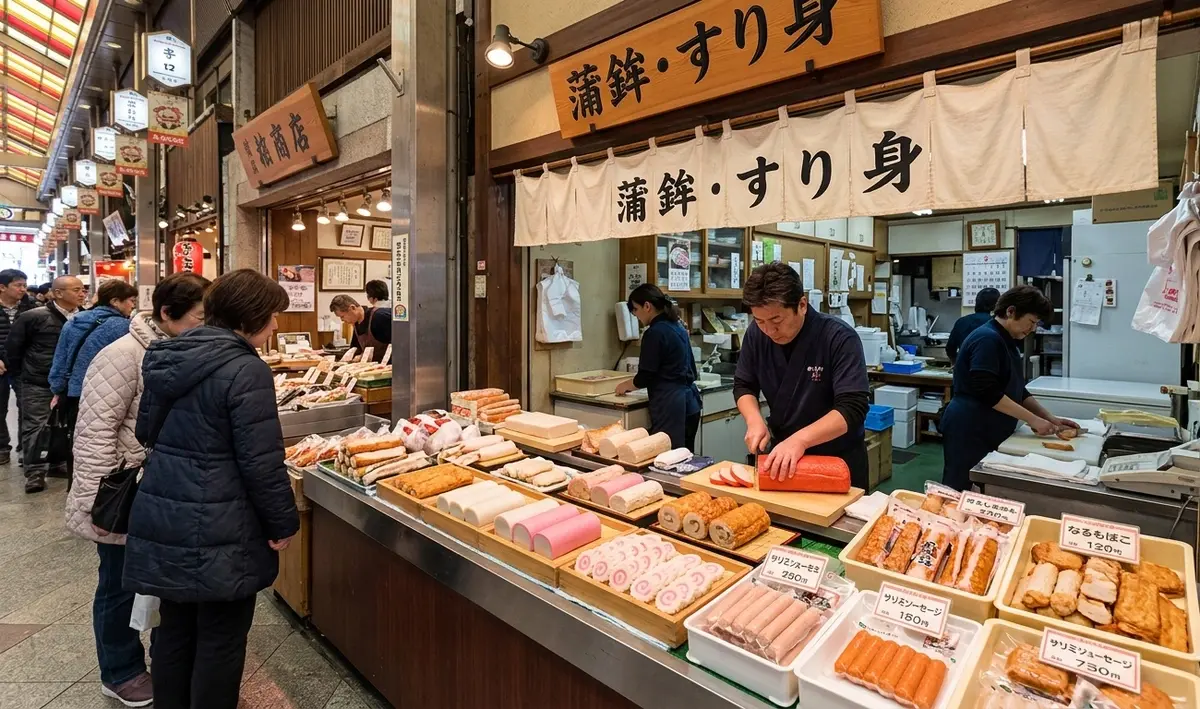
The “artificial crab”
Three years later, the product that now makes up about 10% of all kamaboko consumption in modern Japan was introduced to the international market. Culinary experts quickly embraced it, calling the crab flavor of surimi rolls quite harmonious. The resemblance of the “artificial crab” to pricey real crab meat gave concentrated, deodorized fish protein strong export potential and opened the door for crab sticks to go global. Different countries developed their own production methods and adjusted the recipe and component ratios as they saw fit. Since 1993, manufacturers have labeled the imitation product as “crab sticks, flavored.”
Producers flavor white-fish paste to mimic crab meat. Such products can contain flavor enhancers (notably monosodium glutamate), colorants (for example, E171, E160), and stabilizers, which makes them less diet-friendly than expected. Because of these additives, surimi-based fish products should be consumed with caution. Despite a protein base, tender texture, and mildly sweet taste, crab sticks — a convenient ingredient for quick dishes (used in salads, sauces, and appetizers) — shouldn’t be treated as everyday food. When buying, pay attention to the ingredient list because some products replace surimi with soy and egg protein, starch, and flavored additives.
How to choose crab sticks
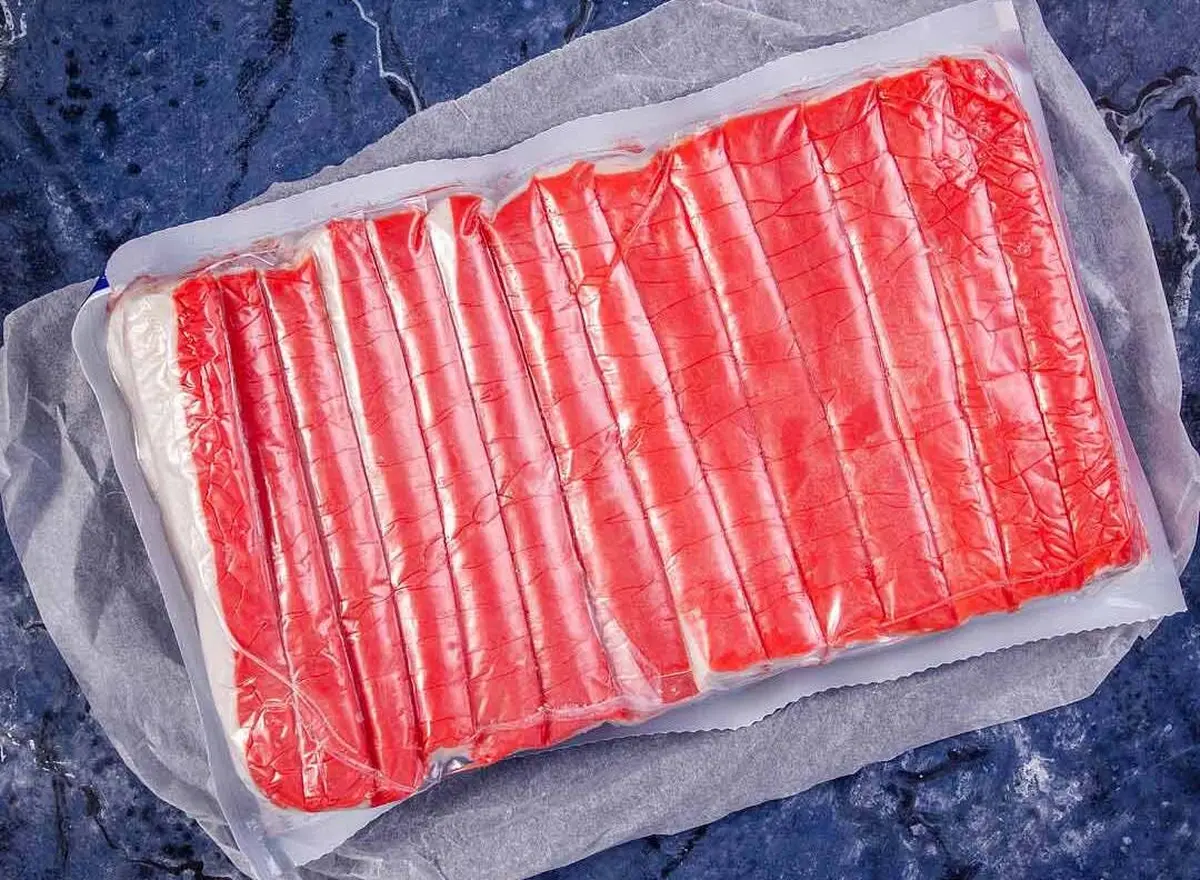
A quality product has an even color, a smooth surface without cracks, and contains at least 40% surimi — ground fillet of pollock, haddock, or hake from the northern Pacific. Premium crab sticks use binding ingredients like egg and starch (sometimes flour), natural colorants (for example, paprika or carmine from cochineal), and flavor extracted from lower-grade parts of crustaceans. In other cases, manufacturers use nature-identical flavor enhancers, aromatic blends, colorants, and thickeners. Prefer ingredients of natural origin whenever possible.
Avoid buying the product sold loose by weight, because in that case you won’t have complete information about ingredients or the manufacturer. Quality crab sticks come in factory packaging. The ingredient list should show mostly natural components.
To determine a crab stick’s composition, read the label:
- surimi (fish paste) — not soy or starch;
- natural vegetable oil;
- chicken egg protein;
- table salt;
- a little sugar and starch.
How do you read the composition if the manufacturer doesn’t state the amount of fish paste? Check how much protein is in 100 g on the package — if the protein content is high, the fish content is likely high as well.
Are crab sticks harmful or not?
When made to quality standards, the “artificial crab” is a useful and even diet-friendly high-protein product. Crab sticks have these characteristics:
- rectangular oblong shape, a faint seafood smell, slightly salty taste, and a “rubbery” texture;
- layers can be pulled apart, unwinding like string cheese;
- color: pink on one side and white on the other; very bright red coloring can indicate the use of artificial dyes;
- inside — white with a uniform structure and soft consistency;
- they should not be oversaturated with water; do not freeze them to avoid losing moisture.
The benefits and risks of crab sticks often come down to price. Crab sticks are a source of protein, an inexpensive substitute for real crab meat, and a cheap source of fish protein. By contrast, soy protein in the product can be problematic for people with certain chronic liver or kidney conditions.
Crab sticks have these contraindications:
- gastritis;
- individual intolerance;
- pregnancy and breastfeeding;
- children under three years old.
If there are no contraindications, the product was stored properly, the vacuum package is intact with a current production/sale date, and it was sold in a reputable store with reliable refrigeration, you shouldn’t expect harm from crab sticks made with natural ingredients.

Macros in crab sticks
Calories, protein, fat, and carbs (macros) are a way to track a product’s or a diet’s nutritional value. Typical macros in crab sticks per 100 g are: protein — 6–8 g; fat — 0.4–1.5 g; carbohydrates — 10–15 g (depending on starch and sugar content). Calories in 100 g of crab sticks are about 73–95 kcal (values vary by manufacturer). The low fat content makes crab sticks a diet-friendly choice because this low-calorie product consists mainly of fish protein. Although crab sticks typically contain more carbohydrates than protein, the body digests them quickly.
Low calorie content helps create the energy deficit needed for weight loss. But consult a doctor before starting any diet to avoid unwanted consequences and mistakes in building your menu. When using crab sticks for weight loss, consider that the calorie count of a salad with mayonnaise is much higher — about 142 kcal per 100 g. Because crab sticks often contain preservatives and flavor enhancers (monosodium glutamate), they add little nutritional value and can cause water retention. Eat crab sticks in small portions, preferably paired with vegetables. Moderate consumption of the “artificial crab” won’t pose a threat, but it won’t replace real crab.
Questions and answers about crab sticks
Why is pollock used in crab sticks?
Pollock has a neutral flavor and low cost, which makes it ideal for forming the texture of crab sticks. It’s the main ingredient in surimi (ground and repeatedly washed fillet of white ocean fish), but not the only one: hake, blue whiting, or whiting can also be part of the white elastic protein mass. In quality crab sticks, surimi makes up 30–50% of the raw mix; in cheap products it’s 10–20%, with the rest made up of fillers.
What natural colorants are used in crab sticks?
Manufacturers color crab sticks to imitate crab meat using paprika extract (E160c) for an orange tint, carmine (E120) for red, annatto (E160b) for a yellow-red shade, and less often turmeric. Low-quality products may contain synthetic additives that can cause allergies.
How many calories are in crab sticks?
Crab sticks are low-calorie: they typically contain about 95–105 kcal per 100 g. One piece weighing around 25–30 g contains just 18–25 kcal.
Are crab sticks helpful for weight loss?
You can include crab sticks in a weight-loss plan because of their low calorie content (around 90–100 kcal per 100 g) and low fat, but they contain a lot of carbohydrates and shouldn’t be treated as a daily dietary staple.
Can children and pregnant women eat crab sticks?
Pregnant women and children under three should not consume crab sticks because of the risk of allergic reactions to flavorings and the carmine colorant. After that age, children may eat small amounts of crab sticks made with natural ingredients.
Which crab sticks are safe for health?
Safe crab sticks do not contain colorant E-171, have a white interior and a springy texture, and list surimi fish paste first in the ingredients (at least 30–40%).
Can you eat crab sticks while dieting?
Yes, you can eat crab sticks while dieting, but limit them to 1–2 times a week. They are low-calorie but not a full substitute for natural fish due to lower protein content and the presence of additives.
How do I choose crab sticks in the store?
Avoid crumbly products with gray spots, excess starch, or labels that list fish only after water or soy. Quality crab sticks come in vacuum packaging, show a white interior (no gray spots), have a springy texture that doesn’t break when bent, and list surimi fish paste first in the ingredients (ideally over 40% fish content and a short ingredient list without excess starch or flavor enhancers).
