
 Gaby
Gaby
The nicknames tracked her life: “the Duchess” as a child, “Lady” as a young woman, “Her Royal Highness” in marriage, “the Princess of Wales” after her divorce, and after her death, “the People’s Princess.” She was the first daughter‑in‑law in the modern royal generation who had a work history before marriage, and she grew more popular than the heir to the throne. Her private struggles became public, and her tragic death amid conspiracy theories turned her into a martyr‑like figure—the mother of Princes William and Harry whose name is wrapped in myths and constant attempts to untangle them. So who was Diana Spencer really—the woman behind the legend?

Aristocratic Lineage
The first mismatch between myth and reality is the name “Princess Diana.” In the British royal system the title “Princess” before a given name is normally reserved for the daughters of the monarch—like Princess Anne. The daughter‑in‑law of a prince is styled “Diana, Princess of Wales” while married to the Prince of Wales. If Charles had not been the Prince of Wales, Diana would not have been called a princess in that way. The wife of a prince holds the rank of duchess.
“Duchess” was Diana Frances Spencer’s childhood nickname. She was the daughter of Viscount Althorp John Spencer and Frances Shand Kydd (later Roche); her family married at Westminster Abbey and moved in aristocratic circles.
Prince Charles would not have married a commoner—he came from a generation when a future wife’s noble status still mattered. A prospective royal bride was expected to be a hereditary aristocrat and without prior marital entanglements. Lady Diana Spencer met those requirements and even had royal blood in her family tree, albeit not always through formal marriages. The Spencer earldom dates to 1765, and Lady Georgiana Spencer later married the Duke of Devonshire, tying the family into the aristocratic web.
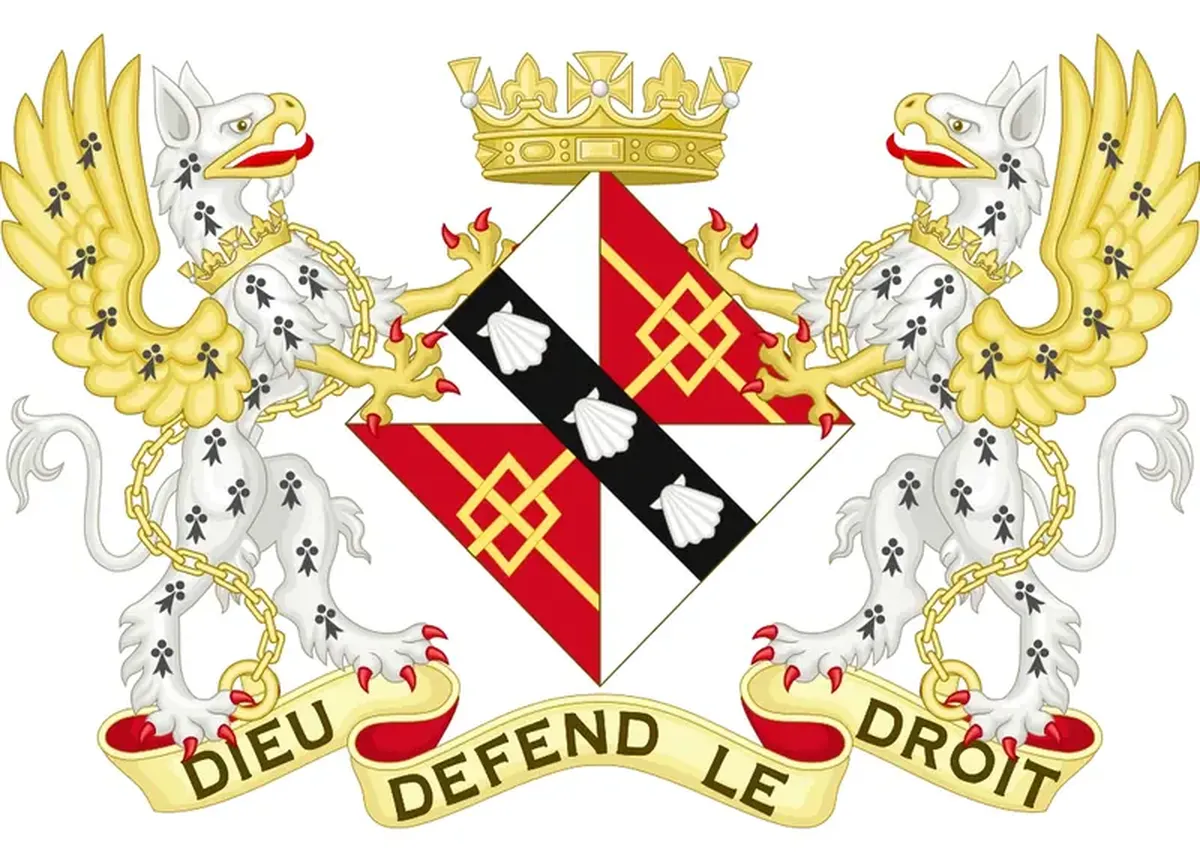
The Spencer Coat of Arms
Diana was distantly related to figures such as Winston Churchill and, through complex ancestry, to earlier monarchs: Mary Stuart appears among her forebears. The Spencers and the Windsors were neighbors, and Diana and Charles shared a remote kinship—both descended from daughters of Henry VII and were 16th cousins. Diana’s grandmothers, Countess Cynthia Spencer and Ruth, Baroness Fermoy, served as ladies‑in‑waiting to the Queen Mother, and Diana’s brother was a godson of Queen Elizabeth II. Historians point out that few families in the British aristocracy were as closely connected to the royal house as the Spencers. In other words, Diana was not an outsider to the court; she was an insider who was later presented to the world as a contrasting, populist figure.
Childhood Trauma
The fourth of five children, Diana was born on July 1, 1961, and remained unnamed for a week because her parents had expected a boy. She was given a double name—after her mother Frances and after an ancestor, Diana Spencer, Duchess of Bedford. She grew up with older sisters Sarah and Jane and a younger brother, Charles (the 9th Earl Spencer).
Diana spent much of her childhood on the Sandringham estate, living in Park House, a home rented from Queen Elizabeth II; she called the monarch “Auntie Lilibet.” The royal family sometimes holidayed with the Spencers, and Diana played with the Queen’s younger sons, Princes Andrew and Edward.
Her parents had lost a baby, John, a year before Diana’s birth. That loss so unsettled her father that he sent Diana’s mother to a clinic to investigate the family’s fertility problems. The strain led to quarrels and, eventually, divorce. Diana’s parents separated when she was seven; she lived with her mother in London, and in 1967 her father forbade Diana from returning to her mother’s home for Christmas. Two years later her mother remarried; her father, who had obtained custody of Diana with the support of his former mother‑in‑law Ruth Roche, remarried nine years after that. Diana’s relationship with her stepmother, Raine, Countess of Dartmouth, was difficult. Diana later described her childhood as unhappy and said she had no model of a stable family life—instead, she witnessed her father physically abusing her mother in front of the children.
Those early experiences left marks that affected Diana’s self‑image. Homeschooled until age nine by a governess, she then changed schools three times, including a period at a private boarding school. Her schoolwork was unremarkable: she failed exams twice and left school at 16 without a diploma. She was, however, active in community work and volunteer activities. Charles later described her as shy when they first met, but others recalled how she could charm people by lowering her eyes and tilting her head. At 5’10”, she couldn’t pursue ballet professionally, but she danced (including tap), swam, dove, and played the piano.

The Prospect of Marriage
“She was not shy; she was cautious and reserved with new people,” Diana’s brother later said, describing how she measured strangers before opening up. She met Prince Charles in the fall of 1977, when the prince—12 years her senior—had been dating Diana’s sister Sarah.
Before becoming his fiancée, Diana worked as a nanny in Hampshire and spent a term at the Institut Alpin Videmanette in Switzerland. Back in London she took accelerated cookery courses, taught dance, cleaned houses for extra money, worked as a waitress, and served as a nursery assistant. In 1979 her mother bought her an apartment, where she lived with three friends. In 1980 the future king noticed the attractive young woman as a potential bride.
Sarah later said she played matchmaker, remembering that she once introduced Charles to her sister. Before their engagement in 1981, Charles had seen Diana about a dozen times. It was Diana’s father who convinced Charles to propose at Windsor Castle; Prince Philip urged his son to accept his responsibility. The couple kept the engagement secret from close friends for another two weeks. After the announcement, Diana chose an 18‑carat white‑gold ring set with 14 diamonds surrounding a 12‑carat Ceylon sapphire, left her job, and moved into Buckingham Palace. Biographer Ingrid Seward later wrote that Diana felt very lonely there. She officially became the Princess of Wales on July 29, 1981—the day of her lavish wedding.

Her wedding was a global spectacle: St. Paul’s Cathedral filled 3,500 seats, 600,000 people lined London’s streets, and about 750 million viewers watched on television. The day had awkward moments. Diana, suffering from bulimia brought on by nerves, looked exhausted; her dress—originally worth £9,000 (roughly £36,700 in today’s money)—and an eight‑meter veil caused her to stumble. Nervousness led her to mix up the order of her husband’s names at the altar, calling him “Philip Charles Arthur George.” But the most discussed moment was Diana’s refusal to promise to obey her husband—she broke with tradition and set an example for later royal brides.
Was There Love?
People have long debated whether Charles ever truly loved Diana or whether his heart always belonged to Camilla Parker Bowles, to whom he was close before and during his marriage. Documentary makers behind “Diana: The Interview” argue that there was little real love on either side. The theory goes that Diana seriously considered calling off the wedding; her sister allegedly told her at the time, “It’s too late—your face is already on every towel!” In the film, astrologer Penny Thornton recounts Diana saying that her fiancé admitted before the wedding that he did not love her. Charles apparently intended honesty to avoid deception, but the admission broke Diana’s heart.
At the same time, former royal press secretary Dickie Arbiter remembered that immediately after the wedding the newlyweds seemed physically affectionate: “During one of their first official trips together, Charles constantly tried to touch Diana, and sometimes even managed to squeeze her.” Diana’s first pregnancy was announced on November 5, 1981. At twelve weeks she fell down a flight of stairs and later told people the fall was intentional—she had hurled herself down the stairs in a depressed state. The baby survived, but Diana suffered from postpartum depression after William’s birth.
Diana later said that her second pregnancy “brought her closer to her husband than ever before and never again.” The birth of Harry in 1984 disappointed Charles in ways that echoed Diana’s own father’s disappointment when she was born—he had wanted a boy, and Charles had hoped for a daughter. Charles also reportedly disliked Harry’s red hair. Diana, however, prioritized her maternal instincts over pleasing the palace: she dismissed a nanny and insisted on greater freedom for her sons than the royal norm.

Diana’s World—An Obsession
Diana personally chose schools for her children and drove them to lessons, arranging her schedule around their lives. From his teenage years William became his mother’s “trusted confidant” because he seemed mature beyond his years, while Diana treated Harry as the “rascal” she once had been.
Actress Cleo Rocos later described one of Diana’s misadventures in her book The Power of Positive Drinking. Biographers also recount a 1988 episode when Diana spent a day with Rocos, TV host Kenny Everett, and Freddie Mercury of Queen. The story goes that Diana insisted on visiting a London gay bar that night, disguised in a men’s army jacket, leather cap, and dark aviator sunglasses. She enjoyed the anonymity and later called it “the best night of freedom in her life,” even returning the borrowed outfit with a note saying, “We should do this again sometime.” Whether every detail is literally true, the story became a metaphor for Diana’s search for a family and a place where she would not be rejected. Her knack for shaping an image and prompting public sympathy for her unhappy life was a political skill—one that those close to her sometimes viewed as calculated.

When BBC journalist Martin Bashir recorded the interview that many say sped the end of the marriage, Diana’s confessions about infidelity, bulimia, and suicide attempts struck global audiences as raw honesty. Those closest to her had a different take: her brother said that “the truth was hard for his sister because she had a tendency to embellish everything she talked about.” Andrew Morton, who published Diana’s tapes and interviews, also wrote that he saw how convincingly she could shape the truth when it suited her. “People support me when they see my suffering,” the princess reportedly told him.
Betrayals and Affairs
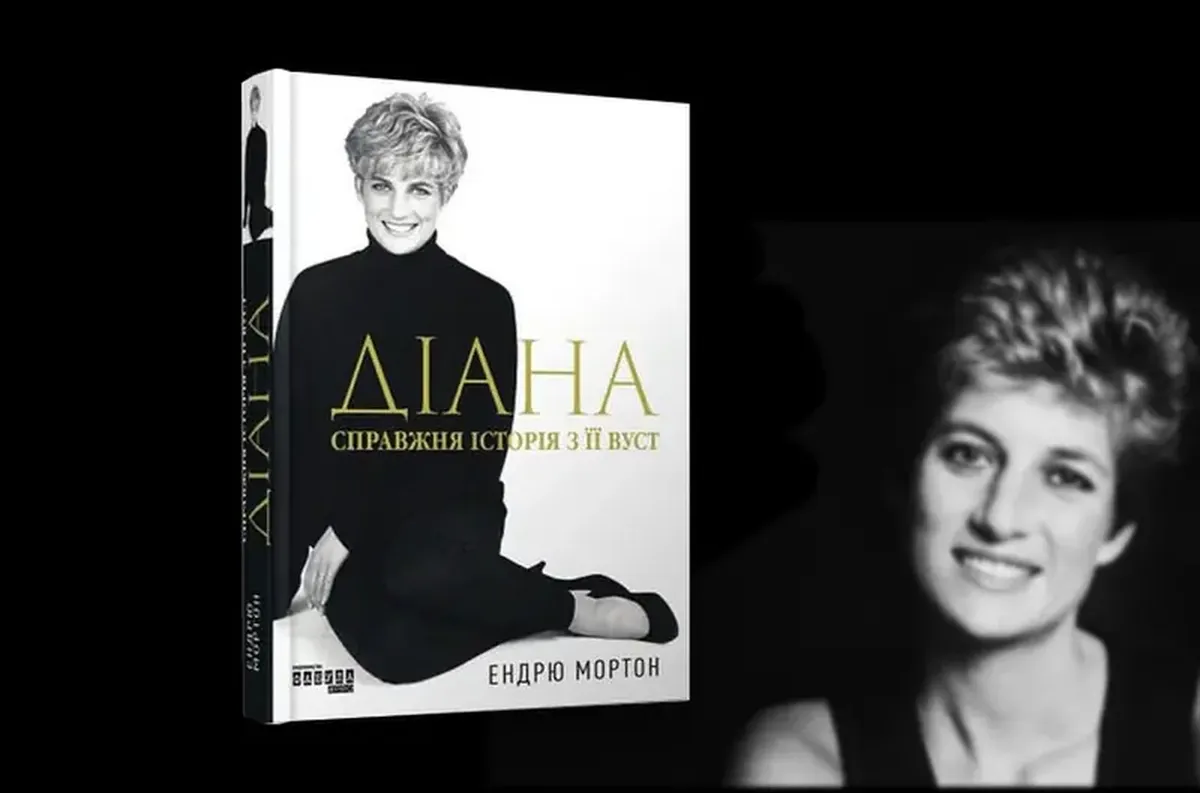
In Andrew Morton’s book Diana revealed the “secret illness” behind her interview comments: bulimia, depression, and self‑harm were consequences of emotional instability made worse by a troubled marriage and relentless press attention. Observers contrasted Diana’s approach to Charles—she clung, scolding and confronting him—with Camilla Parker Bowles’s style of companionship. When Charles resumed his long‑running relationship with Camilla in the mid‑1980s, an offended Diana grew close to her riding instructor, James Hewitt. The media heightened the strain by publishing compromising recordings of conversations between the royals and their lovers.
In later interviews Charles and Diana blamed each other for their marriage’s collapse. Diana said there were “too many people in her marriage,” implying other infidelities. She wanted to be “the queen of people’s hearts, not the wife of a reigning monarch,” and when the marriage offered no happiness she stopped trying to preserve it. After their high‑profile divorce on August 28, 1996, Diana emerged as a more independent figure, focusing on charitable work and public causes. She became godmother to her friend Rose Moncton’s daughter Dominika, who was born with Down syndrome, and she championed the rights of people with disabilities.

Alongside her public causes—AIDS awareness and the campaign against landmines—Diana had private, passionate relationships. She dated British‑Pakistani heart surgeon Dr. Hasnat Khan, and friends say she was devastated when they broke up in the summer of 1997. Her later relationship with Dodi Al‑Fayed, son of businessman Mohamed Al‑Fayed, occurred after a few days together on his yacht in August 1997. Dodi’s father later claimed his son intended to marry Diana and that, hours before the fatal crash in Paris, Dodi had been choosing an engagement ring for her; security footage appears to show a ring purchase that evening.

“Say Yes!”
Dodi reportedly loved Diana. He admired her taste—she mixed casual and bold in ways that later influenced mainstream fashion, pairing shorts with blazers or tucking jeans into boots, unafraid of loud colors and prints. Her preference for pink and her careful use of a clutch to hide her neckline became part of her public persona. She also knew how to pose for photographers.
The relationship between Diana and the media was not simply predator and prey. PR strategists and journalists both benefited: Diana provided photos and moments, and the press amplified her image because she knew how to shape public sympathy. The iconic photograph of a lonely Diana against the Taj Mahal—built as a monument to love—was a produced image: the photo played on the idea that an ungrateful husband had abandoned his charming wife. Diana used the press as a tool, directing attention to scenes that supported her narrative.
After her death, the world’s view of Diana hardened into near‑sainthood.
Everyone knows the basic facts of her death. On the night of August 31, 1997, the car carrying Diana, her bodyguard Trevor Rees‑Jones, Dodi Al‑Fayed, and driver Henri Paul crashed into the 13th pillar of the Pont de l’Alma tunnel in Paris while trying to evade paparazzi. Dodi and the driver died at the scene. Diana was still alive when rescuers arrived; she was taken to a nearby hospital but died around 4 a.m. that night. During the Paris stay the couple had visited the Ritz Hotel, and a representative reportedly fetched an engagement ring ordered by Dodi—inscribed “Dis‑moi oui” (“Say yes”). Mohamed Al‑Fayed later accused British intelligence services of involvement in the crash, alleging the establishment would not allow an heir to the throne to marry a Muslim—a claim he has long maintained.
The Death of Princess Diana
Rescuer Xavier Gourmelon, who attended to Diana at the scene, recalled that she lay in the back of the wrecked car without obvious external injuries: there was no blood on her body, she moved, opened her eyes, and asked, “My God, what happened?” Paramedics gave her oxygen and performed CPR when her heart briefly stopped; she was then transported to hospital unconscious. Doctors later reported numerous internal injuries. Despite rescuers’ efforts and fleeting hopes, she did not survive. The only survivor of the crash was the bodyguard, who had been wearing a seatbelt and later denied the murder theories, though he suffered head injuries that affected his memory.
Diana was buried on the Spencer family estate, Althorp, in Northamptonshire, which has belonged to her family for more than 500 years. Her final resting place is on a secluded island in the grounds where she was born. Elton John performed a moving rendition of “Candle in the Wind” at her funeral, equating her life to a candle snuffed out too soon. On the 10th anniversary of her death the film Princess Diana: The Last Day in Paris recreated her final hours; another film, Diana: A Love Story (2013), explored her relationship with Dr. Hasnat Khan.

The BBC produced a documentary episode in its “Conspiracy Files” series titled “How Princess Diana Died.” Official investigations concluded that Diana’s death was an accident and dismissed rumors that she had been pregnant with Dodi’s child. Mohamed Al‑Fayed disagreed with the official findings. He once erected a memorial to the couple at his former store Harrods and later moved a statue of them to the garden of his home; the pedestal reads: “Innocent Victims”…
