
 Gaby
Gaby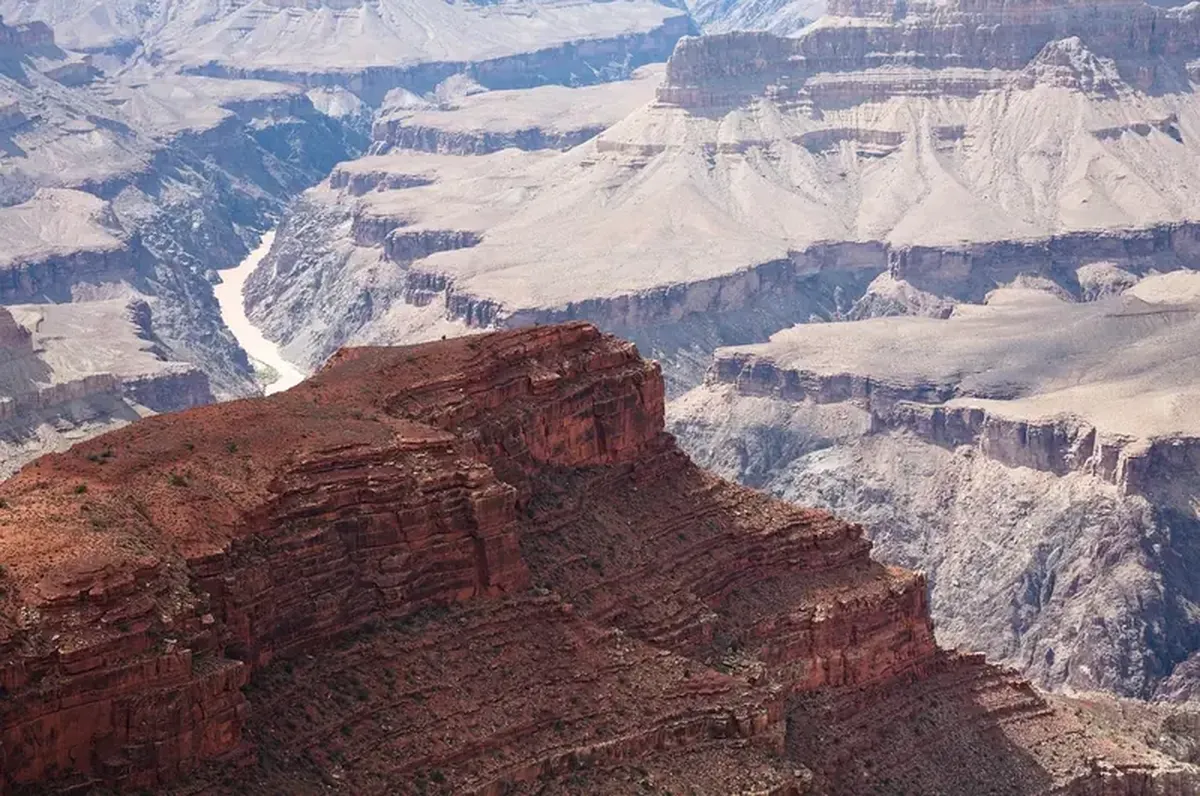
The Grand Canyon is an iconic American landmark—but its origin story may be more complicated than visitors realize. The Grand Canyon National Park in northern Arizona is a world-renowned tourist destination and one of the iconic symbols of the United States. But the canyon’s geological history remains little understood by many visitors and has been the subject of scientific debate.
According to the National Park Service (NPS), for a long time the formation of this majestic canyon with its steep cliffs was primarily attributed to tectonic activity and erosion by the Colorado River.
A Fresh Perspective
The Grand Canyon plunges 1,857 meters deep and stretches 446 kilometers along the Colorado River, which the NPS says has been carving through rock for the last five to six million years.
However, a new study published in the journal Geology proposes a bold theory: researchers linked parts of the Grand Canyon’s formation to Arizona’s Meteor Crater (Barringer Crater).
This crater, about 1,200 meters in diameter and located more than 200 kilometers southeast of the Grand Canyon, formed roughly 56,000 years ago when a large iron-nickel asteroid struck the area. The study’s authors hypothesized that the impact triggered a geological shift or landslide that could have blocked the Colorado River, forming a paleo-lake that no longer exists.
But that raises a question: how and when did large pieces of wood and evidence of ancient human activity end up in Stenton Cave within Grand Canyon National Park? The cave’s entrance sits more than 45 meters above the river, the Daily Mail reported.
“It would have required a flood ten times stronger than any that have occurred here in the last few thousand years,” said Professor Karl Karlstrom of the University of New Mexico, one of the study’s authors.
“Or perhaps these are very ancient deposits left after the river stripped the canyon floor, or maybe they came from a paleo-lake formed by a lava dam or a landslide. We needed to determine the age of the cave deposits,” he explained.
Karlstrom and his colleagues dated the wooden debris in the cave to about 56,000 years — the same age as Meteor Crater and the landslide dam. Because the timelines match, they concluded the asteroid that created the crater may also have triggered the landslide. That landslide would have formed a dam on the Colorado River and created a paleo-lake, and when the dam failed it would have released catastrophic floods that inundated caves and accelerated erosion in the canyon.
The study has drawn public attention, especially after the Dragon Bravo wildfire damaged the Grand Canyon’s northern rim last week, destroying the historic Grand Canyon Lodge and several other structures.
