
 Gaby
Gaby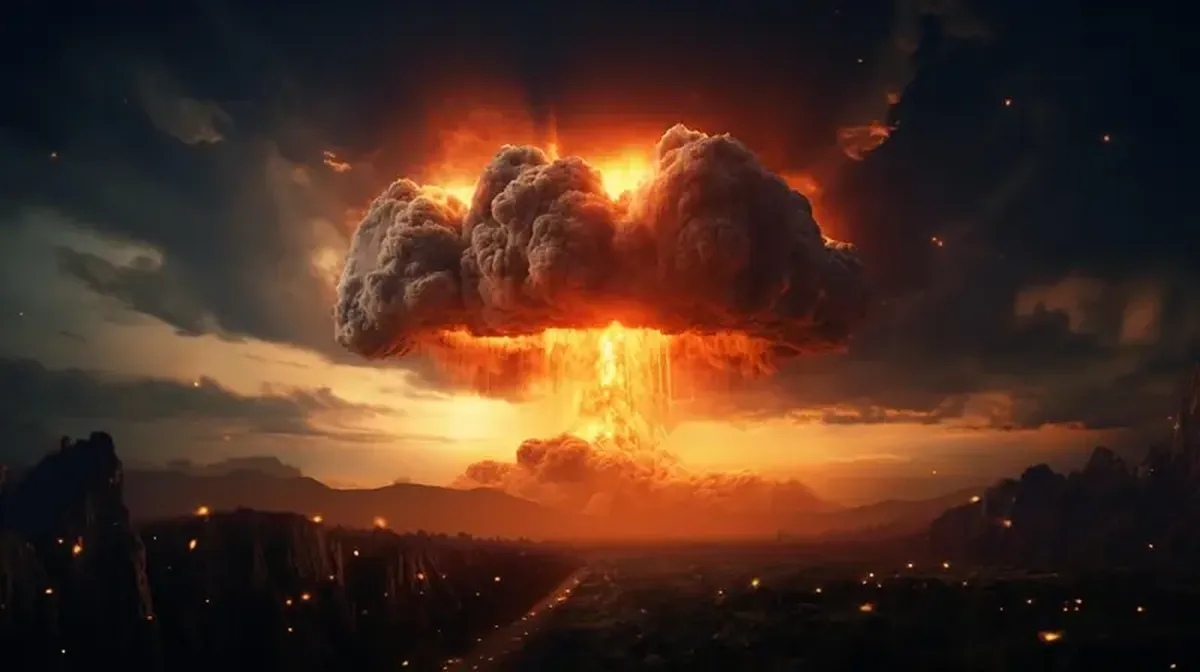
August 2025 marks the 80th anniversary of the atomic bombings of Hiroshima and Nagasaki. More than 200,000 people died within a year, and survivors lived with lifelong health problems.
Those attacks are the only times nuclear weapons have been used in war, but the prospect of nuclear conflict still feels real for many people. As of early 2025, more than 12,200 nuclear warheads remain in the world.
What if those fears become reality?
AsapSCIENCE, a Canadian science team, says there’s no simple formula for predicting a single bomb’s destructive reach. The damage depends on many factors: the weather, the time of day, the geography, and whether the weapon detonates on the ground or in the air.
About 35 percent of a nuclear blast’s energy is released as thermal radiation. Thermal radiation travels at nearly the speed of light, so the first thing people would see is a blinding flash of light and heat. The flash alone can cause temporary blindness that lasts several minutes.
AsapSCIENCE modeled a one-megaton bomb — roughly 80 times the power of the Hiroshima device but smaller than many modern warheads. On a clear day the flash could temporarily blind people as far as 21 kilometers away; on a clear night the same flash could cause temporary blindness up to about 85 kilometers away.
Heat is a major danger closer to the blast. Around 11 kilometers out, people could get mild first-degree burns; within about 8 kilometers, third-degree burns are possible, which destroy and blister skin tissue. If third-degree burns cover more than 24 percent of the body and immediate medical care isn’t available, survival chances are low.
Distance isn’t the only factor — clothing matters too. Light-colored clothes reflect some thermal energy, while dark clothes absorb more.
That difference becomes irrelevant for anyone very close to the explosion.
Experts estimate the center of a one-megaton blast could reach temperatures approaching 100 million degrees Celsius — several times hotter than the sun’s core — more than enough to instantly break down the human body.
Farther out, heat isn’t the only hazard. A nuclear blast pushes huge amounts of air outward, creating sharp pressure changes that can flatten structures. Within a 6-kilometer radius of the epicenter, shockwaves can exert the equivalent of 180 metric tons of force on the walls of a two-story building, with wind speeds around 255 kilometers per hour. Within about 1 kilometer, peak pressure can be roughly four times greater and winds can reach about 756 kilometers per hour.
Technically, people can survive extreme pressure, but collapsing buildings are lethal for most. Survivors would also face severe radiation poisoning.
In 2019 AsapSCIENCE modeled a U.S.–Russia nuclear war in a video and projected that within days the Earth could slide into a nuclear winter from the smoke and soot lofted into the atmosphere.
ScienceAlert points out that international treaties exist to prevent the spread and use of nuclear weapons. Let’s hope we never have to rely on what we’ve learned about surviving a blast.
