
 Gaby
Gaby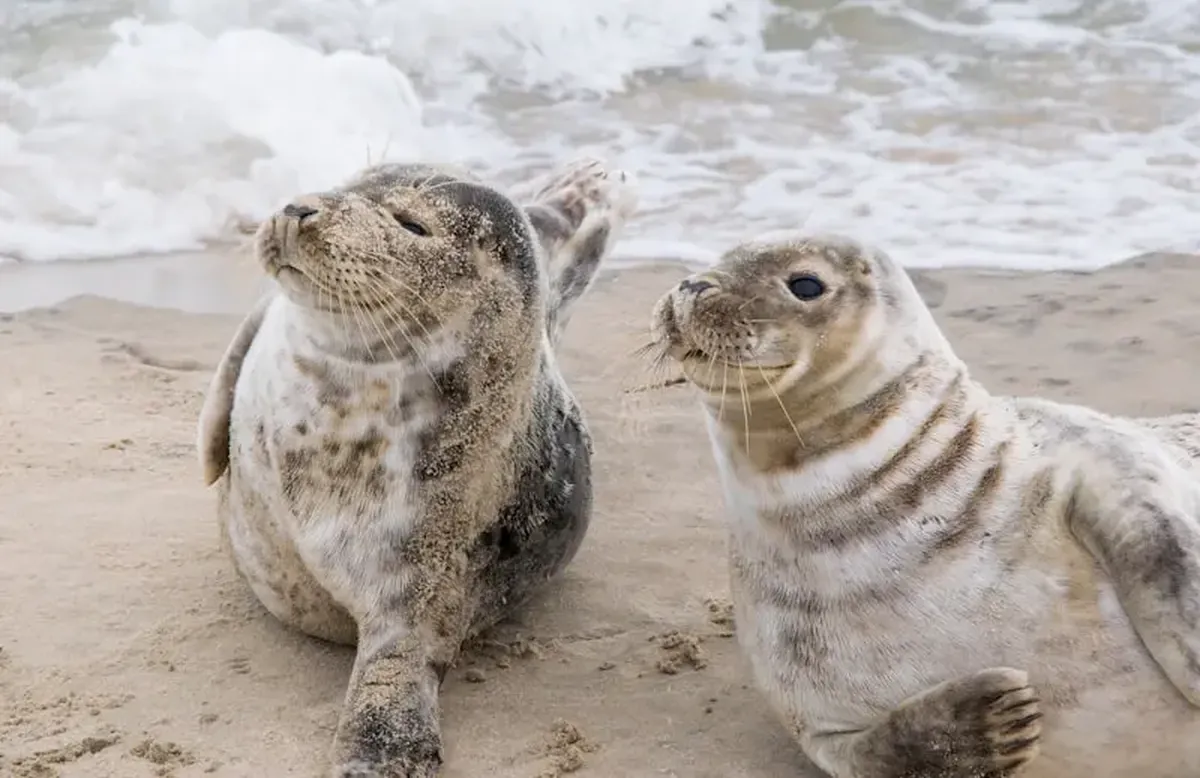
Researchers from the Max Planck Institute for Psycholinguistics in the Netherlands found something fascinating: these marine mammals can recognize different rhythms without any prior training, much like humans. In a recent article in the journal Biology Letters, the team reported that even our closest relatives—primates—need to be taught how to respond to rhythm.
Dr. Laura Verga, the study’s lead author, said seals have long been considered musical. To test their rhythmic abilities, researchers created seal vocalizations that varied in three ways: tempo (fast or slow), note length (short or long), and regularity (regular or irregular, like in jazz).
The team tested 20 young seals housed at a rehabilitation center in Pieterburen before the animals were released into the sea. The seals listened to the vocalizations one after another while the scientists recorded how often each animal turned its head to look at the sound source behind it. That head-turning served as a measure of how interested a seal was in what it heard. (Researchers use a similar method to assess rhythmic abilities in children.)
The results showed that seals can distinguish between different rhythms by whether they turned toward the sound, how often they did so, and how long they looked. The seals differentiated various rhythms: when they heard a sequence they preferred, they looked longer or more often toward the sound. The mammals were particularly captivated by longer, faster, and rhythmically precise vocalizations.
That means seals—without any training or rewards—can tell the difference between regular (metronomic) and irregular (arrhythmic) sequences, as well as between short and long notes and fast and slow tempos. As Dr. Verga summarized, seals join humans as a species that perceive rhythm. The finding advances debates about the evolutionary origins of human language and musicality, a topic Sci.news says remains mysterious. Like human infants, seals develop rhythm perception early, and that ability appears stable and does not require training.
