
 Gaby
GabyHave you ever dreamed of a robot that cooks, cleans, and handles every chore? For a long time that idea felt fantastical — but it’s starting to happen. Robots already build cars, sort packages, and run warehouses. New robotic assistants are finding uses across fields from law enforcement and security to healthcare and tourism. Personal AI machines that vacuum, mow lawns, cook, and take out the trash are on the horizon.
Assistant robots for emergency assistance
The Atlas robot can lift heavy objects, open doors, perform backflips, jump, and even do parkour. It is designed to assist emergency services in search-and-rescue operations and to operate in environments where humans cannot survive, such as fires and war zones.

Built by Massachusetts company Boston Dynamics, the 1.8-meter-tall bipedal humanoid has “arms” with only two fingers. One finger is fixed, while the other moves. That’s enough for the robot to grasp objects securely.
Robotic chef
The humanoid robot Moli is a chef that can learn to make your favorite dishes. It mimics human hand movements and can perform delicate tasks like cracking an egg.
To use it, select the number of servings, cuisine, dietary restrictions, calorie target, ingredients, cooking method, and other options from its recipe library. After saving your preferences, choose a recipe and place the washed, chopped ingredients in the designated spots.
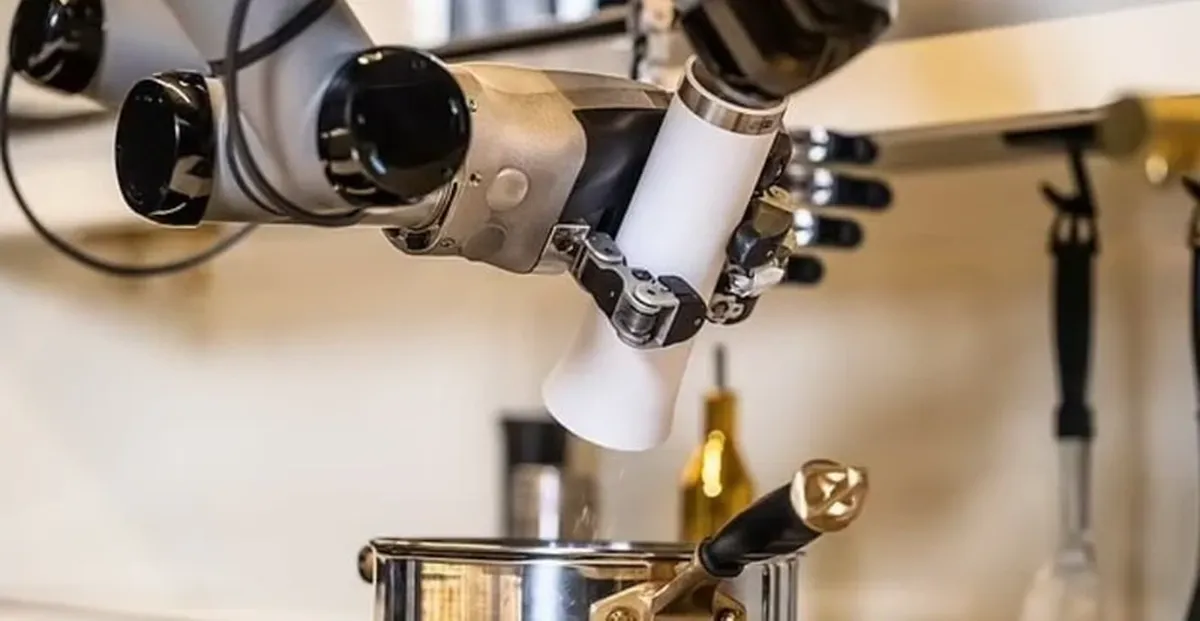
Then touch the “Start” button and cooking begins. The robot also cleans up after making the meal. The kitchen is controlled via a touchscreen or remotely with a smartphone or tablet. The only downside: the newly announced price for this kitchen assistant is $335,000.
Helper robots for children
Miko is a $300 robot that recognizes children’s emotions, plays games, teaches new things, and remembers what kids say and feel. It has a wide-angle HD camera and sensors to map the room. All of Miko’s data is end-to-end encrypted.
Delivery robots
Moxi gained popularity at the start of the pandemic. Its robot couriers can deliver medications, comfort items for patients, and other goods. They can open elevator doors but still need a person to press the button for the destination floor.
Microscopic doctors
Antibacterial nanorobots are tiny autonomous machines that deliver medication directly to an infection. They mimic bacteria and their targets, then capture pathogens in a nanowire mesh. They’re pretty incredible.
Harvest preservation robot
BugVacuum is a self-propelled vacuum that sucks up insects while autonomously moving between crops on farms. Farmers only need to place it at the starting point and set it to automatic mode. As the Daily Mail reported, the robot is well suited to eliminating insecticide-resistant pests.
Sanitary robot
Robear is a sanitary robot shaped like a plush teddy bear that helps move disabled people or elderly patients from their beds to wheelchairs. Its soft body is designed for gentle contact with the patient’s skin while providing strong support.

This robot uses mechanical arms to move patients—for example, from a wheelchair or a low bed into a bathtub. It weighs 140 kg and has retractable legs to prevent the “bear” from tipping over.
Cargo transport robot
Gita Bot is a mobile robot that follows you carrying up to 18 kg of stuff—groceries, tools, and more. It was created by Italian company Piaggio, maker of Vespa scooters.

Gita Bot is the first cargo robot sold directly to consumers. Piaggio says it offers a stylish alternative to scooters. The two-wheeled machine uses cameras and sensors to follow its owner.
