
 Gaby
Gaby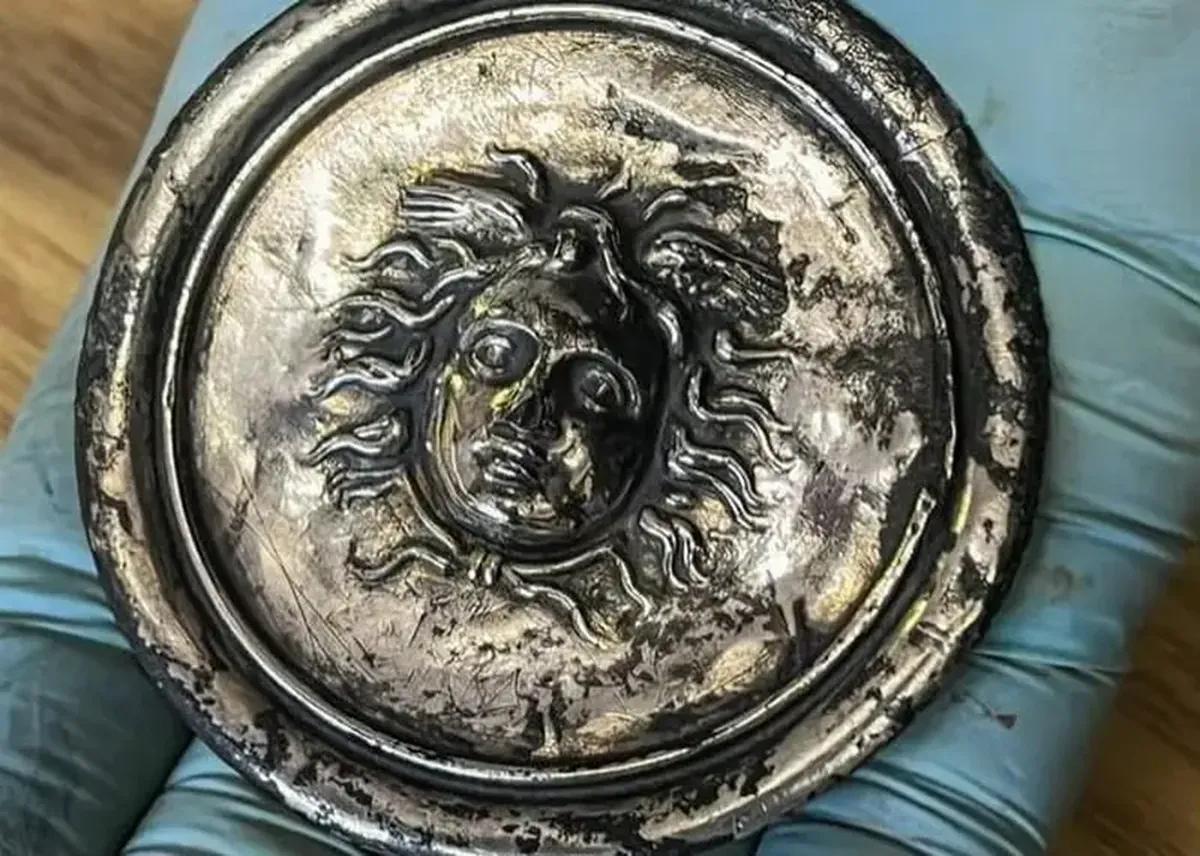
Archaeologists have uncovered an unusual ancient award while excavating in northern England—the area that once marked the northern edge of the Roman Empire. During digs at an auxiliary Roman fort, they found a silver medal depicting a winged Gorgon with snakes for hair.
The Gorgon with Snakes – A Talisman Against Evil and a Medal of Honor
This military award is nearly 1,800 years old. The auxiliary fort at Vindolanda, where the medal was found, dates to the late 1st century and was established several decades before Hadrian’s Wall was built in AD 122.
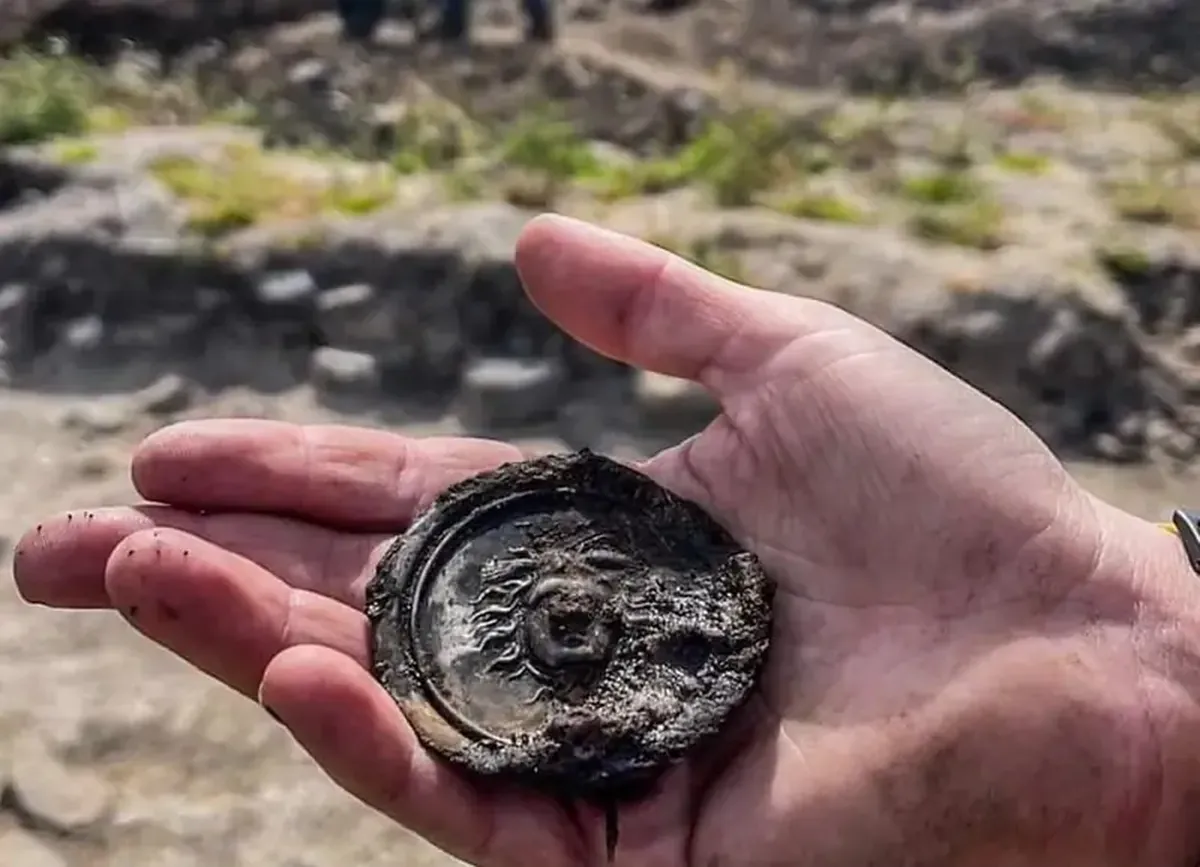
A representative from the Vindolanda Trust, which runs the excavations in this part of England, says the medal was discovered on the floor of a barrack. The award is a silver phalera showing the head of the Gorgon.
In Greek myth, the Gorgon has snakes for hair and could turn people to stone with her gaze. In the most famous version, Perseus beheaded her in her sleep after using Athena’s polished shield to avoid being petrified.
Professor John Pollini notes that Roman culture inherited much from the Greeks. In the Roman Empire, the Gorgon served as a protective talisman believed to ward off evil. He says the image has been used since Greek times specifically for protection.
You can find Gorgon images on Roman tombs, in villa mosaics, and on battle armor. A famous Pompeii mosaic shows Alexander the Great wearing a Gorgon on his breastplate.
Gorgon heads also appear on other Roman phalerae, though details vary. On the Vindolanda medal, the creature even has wings on her head.
Pollini says the Gorgon is sometimes shown with wings and sometimes without, which may suggest the ability to fly—much like the Roman god Mercury, often depicted with small wings on his helmet.
A Rare Find at Vindolanda
A phalera is a medallion that served as a military honor for cavalry. It was first awarded to the best horsemen and later to legionaries and auxiliary soldiers. Phalerae have Greek origins, so it’s unsurprising that their imagery draws on Greek myth.
Gorgon and lion heads are among the most common designs on Greek and Roman phalerae. Roman examples also often featured the war gods Mars and Minerva, as well as Jupiter. Soldiers typically wore phalerae in odd numbers, either on the chest or on leather straps. They were made from bronze (sometimes gilded), silver, glass, or precious stones.
Pollini says the Vindolanda silver phalera is a rare find. Silver examples are scarce because the metal could easily be melted down.
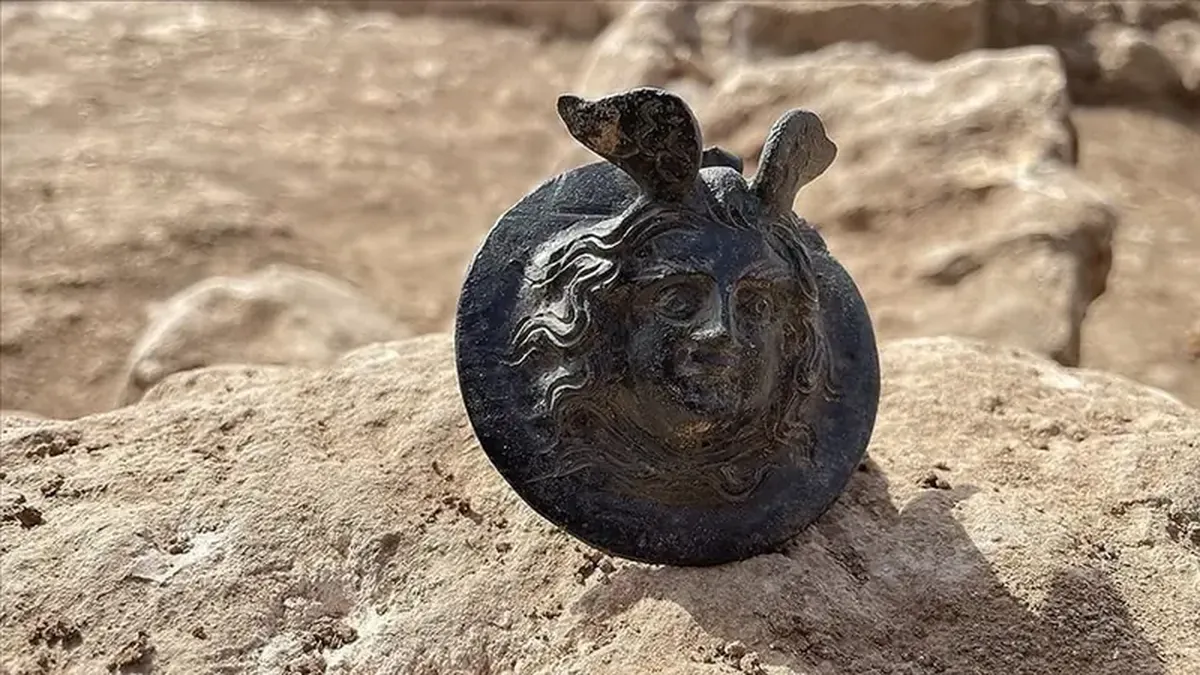
Bronze phalera with a Gorgon, found in Turkey
Phalerae are most often found in burial sites, but the Vindolanda Gorgon medal was likely lost rather than buried. Pollini believes someone would hardly have discarded such a treasure.
A similar artifact turned up late last year in eastern Turkey: during excavations at the ancient Greek site of Perre, archaeologists found a bronze medal bearing a Gorgon’s head.
LiveScience reports the silver artifact found in England in early June 2023 is undergoing conservation and will go on display at the Vindolanda exhibition in 2024.
