
 Gaby
Gaby
Even people who start learning an instrument later in life can get significant brain-health benefits. That’s the conclusion of two recent studies.
Researchers found that older adults who play instruments have healthier brains that are better protected against dementia.
What Did the First Study Reveal?
The study, published in the journal PLOS Biology, was conducted by Canadian and Chinese scientists. It involved 50 adult volunteers who averaged 65 years old. Half of them had been playing an instrument for at least 32 years, while the other half had no musical experience. The team also included 24 younger participants who averaged 23 years old; none of the younger group had any formal music education.
The researchers measured blood flow in the participants’ brains using magnetic resonance imaging (MRI). During the scans, the volunteers listened to a recording of a person speaking against background noise created by 50 other people. Participants were asked to identify what the speaker was saying.
Older musicians performed the task just as well as the younger participants.
However, older adults who did not engage in music showed signs of age-related cognitive decline. While musicians benefited from strong connections in the right hemisphere of the brain, non-musicians did not show that advantage. Non-musicians compensated by recruiting the left hemisphere as well, which put more strain on their brains.
“Just as a well-tuned instrument doesn’t need to be played louder to be heard, the brains of older musicians remain finely tuned thanks to years of practice,” said Dr. Yi Du, a co-author from the Chinese Academy of Sciences.
As we age, many brain functions—such as memory, learning, and perception—decline, which can ultimately lead to dementia. Scientists say cognitive reserve, the brain’s ability to cope with damage, helps prevent deterioration of cognitive functions.
“It’s still unclear how this works,” said Dr. Morten Shai-bi-Knudsen, an associate professor in the University of Copenhagen’s Department of Aging, in an interview with BBC Science Focus.
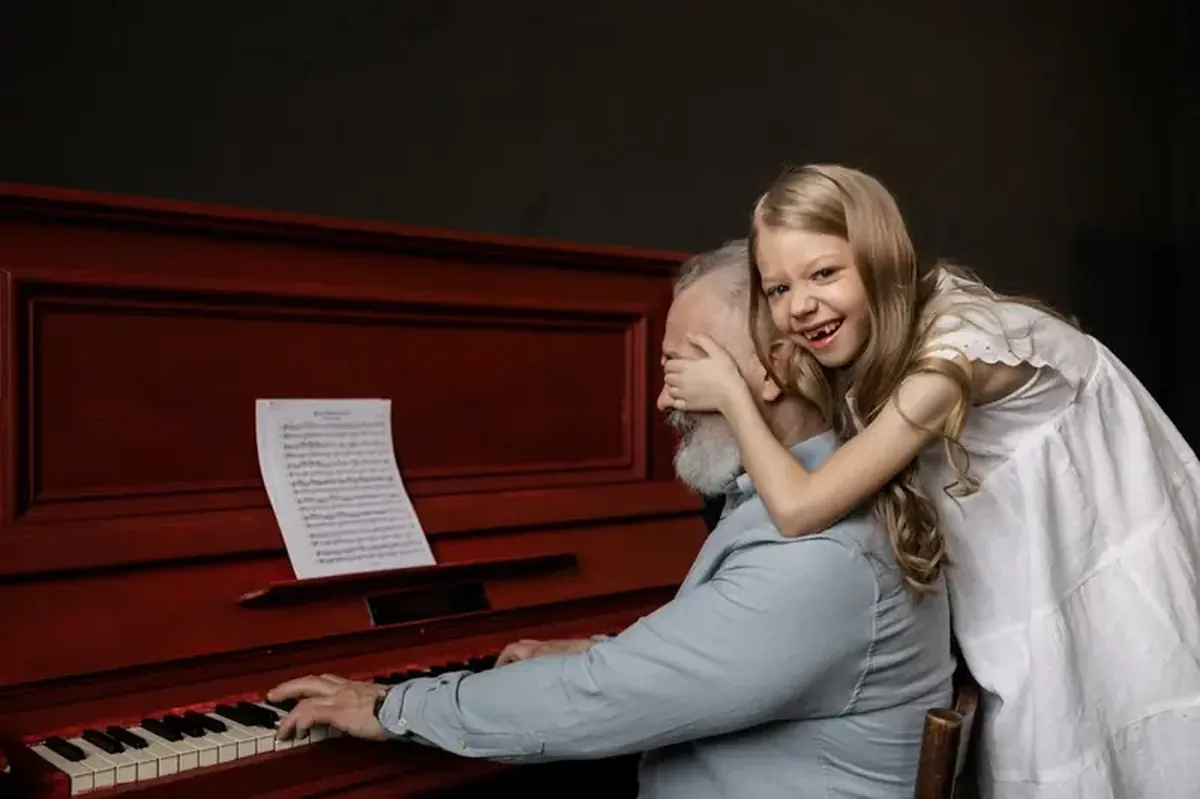
What Did the Second Study Reveal?
Another recent study in the journal Imaging Neuroscience showed that taking up music later in life can improve brain health.
A team of researchers from Kyoto University in Japan recruited 53 older volunteers who averaged 73 years old. Over four months, participants learned to play instruments. Four years after the initial observations, scientists conducted MRI scans while the participants took a verbal memory test. Only 13 of them continued to pursue music.
Those who stopped playing showed the worst memory-test results. The brain area responsible for motor function, learning, and memory also decreased in volume for those who quit.
Those who kept playing over the four years showed no signs of cognitive decline.
Dr. Shai-bi-Knudsen said, “Playing an instrument can positively impact not only the preservation of cognitive functions as we age but also the maintenance of the brain’s structural integrity.”
He added, “Playing an instrument also fosters social interaction, which is crucial for older adults. I hope people will take up music. It’s never too late to learn.”
