
 Gaby
GabyAustralian scientists tested whether a vertical greening system could remove a mix of harmful compounds found in gasoline vapors. For the experiment, they put a collection of houseplants in sealed chambers that simulated a small plant-wall system. During a typical workday, vegetation cut some cancer-causing compounds by more than 20% from their starting concentrations.
Plant filters against gasoline compounds
The lab setup doesn’t match the scale of real office spaces. Still, scientists say installing vertical gardens could improve air quality in a room or office. They add that plant systems could complement energy-intensive ventilation and together boost air purification in indoor spaces.
The new results have not yet been peer-reviewed. Previous studies have shown that indoor plants can absorb gaseous compounds (VOCs), but most work tested single chemicals rather than complex mixtures and used controlled conditions that don’t match real-world exposure.
This new study also used sealed chambers. Common houseplants (golden pothos, syngonium, spider plant) were chosen to remove gasoline vapors, which are a major source of VOCs.
Ecologist Fraser Torpy says the experiment showed plant systems removed most pollutants from indoor air within a few hours. They were especially effective at removing benzene compounds, which are among the most harmful.

Why vertical indoor gardening can help
For the study, Torpy’s team built a plant wall from nine specially designed plexiglass boxes. Some boxes held four plants; others were left empty. A small amount of gasoline evaporated inside the chambers, and the researchers measured the gas concentrations.
Although gas leakage from the test boxes can’t be ruled out, the team is confident the plants removed roughly 43% of VOCs during the eight-hour experiment. Most of the removed compounds fell into three groups: alkanes (98%), benzene derivatives (86%), and cyclopentane (88%).
These pollutants can harm people’s health. They can drift into schools and buildings hundreds of meters from gas stations and sometimes exceed safe levels in indoor air.
Researchers say people who live near gas stations face higher risks of developing cancers such as leukemia. Garages near office buildings and homes can also worsen indoor air quality. The research group told ScienceAlert that removing these compounds could significantly affect efforts to maintain a healthy indoor environment.
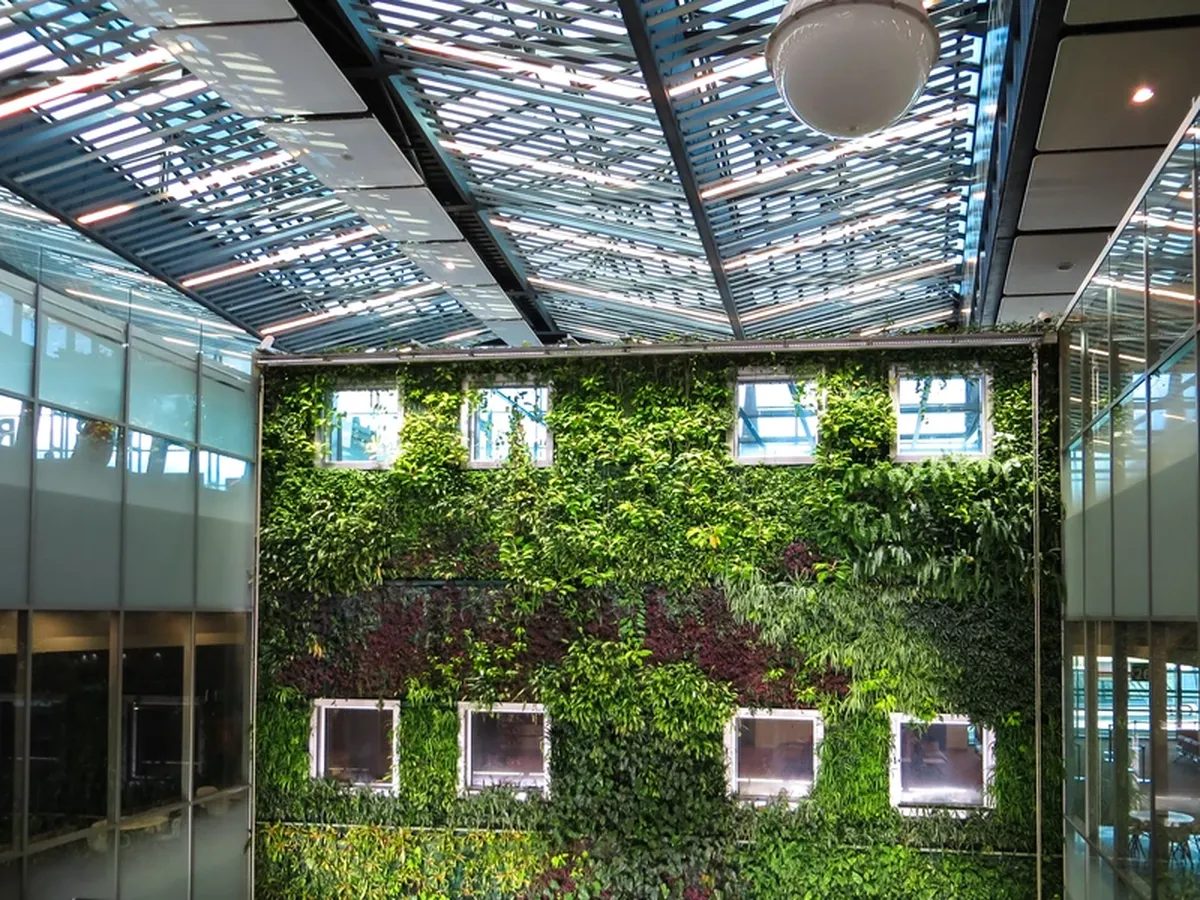
A complete greening system is needed, not just a few pots
Further experiments show vertical gardens can help purify air. Torpy says higher toxin concentrations prompt faster, more effective removal by plants, so vegetation seems to adapt quickly to those conditions.
Vertical greening systems consist of many potted plants equipped with air pumps. That makes them far more effective than a handful of houseplants on a kitchen shelf, which would need to number in the thousands to noticeably clean home air.
Researchers say a modest collection of plants won’t clean the air fast enough to affect indoor air quality. They mainly lift your spirits.
Research is ongoing
The airtight box setup only partially simulates a large office building with ventilation systems. Still, commercial interest in green-wall technologies is growing, a trend accelerated by the pandemic and the greater global focus on indoor air quality.
Torpy says more research is needed to test large commercial systems in different building types. Only then can we determine whether plants offer an advantage over current ventilation systems.
Researchers also need to test different plant species and air filters, find out whether plants reach a saturation point for absorbing gases, and check whether plant-based purifiers can take up chemicals released by synthetic materials. Those answers will guide practical use of plants for indoor air purification.
