
 Carlos Solis
 To do this, American biotechnologists at Colossal Biosciences have successfully cultivated primordial germ cells from the Nicobar pigeon, the dodo’s closest living relative.
The enormous dodo was endemic to Mauritius in the western Indian Ocean (meaning it lived only on that island).
A True Breakthrough in Ornithology
Researchers aim to bring the extinct bird back to life by 2030. Over 300 years ago, dodos were hunted to extinction after humans arrived on Mauritius. However, scientists are determined to resurrect the species.
After cultivating the pigeon’s primordial germ cells — stem cells that develop into sperm or eggs — scientists plan to edit them with dodo DNA, then transfer the cells into genetically modified chickens.
Following this, the chickens will lay eggs that contain embryos carrying edited DNA, leading to the resurrection of the species. This could happen as soon as the end of the decade, according to the Daily Mail.
Ben Lamm, CEO of Colossal Biosciences, described the latest development as “a significant step forward in the quest to resurrect the extinct dodo species.” Ultimately, Lamm envisions thousands of dodos living in Mauritius, possessing enough genetic diversity to be protected from various diseases.
The first mentions of the dodo (or Mauritian dodo) come from Dutch sailors who landed on Mauritius in the late 16th century. Over the next hundred years, these birds were decimated by colonizers and their domesticated animals. We know the dodo’s appearance from illustrations from that era.
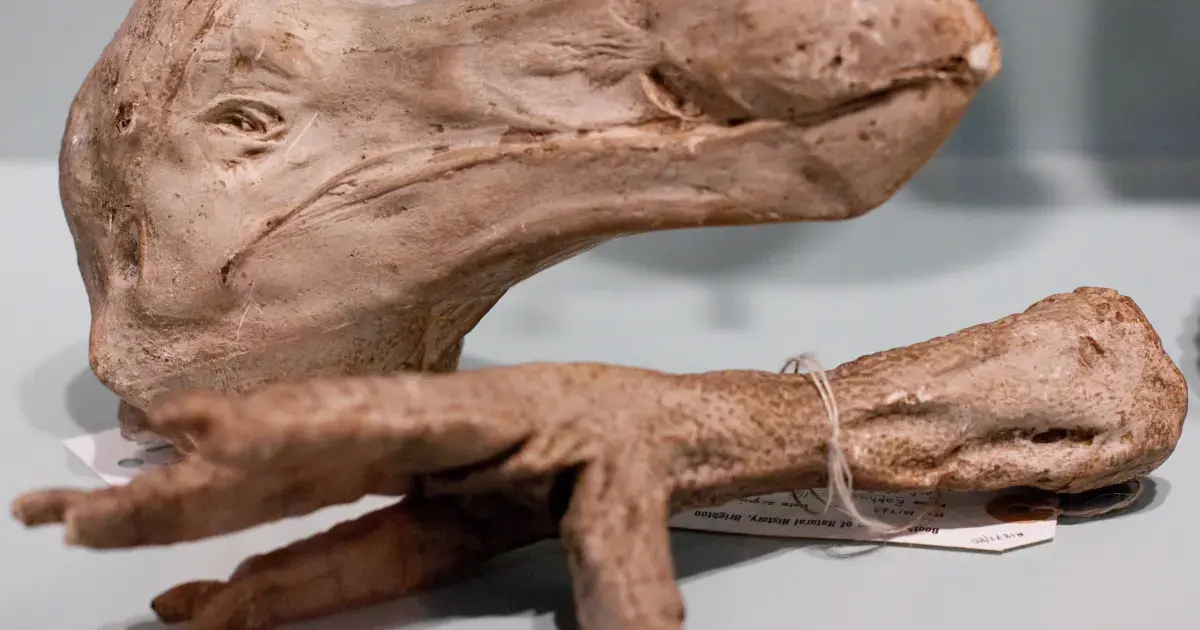
The dodo was a flightless bird about a meter tall and weighed between 25 and 50 kg. It is believed to have been a stout, clumsy bird. However, since this species went extinct in the late 1600s, no one knows for sure what the dodo looked like.
The Oxford University Museum of Natural History houses the only known specimen of dodo soft tissue. Scientists reported that the “Oxford dodo” was shot in the back of the head with a shotgun.
The National Museum in Prague holds the upper jaw of a dodo, while the Danish Museum of Natural History has the skull of this bird, from which Colossal Biosciences experts extracted DNA.
Company representatives say these rare dodo fragments are “symbols of extinction caused by human activity.”
Colossal Biosciences also plans to bring back woolly mammoths and Tasmanian tigers.
Since its launch in September 2021, Colossal Biosciences has raised over $555 million in funding. The company also says it has successfully resurrected the dire wolf (sometimes called the terrible wolf), which roamed North America tens of thousands of years ago and has recently gained fame through the series “Game of Thrones.”
The dodo revival project is currently valued at $120 million. Among its notable investors are filmmaker Peter Jackson, golfer Tiger Woods, and football player Tom Brady.
Photo: Openverse
