
 Gaby
Gaby
Before it became a popular medium of exchange and the base for trendy cocktails, strong sugarcane rum was scorned by aristocrats for its harsh taste and dismissed as cheap. Today that fermented, distilled spirit is celebrated each year on World Rum Day—the second Saturday in July—bringing together enthusiasts, distillers, and bartenders around the world. How did rum change so dramatically, how is it best enjoyed, and what should you serve with it? Let’s answer those questions with research and recipes from HouseWife.

What is Rum?
Rum and whiskey are distinct spirits, though both begin with fermentation and distillation and are often aged in barrels. Light rum is typically aged for just a few months, while golden and dark rums can mature for up to 15 years; premium whiskey, by contrast, may age for decades. Alcohol by volume in whiskey usually ranges from about 37% to 75%, and in rum it can vary from roughly 30% to 80%, with a common standard strength near 40%. The key differences come down to raw materials, production techniques, and resulting flavors.
Unlike whiskey, which is made from grains, rum comes from sugarcane—either fresh sugarcane juice or molasses. Whiskey tends to feature malt, smoke, nut, or spice notes; rum can be spicy, fruity, or caramel-forward. During barrel aging, the spirit absorbs tannins and aromatic compounds and takes on color, producing a clear, sediment-free spirit with brown or golden hues. Each rum style therefore has its own character and has earned global recognition.

Early Reputation
Alcoholic drinks made from fermented sugarcane juice have been known for thousands of years, but those early beverages weren’t distilled—the step that defines modern rum. The first distilled cane spirit is often identified as Brazilian cachaça, from the 1520s. A 1651 Barbados document called a drink “rumbullion” or “kill-devil” and described it as “a hot, hellish, and terrible alcohol made from distilled sugarcane.”
Historians generally agree that rum as we know it emerged in the Caribbean in the 17th century, when enslaved workers on sugarcane plantations learned to distill alcohol from fermented molasses, a byproduct of sugar refining. From the Caribbean, rum-making techniques spread to colonial North America: the first rum distillery in the Thirteen Colonies opened on Staten Island in 1664, followed three years later in Boston. By the end of that century, rum had surpassed French brandy as the favored trading spirit.

Rum Production Diagram
Rum as Currency
Rum production became one of colonial New England’s biggest industries—abundant timber, skilled coopers, and metalworkers helped the region become a distilling center. The rum made there was lighter than the potent Caribbean varieties, and in many places the drink was literally equated to gold and used as currency in the slave trade. Four gallons of rum were sometimes exchanged for one enslaved African. For a time, Rhode Island rum even functioned as accepted currency in parts of Europe.
Estimates suggest that before the American Revolutionary War, the average resident of the colonies drank about 14 liters of rum per year. George Washington served a barrel of Barbadian rum at his 1789 inauguration. From that era, rum began to shape politics: candidates used it to curry favor with voters, and politicians who drank with the people were often seen as “true republicans.” Rum’s popularity in North America later waned in favor of whiskey as sugar imports from the British West Indies were restricted.

Naval Past
Rum became tied to piracy when some English privateers—originally state-sanctioned traders of plundered goods—turned to outright robbery. Robert Louis Stevenson famously depicted that association in Treasure Island. After the Royal Navy captured Jamaica in 1655, rum replaced French brandy in sailors’ rations, and the fleet received the strongest spirits from the West Indies. Naval rum was notable for its high alcohol content: the rum supplied to the British fleet was often 100 proof.
Before the hydrometer, sailors tested alcohol strength with gunpowder; the maximum proof that could be verified this way corresponded to about 57% alcohol by volume, and that figure became a mark on bottles of naval rum. The British call such spirits “naval strength.” The daily rum ration, known as a tot or totty, was issued on Royal Navy ships until July 31, 1970. Even after daily neat rum was abolished, the tradition survives on special occasions.
By Royal Permission
At first sailors drank their rum neat or mixed it with lime juice. In 1740, Admiral Edward Vernon began diluting the 100-proof spirit with water and adding hot tea, lemon juice, and spices to make a drink called “grog” to reduce intoxication. Today, only members of royal families can still order a tot of neat rum on certain ships; for example, the Queen, as Commander-in-Chief, authorized a tot to the Royal Canadian Navy during their centennial celebrations on June 29, 2010.

On special occasions—anniversaries, royal weddings, or birthdays—the admiralty may “splice the mainbrace,” once meaning a double ration. The Royal Canadian Navy, for instance, issues rum from the commander’s fund with a strength sometimes described as “150 proof,” or 75% ABV. The last navy to issue a daily free ration of neat rum was the Royal New Zealand Navy. Rum’s role in British colonies in Australia followed a distinct path.
The Rum Rebellion
In colonial Australia, rum gained value because coinage was scarce and alcohol could ease harsh conditions. Officers used rum to incentivize convict labor on their lands. Australia’s remoteness brought frequent food shortages to the penal colony founded in 1788, and ships often carried barrels of Bengal rum from India, which was stronger and less sweet than Jamaican varieties.
When William Bligh became governor, he tried to curb alcoholism by banning rum as a medium of exchange, and the New South Wales Corps resisted. In 1808 the corps arrested Bligh and controlled the colony for two years, until Britain appointed a new governor more tolerant of rum. That episode—the only military takeover of the Australian government—is known as the Rum Rebellion. Many British merchants in India profited from renewed rum shipments to Australia.

Nelson’s Blood
The link between naval rum and Admiral Horatio Nelson is wrapped in a grisly legend. After Nelson died at Trafalgar, his body was reportedly preserved in a barrel of alcohol for the journey home. When the barrel was opened in England, there was supposedly no liquid left—sailors had allegedly bored a hole and sipped the contents through a straw. Since then, the phrase “to tap the admiral” has described secretly sipping a barrel, and rum gained the nickname “Nelson’s blood.”
Whether sailors actually drained a barrel that carried Nelson’s body is debated. Official records say his body was preserved in “fine alcohol,” which could have been rum or brandy, so the story remains a mix of rumor and lore.
How to Mix Rum
What began as rough colonial spirit eventually evolved into an internationally respected beverage. Facundo Bacardi, a Spaniard who settled in Cuba in the 1860s, played a major role in developing premium rum varieties. Today, premium rums occupy a market niche alongside fine cognac and whiskey—often boutique, aged bottles meant to be sipped neat as digestifs. Elite rums are typically consumed without mixing or dilution.
Mixed rums, however, are meant to be diluted and shine in cocktails. When mixing rum, consider how flavors interact: rum pairs well with citrus juices (especially lemon), tropical fruits, and coconut milk. Try combinations like rum with blue Curaçao or grenadine. Light rum forms the base of Mojitos and Cuba Libres; dark rum works well hot in grog with hot water, lemon, cinnamon, and sugar.

Ingredients of Rum
The basic ingredients of rum are fermented sugarcane juice or molasses, water, and yeast. Industrial rums usually start from molasses, while agricultural rums use fresh sugarcane syrup. Producers may add spices or caramel for color and flavor in some styles, especially golden and dark rums. Flavored rums may include cinnamon, vanilla, or fruit infusions.
If rum is made without added sugar, the spirit itself remains dry; rum drinks and flavored rums often contain sweeteners and lower alcohol content. A recent trend is “pink rum,” a white rum flavored and colored with berries. Besides clear white rum for cocktails, golden (or “amber”) rum sits between light and dark rums in color and flavor.
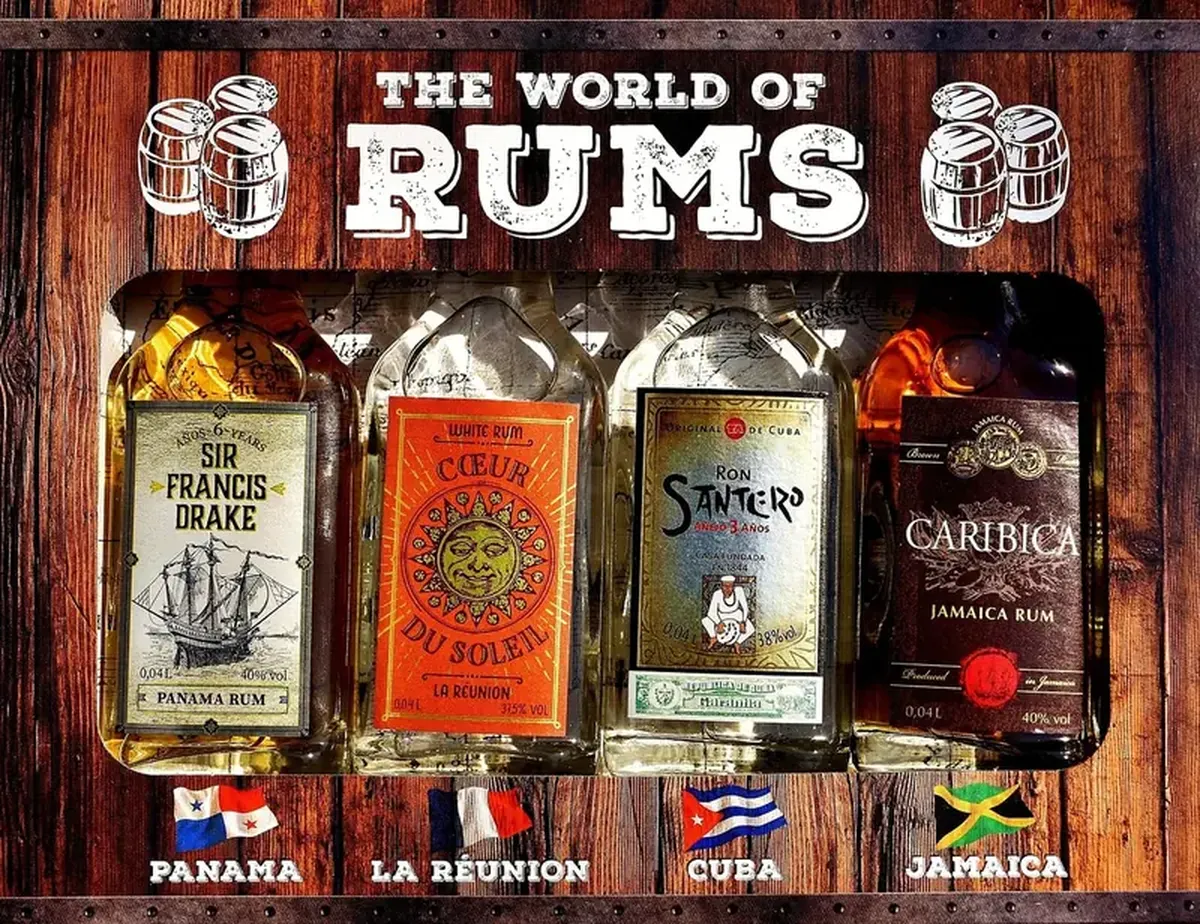
Types of Rum
Dark rum shows the deepest color and flavor because it is aged the longest in barrels; it can be red, brown, or nearly black, and often highlights molasses and caramel notes. Dark rum is popular in cooking—the classic rum baba typically uses dark rum. Spiced rum gets added flavor from spices like cinnamon, clove, cardamom, or pepper; examples include Lamb’s Spiced.
Flavored rums take on aromas from fruits such as star fruit, lime, banana, orange, mango, pineapple, or coconut. Drink flavored rums neat, on the rocks, or in tropical cocktails. There are even non-alcoholic rums, distilled from sugarcane with the alcohol removed afterward.
What to Drink with White Rum
Light rums pair best with tart, fresh juices free of preservatives. White (or silver) rum and golden rum mix well with lemon, orange, grapefruit, or apple juice. Below are some refreshing recipes using rum.
Rum and Cola (Recipe)
Ingredients: cola – 140 ml; white rum Cubana Cultura – 50 ml; lime juice – 10 ml; lime – 20 g; ice cubes – 180 g.
Fill a highball glass with ice cubes. Pour in the white rum and lime juice. Gently stir with a cocktail spoon and garnish with two lime slices.
Cold Tea with Rum
Ingredients: green or black tea – 1000 ml; light rum – 200 ml; lemon juice – 100 ml; milk (optional) – 150 ml.
Mix the white rum with lemon juice. Add the tea and milk, stir, and serve over ice garnished with a sprig of mint.
For children, omit the alcohol.
Ginger Punch
Ingredients: golden rum – 100 ml; dry white wine – 700 ml; grapefruit juice – 150 ml; orange juice – 300 ml; ginger ale – 700 ml; orange – 1 piece; lemon – 1 piece; strawberries – 200 g.
Pour the rum, wine, and juices into a large pitcher and chill for 1–2 hours. Add the ginger ale and fruit just before serving.
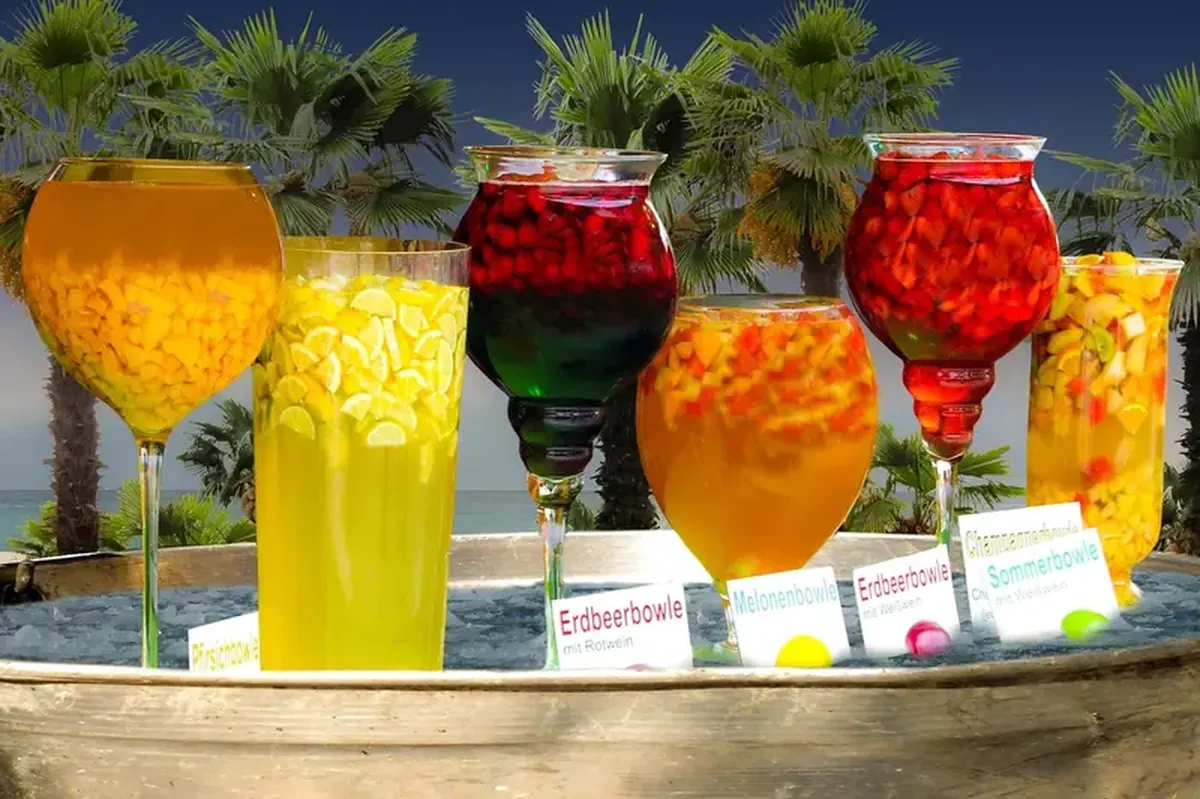
Fruit Punch
Enhance this summer drink with crushed ice or frozen berries and fruit. Pit and chop apples, pears, peaches, apricots, and oranges. Leave strawberries, wild strawberries, or cherries whole.
Place the fruit in a glass container, sprinkle with sugar, and stir until the sugar dissolves. Cover the container and chill over ice.
Pour in chilled table wine at 8–10°C and chilled sparkling wine at 5–6°C (half a liter of each). Add rum to taste for aroma and serve the chilled drink with the fruit like a compote, using a large spoon or ladle. Garnish with a mint leaf or sprig.
Snacks for Rum
When pairing food with rum, choose dishes that complement rather than overpower the spirit. White rum pairs well with light snacks: fresh fruit, soft cheeses, and seafood like shrimp. Golden rum suits desserts—especially chocolate. Spiced rum matches nuts, dried fruit, or fresh fruit. Dark rum, with its pronounced flavor, pairs nicely with dark chocolate, blue cheeses, rich meats, and spicy bites. Soften dark rum with citrus pieces, cinnamon, or plain white bread if needed.
Serve mango, coconut, orange, or pineapple with rum. For cheeses, choose soft or aged varieties and blue cheeses. Seafood that works well includes mussels, shrimp, and smoked or lightly salted fish. For meat snacks, try prosciutto, smoked turkey, salami, or other cured meats. Pair dark chocolate with rum, and offer nuts like pecans, cashews, caramelized almonds, or walnuts. You can also combine rum with black coffee and simple crackers. Experiment to find the combinations you enjoy most.
P.S. Remember that excessive alcohol consumption is harmful to your health.
