
 Gaby
Gaby
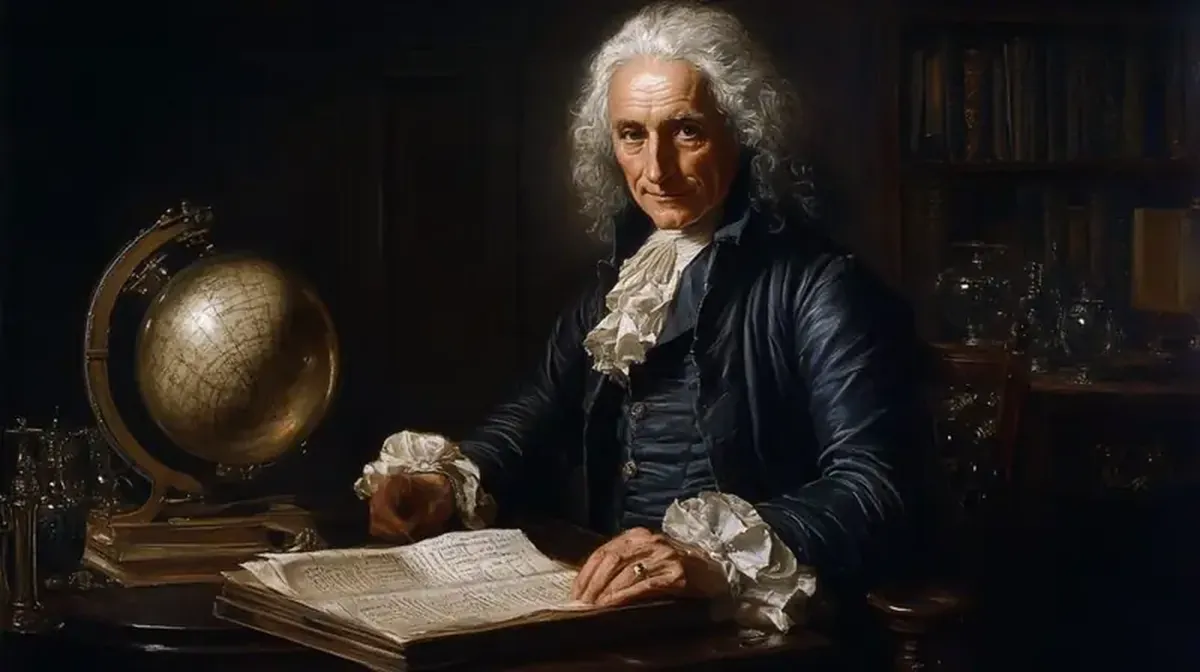
Researchers have uncovered a prophecy about the end of the world among the notes of Sir Isaac Newton (1643–1727), renowned for his groundbreaking work in physics, mathematics, and astronomy.
More than 300 years ago, the man who formulated the law of universal gravitation tried to calculate when the apocalypse would occur. In 1704, he wrote that the world as we know it would cease to exist in 2060. This ominous warning was left alongside a series of mathematical calculations on a sheet of postal paper.
Why Did He Choose This Year?
Newton based the date on a Protestant reading of the Bible. He was fascinated by descriptions of the end times and by the biblical account of Armageddon, the final battle between good and evil. As the Daily Mail reports, that battle is interpreted to mark the end of history and the start of a new era.
To pick a date, Newton used math to analyze dates from biblical history. He used 800 AD — the year Charlemagne was crowned emperor of the revived Holy Roman Empire — as his starting point. He counted 1,260 years from that date, which lands in 2060. So he concluded the apocalypse could occur in 2060.
But scholars who study Newton’s papers also found that he hedged this prediction. He wrote, “This may end later, but I see no reason for it to end sooner.”
What Does Modern Science Think?
Stephen D. Snobelen, a professor of the history of science and technology at the University of King’s College in Halifax, Canada, says Newton’s “prophecy” wasn’t the result of complex mathematics; it was simple arithmetic “a child could perform.”
Snobelen also says Newton was reluctant to pin dates on prophecy because he feared that failed human predictions would discredit the Bible. Today it might seem odd that a scientist of Newton’s stature spent so much effort on biblical prophecy. But Snobelen explains, “Newton was not a scientist in the modern sense of the word. Instead, he was a natural philosopher.”
“Natural philosophy, practiced from the Middle Ages into the 18th century, examined both the natural world and what people saw as God’s interventions,” Snobelen adds. “For Newton, there was no insurmountable barrier between religion and what we now call science. Throughout his long life, Newton worked to uncover divine truth—whether in nature or in Scripture.”
