
 Gaby
Gaby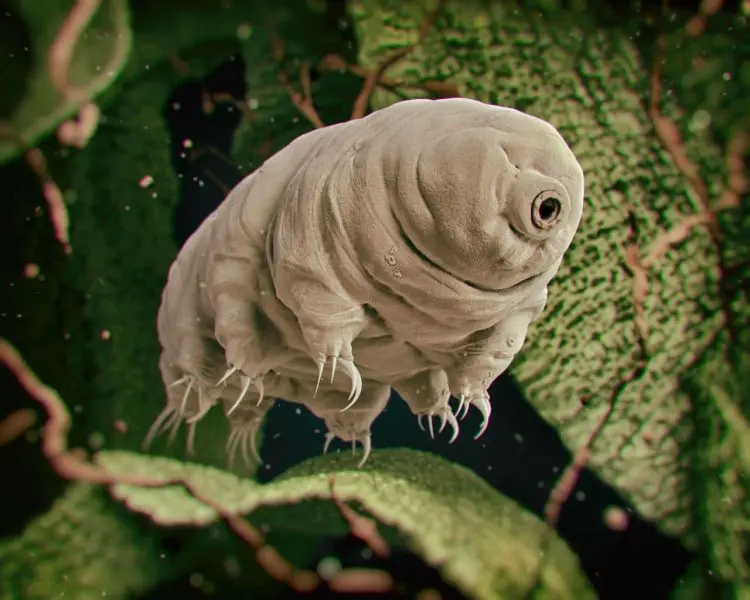
Tardigrades, also known as water bears, are among the most indestructible creatures on Earth. These microscopic animals, measuring between 0.05 and 1.4 mm and scuttling on eight short legs, seem capable of withstanding almost anything and emerging unscathed. The strategies behind their superhero-like survival are many: a damage-suppressing protein that shields their DNA and an anabiotic dehydrated state they enter when conditions become unbearable. Recently researchers uncovered another surprise. A team led by biologist Courtney Clark-Hachtel at the University of North Carolina at Asheville tested tardigrades’ resistance to high doses of radiation. The researchers bombarded the tiny creatures with gamma rays and watched how they responded. “What we saw surprised us. Tardigrades did things we absolutely did not expect,” said biologist Bob Goldstein. Goldstein said researchers already knew some species could tolerate ionizing radiation at doses up to 1,000 times lethal to humans. Researchers have linked that ability to a damage-suppressing protein called Dsup. But not all water bears carry Dsup. So the team hypothesized other survival mechanisms must be at work, as reported by Science Alert.
How the Research Was Conducted
To uncover this mystery, the team studied the effects of gamma radiation on the tardigrade species Hypsibius exemplaris. They placed the animals in a tabletop irradiator and exposed them to gamma rays from the beta decay of cesium-137. First the animals received a lower, nonlethal dose, then a much higher, lethal dose. To the biologists’ surprise, the Dsup protein did not protect Hypsibius exemplaris from the radiation, even though the protein was present. The DNA of the tiny subjects suffered considerable damage. But instead of preventing damage, the tardigrades ramped up expression of DNA repair genes so much that the gene products became some of the most abundant molecules in their bodies. Within a day after exposure, the water bears had repaired much of the radiation-caused DNA damage. As the researchers found, Hypsibius exemplaris can endure doses of ionizing radiation that would obliterate other animals. Clark-Hachtel said tardigrades mount an extraordinary response to radiation, and that response appears to be the secret to their extreme survival. “Understanding how tardigrades cope with radiation stress could help us generate new ideas for protecting other animals and microorganisms from harmful radiation,” she added. The results of the study were published in the journal Current Biology.
