
 Gaby
Gaby
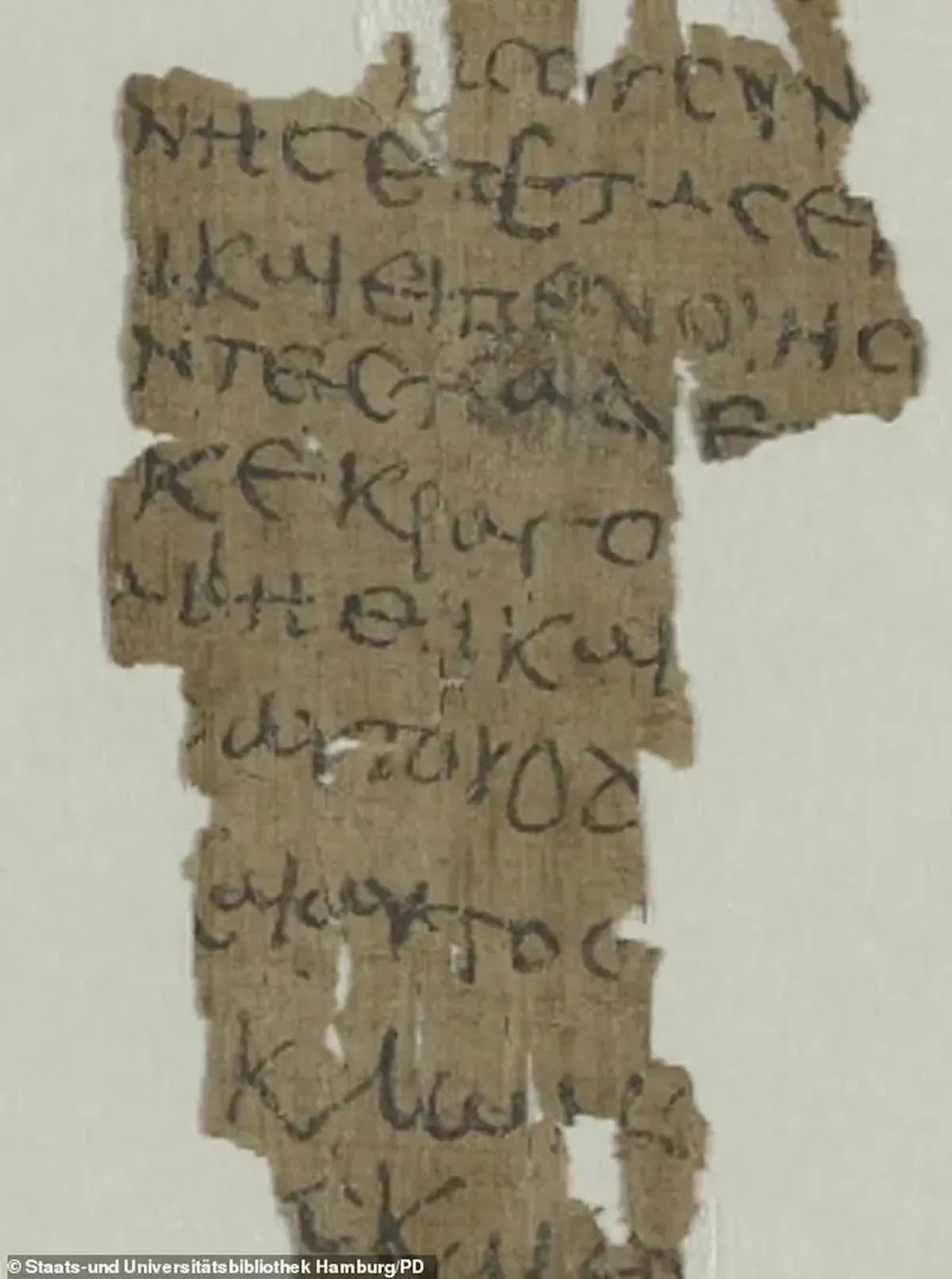
Researchers accidentally discovered a rare artifact in the collections of the Carl von Ossietzky State and University Library in Hamburg, Germany. For many years, a papyrus containing Greek text from late Ancient Egypt sat unnoticed.
The find was made by papyrologists Lajos Berkes of Humboldt University in Berlin and Gabriel Nokki Masedo of the University of Liège in Belgium. They dated the manuscript to the 4th–5th centuries AD, according to the Daily Mail.
What We Know About the Discovery
Experts examined a fragment of papyrus measuring 5 by 11 centimeters that had been cataloged in the library under the number P.Hamb.Graec. 1011. The fragment shows 13 lines, each with up to 10 letters.
Crucially, the researchers were able to decipher the manuscript. The papyrus recounts the story of the “second miracle” from the Gospel of Thomas, describing how a five-year-old Jesus brought clay sparrows to life. The original account of this miracle is believed to date to the 2nd century AD. However, the sections of the Gospel of Thomas that describe Christ’s early years were not included in the canonical Bible, which focuses on Jesus’s ministry and the events leading to his crucifixion.
The “second miracle” says that young Jesus molded 12 sparrows from clay. While he was doing this, his father discovered him and told him to stop because it was the Sabbath—a day of rest when work is prohibited. The boy then commanded the clay figures to “fly like living birds,” and they did, Professor Gabriel Nokki Masedo recounted.
Dr. Lajos Berkes said the handwriting is awkward; at first glance it could be mistaken for mundane notes, like a shopping list. But the deciphered text led the scholars to suspect it might be a student exercise.
The research duo is preparing a critical analysis and commentary on the manuscript. Their findings will be published in The Journal of Papyrology and Epigraphy.
Brooklyn Museum
