
 Gaby
Gaby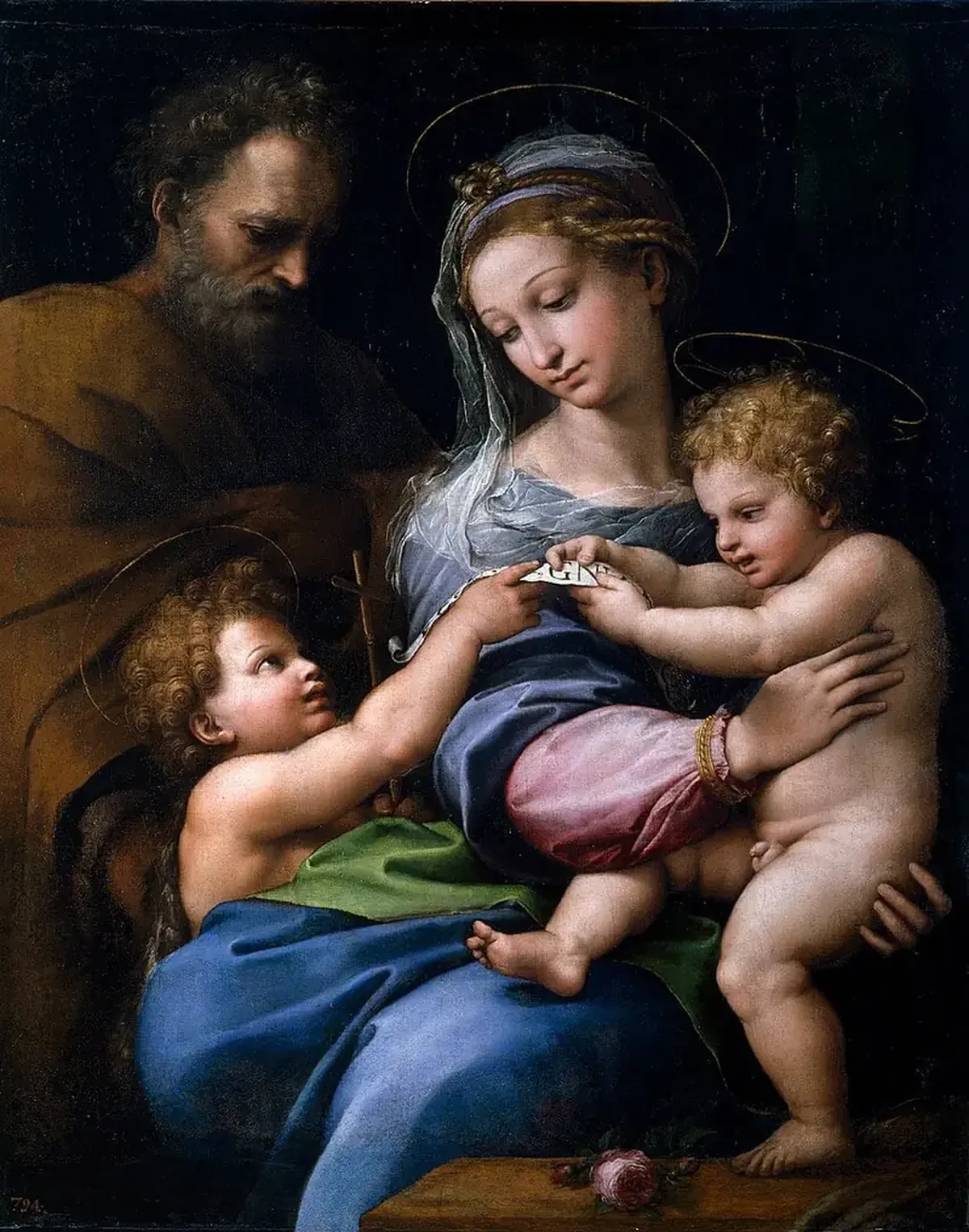
Famous artists often ran large workshops of students who helped create their masterpieces. So this story matters not just because an assistant may have worked on the painting, but because of advances in technology.
The painting “Madonna with the Rose” (1518) by the Renaissance artist Raphael Santi is currently on display at the Prado Museum in Madrid. The artwork shows the Virgin Mary holding the infant Jesus, with Saint Joseph and the young John the Baptist.
Since the 19th century, art historians have debated whether parts of the painting were by Raphael. Art historian Johann David Passavant suggested other artists may have contributed to “Madonna with the Rose.” Now British researchers are trying to settle that dispute using artificial intelligence.
What the Researchers Discovered
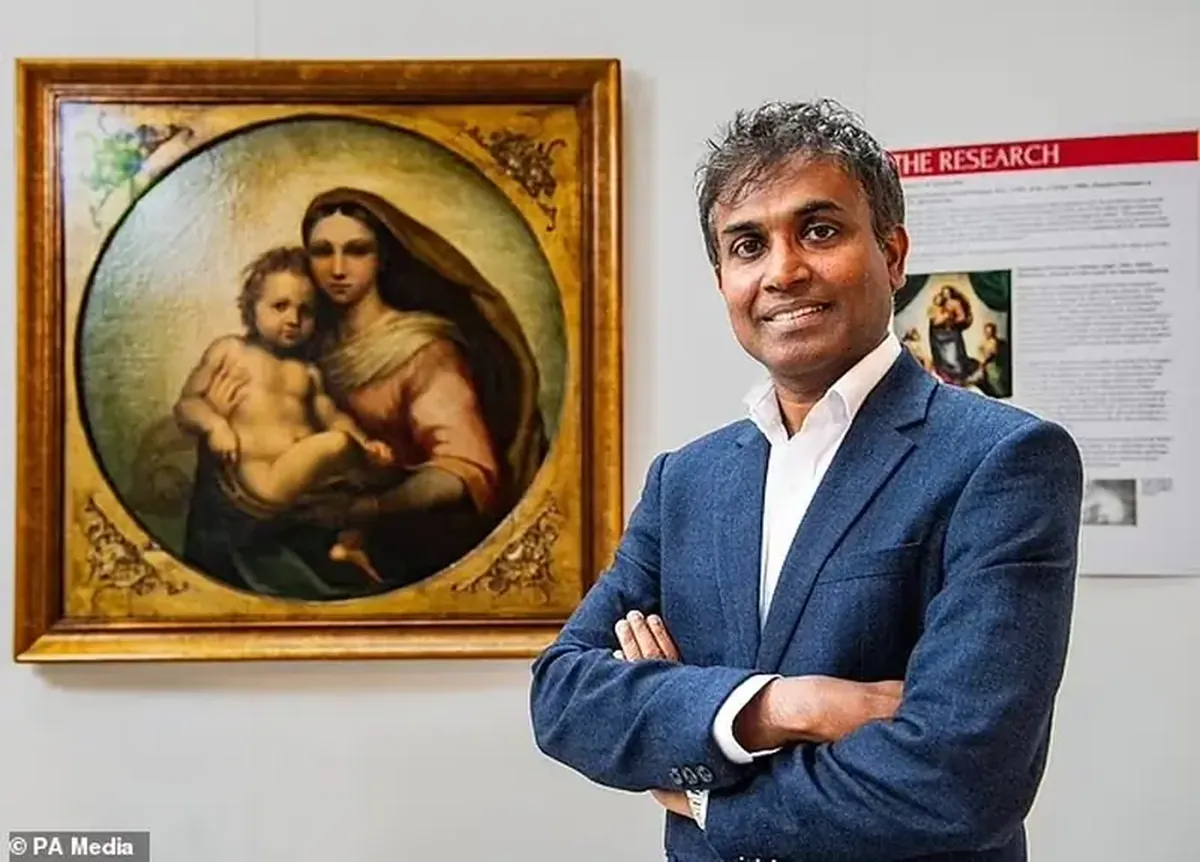
Professor Hasan Ugail, director of the Center for Visual Computing and Intelligent Systems at the University of Bradford, developed an algorithm to do the job. By analyzing brushstrokes at a microscopic level, his system can identify Raphael’s works with about 98 percent accuracy, the Daily Mail reported.
The AI concluded that most of the painting is by Raphael. But the face of Joseph in the upper left appears to be by a different hand. Some experts had thought the rose and the lower portion were by someone else, but the AI disagreed.
Art historians have long noticed that Joseph looks out of place, as if he were painted later. Some have speculated that he wasn’t part of the original composition.
The AI learned Raphael’s style by studying 49 of his works. “We used images of Raphael’s paintings to train the computer to recognize his style in great detail through brush strokes, color palettes, shades, and every aspect of the work,” Professor Ugail explained. Ugail says the computer sees the painting at a much deeper, microscopic level than the human eye.
Possible painters of Joseph include Raphael’s students Giulio Romano or Gianfrancesco Penni, both of whom later became known for their own work.
Researchers say the system shouldn’t be the only tool used for authentication. Still, study author David Stork of Stanford University says the results advance overall authentication protocols.
The findings were published in the journal Heritage Science.
