
 Gaby
GabyTraining dogs to use their sense of smell—often called “scent training”—can be done at home and may boost their cognition, researchers at Aberystwyth University in the UK found. Overall, dog training can be a complex process that doesn’t always yield positive results. However, new research has revealed a way to correct problem behaviors and enhance dogs’ cognitive abilities. Previous studies mostly compared well-trained working dogs to untrained pets. For the first time, scientists tested scent training on two groups of untrained dogs.
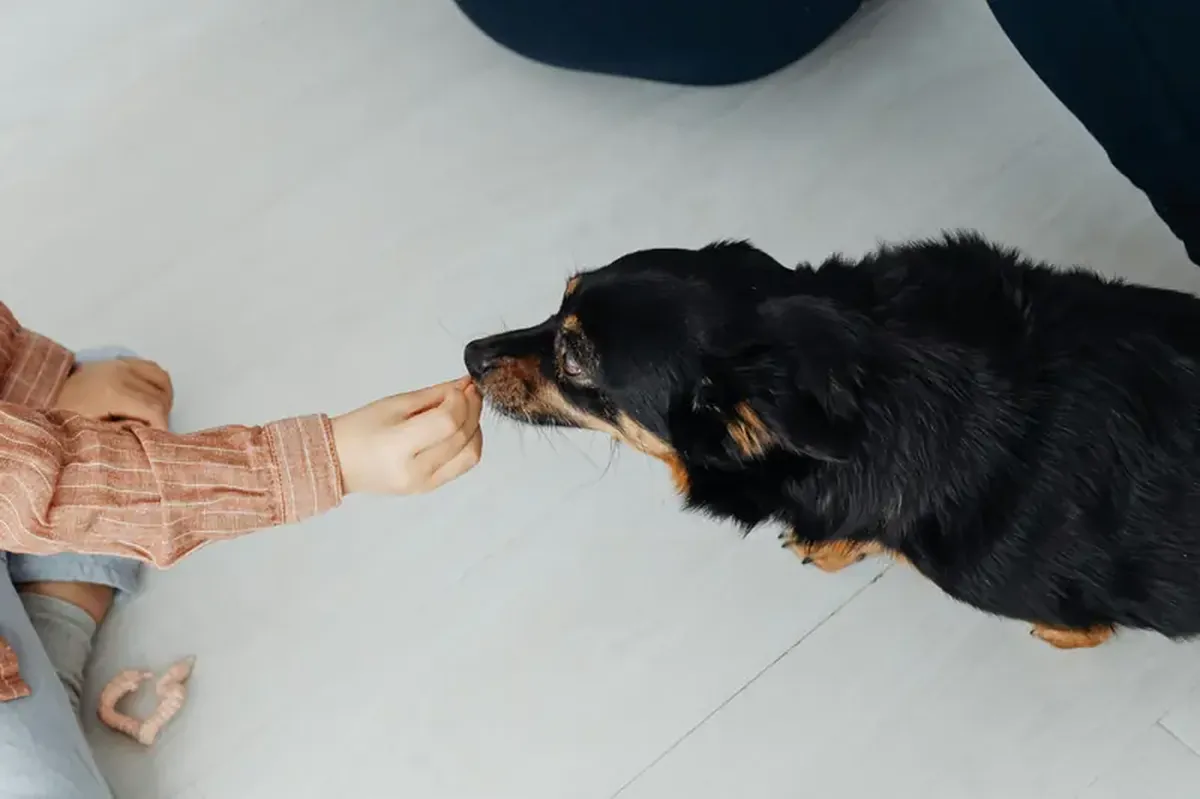
In this study, researchers enlisted 40 dogs with varying levels of training. The team aimed to see whether dogs’ scent-detection skills would improve their cognition. Dog owners filled out a questionnaire about their pets’ gender, neutering status, breed, and age. The dogs were then split into two groups, as reported by the Daily Mail. The first group performed a “detour task”: dogs encountered a transparent barrier, had to navigate around it, and then received a treat. For the second group, researchers used the command “look” to get the dogs’ attention, showed them food, and placed it under a pot. The training was divided into three phases—familiarization, training, and testing—with 20 trials in each phase. In the first phase the dogs in the second group saw one pot; in the second phase there were two pots; in the third phase there were three pots. All pots carried the scent of pâté, so the dogs couldn’t easily tell which pot hid the treat. Then the dogs had to search for the food. If a dog didn’t respond to the command or touched the wrong pot within 20 seconds, the researchers showed the dog the treat but did not give it.
The results showed that dogs in the second group—the ones who had to sniff out the food—performed better than dogs that had to navigate the obstacle. The study required the animals to focus on a single scent. Dogs that underwent scent training showed better cognitive abilities and completed tasks more effectively. Lead author Sarah Dalesman says the method is easy to use at home because it doesn’t require special equipment. “Working with scents is a fantastic activity for dogs. It’s suitable for animals of all ages, from young puppies to senior dogs,” she said. “Even hiding a bit of regular food so the dog has to sniff it out can provide great mental stimulation for the animal,” Dalesman added.

What other tips do researchers have? There are other ways to train dogs if owners find scent work isn’t a good fit for their pet. For example, puzzle toys and agility training are great alternatives. Puzzle training uses toys that contain food or treats, encouraging the dog to work for a reward. Examples include rubber toys you can stuff with food, hard-plastic toys with mazes, or toys with compartments for treats. The idea is to give the dog a mental and physical challenge that can be especially helpful when they’re stuck indoors. Another option is agility training, which involves navigating a pre-set obstacle course with tunnels, jumps, tables, and poles. This type of canine sport, which originated in the UK in the 1970s, helps develop dogs’ problem-solving skills. Sarah Dalesman says the range of training methods is broad; it’s just a matter of finding the one that suits both the dog and its owner.
