
 Gaby
GabyThe Moon’s temperature, like Earth’s, changes depending on whether sunlight is hitting its surface. But the swings are much larger than on our planet.
“The temperature wildly fluctuates from extremely high to extremely low,” said John Monier, a professor of astronomy at the University of Michigan (USA), in an interview with Live Science. According to him, temperatures on the Moon can range roughly from minus 100 °C to over 100 °C.
For comparison, the average surface temperature of the Earth is 15 °C. According to NASA, Earth’s surface temperatures range from minus 89 °C to 57 °C.
Although the Earth and the Moon are approximately the same distance from the Sun (about 150 million kilometers), several factors explain why their temperatures are so different.
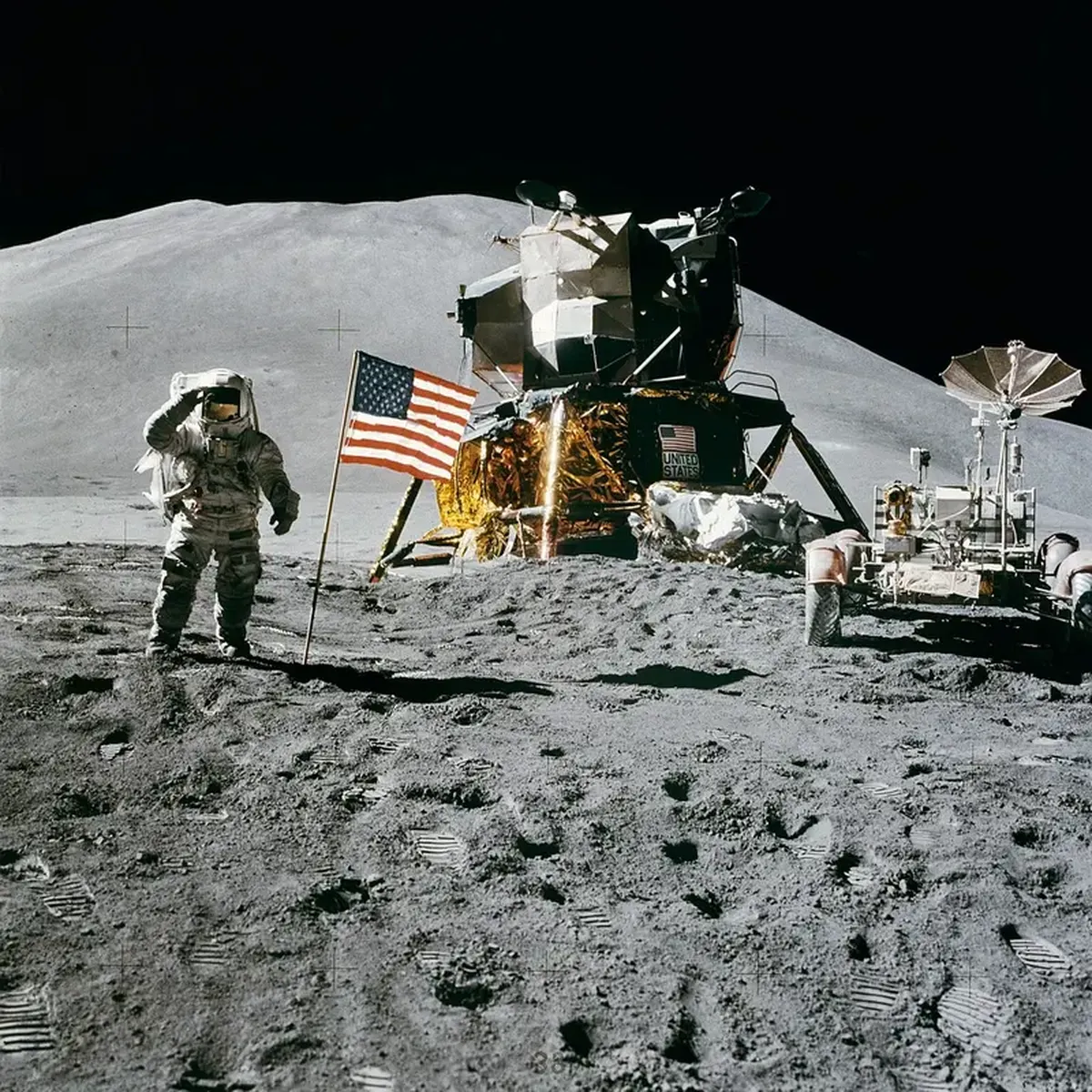
First, the Earth has an atmosphere that holds heat and supports moderate, life-sustaining temperatures. The Moon has virtually no atmosphere, so its surface is exposed to intense heating from the Sun.
On Earth, unlike the rocky Moon, vast oceans absorb and store the Sun’s energy and slowly release it at night.
Meanwhile, the lunar soil, known as regolith, is a “good insulator,” Monier noted. That means surface material can hold heat or cold for long periods. As a result, temperatures vary dramatically across the Moon’s surface.
According to NASA data, near the lunar equator temperatures can reach 121 °C in sunlight and drop to minus 133 °C in darkness. Overall, the Moon’s surface has one of the most extreme thermal environments in the Solar System after Mercury. At the Moon’s poles, the Sun neither rises nor sets: it never climbs more than 1.5 degrees above or below the horizon, casting long, slow-moving shadows. Because of this, some craters on the lunar surface are in perpetual darkness. These permanently shadowed regions may trap ice particles that could be crucial for future human missions.
In 2022, NASA measured the Moon’s temperatures using the Lunar Reconnaissance Orbiter (LRO), a robotic spacecraft launched in June 2009. The data showed that some shaded areas inside craters maintain a temperature of around 17 °C. That suggests certain craters could potentially become favorable locations for shelter.
But other shaded areas on the Moon can be extremely cold. Recent studies indicate the Moon may host the lowest temperatures in the Solar System.
In craters at the Moon’s south pole, scientists estimate temperatures can drop to as low as minus 248.15 °C or even lower.
Understanding how temperature varies across the Moon will be crucial for future exploration. For any long-term human presence, equipment will need to withstand those extreme highs and lows, Monier says.
