
 Carlos Solis
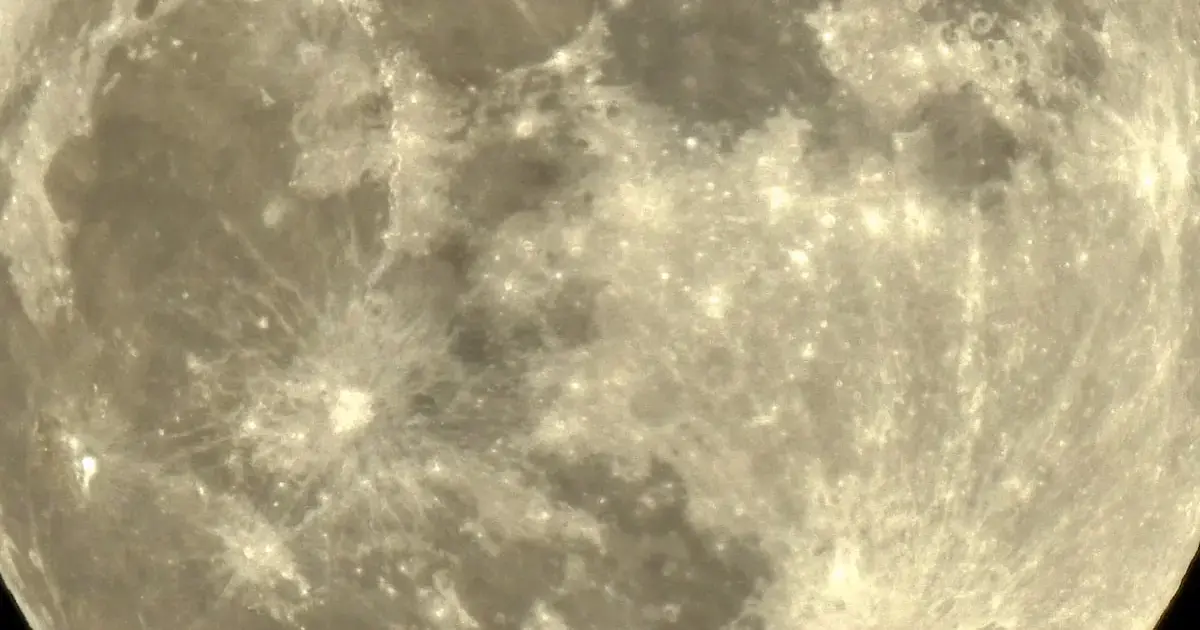 The far side of the Moon is dominated by the vast South Pole-Aitken Basin. Stretching over 1,930 kilometers from north to south and 1,600 kilometers from east to west, it is a colossal feature.
This ancient impact crater formed around 4.3 billion years ago when a giant asteroid struck the young Moon at a glancing angle.
A new study from the University of Arizona, led by Jeffrey Andrews-Hanna, has revealed that this massive crater holds secrets about the Moon’s formation and early evolution. The team meticulously examined the shape of the South Pole-Aitken Basin and discovered something unusual.
Typically, giant impact craters across the solar system show a teardrop shape that narrows in one direction. However, analysis shows that the largest crater on the Moon narrows to the south. This finding reverses previous assumptions that the asteroid came from the south — the impact most likely came from the north.
Why is this detail important?
This matters because the landing sites for the upcoming Artemis lunar mission, scheduled for 2027, are set near the southern edge of the South Pole-Aitken Basin.
Generally, impact craters distribute ejected material unevenly. The bottom of the basin is typically covered by a thick layer of material expelled from the depths during the collision, while the upper part receives significantly less, as reported by Science Alert.

Thus, astronauts will land in an ideal location to collect material from the Moon’s deep interior for study.
In its early history, the Moon was covered by an ocean of magma. As this molten layer cooled and crystallized over millions of years, heavy minerals sank to the bottom, forming the mantle, while lighter ones floated to the surface, creating the crust.
However, some elements concentrated in the remnants of the liquid magma. These residual elements — potassium, rare earth elements, and phosphorus, collectively known as KREEP — refused to solidify completely.
Scientists have long puzzled over why KREEP elements are almost entirely concentrated on the side of the Moon that faces us. These radioactive materials generated heat, driving intense volcanic activity that formed the dark basalt plains that create the familiar “face” of the Moon we see from Earth.
Meanwhile, the far side remained rugged and largely free from volcanic activity.
The crust on the Moon’s far side is significantly thicker. The university team suggested that as the far-side crust thickened, it pushed the magma ocean toward the thinner near side. Supporting this, the western flank of the basin shows a high concentration of radioactive thorium, a characteristic element in KREEP-rich material, while the eastern flank lacks it.
The team hypothesized that the impact sliced through the lunar crust right at the boundary where a thin, heterogeneous layer of KREEP-enriched magma still existed beneath the far side. The collision essentially opened a window into this transitional zone between the KREEP-rich near side and the typical far-side crust.
Once the Artemis astronauts collect samples from this radioactive region, scientists on Earth will rigorously test them. Ultimately, scientists will be able to explain how the Moon transformed from a molten sphere into a geologically diverse world with its radically different hemispheres.
The study’s findings were published in the journal Nature.
Photo: Unsplash
