
 Gaby
GabyOn high-voltage power lines it’s common to see birds perched there. But why do they sit on wires, and how do they avoid getting electrocuted? The first part is simple: the wires make convenient perches for scanning for predators or prey, and they aren’t blocked by trees. Still, not every bird survives. A 2014 study estimated that between 0.9 and 11.6 million birds die from electrocution in the U.S. each year. Larger species, especially raptors, are at higher risk because they’re more likely to touch two wires at once or contact a wire and a grounded object, IFLScience reported.
Meanwhile, a 2016 study by the National Wildlife Forensics Laboratory of the U.S. Fish and Wildlife Service examined 417 raptors killed by electrocution. About 80 percent of those birds were either bald eagles or golden eagles.
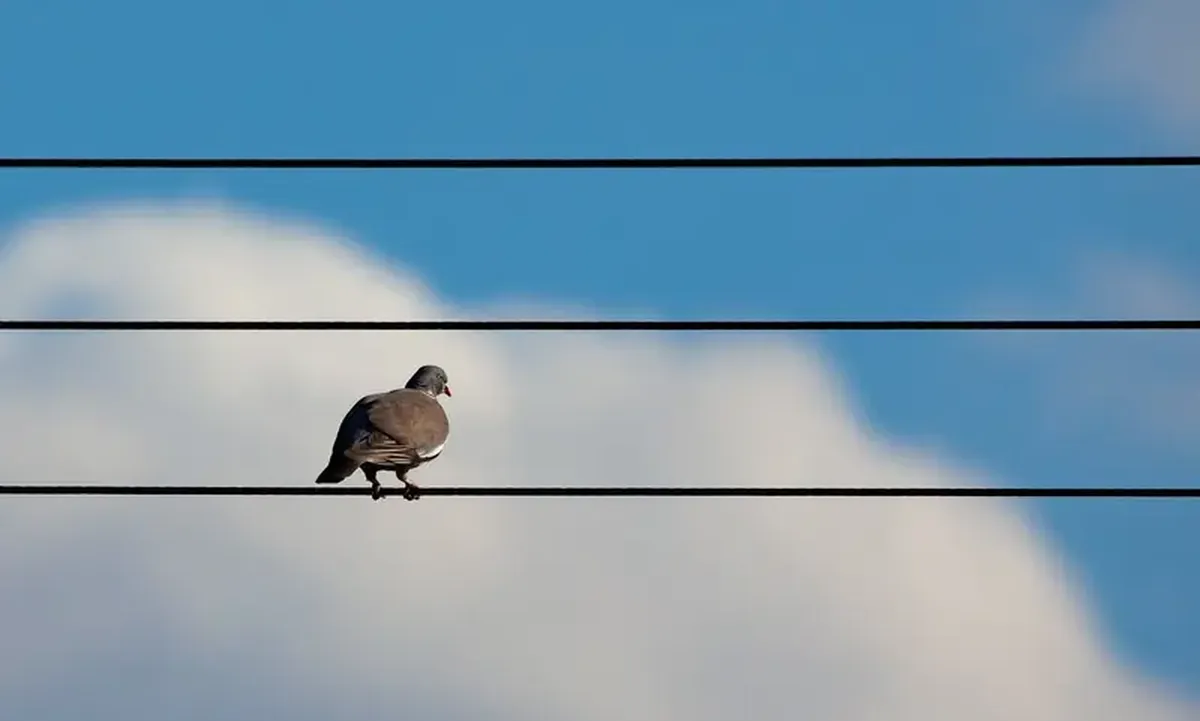
So why don’t some birds get zapped? It comes down to how they perch. Birds that sit on a single energized wire without touching anything grounded don’t create a path for current, so the electricity doesn’t flow through them. “Birds do not create a connection between the power line and the ground, so they do not complete the circuit,” said Will Babb of the Ohio Department of Natural Resources’ wildlife division. If a bird touches a power line and the ground at the same time, it completes the circuit and will be electrocuted. Any grounded, conductive object that contacts an energized wire creates the same deadly path. If a bird touches both a wire and a grounded pole at once, or touches two high-voltage lines simultaneously, current will flow through the bird and it will be electrocuted.
