
 Gaby
Gaby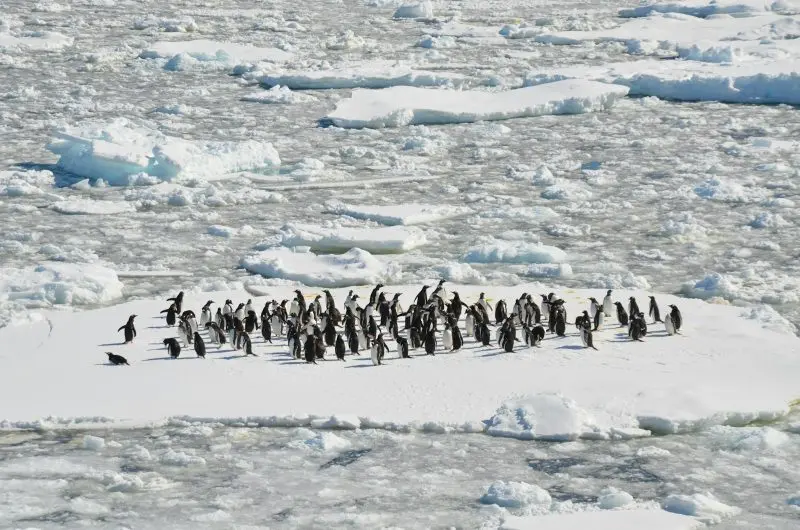
Antarctica is warming fast because of human-caused climate change. But penguins may be doing some unexpected cooling: a new University of Helsinki study shows ammonia from penguin droppings helps create extra cloud cover along the Antarctic coast, blocking sunlight and lowering temperatures, Science Alert reported.
Lead author Matthew Boyer says lab work had suggested gaseous ammonia could help form clouds, but “it has been challenging to quantitatively assess this process and observe its impact in Antarctica until now.” Antarctica makes an ideal natural laboratory: with almost no human pollution and little vegetation—so few other sources of cloud-forming gases—penguin colonies become the dominant source of ammonia.
The future of these birds, however, is under threat. Shrinking sea ice disrupts their nesting, feeding, and protection from predators. Still, penguins play a significant ecological role. Like other seabirds such as imperial cormorants, they release large amounts of ammonia in their waste. When that ammonia mixes with sulfur-containing gases from phytoplankton, tiny aerosol particles form, and those particles can grow into clouds.
Boyer’s team set up instruments at the Argentine Marambio base on Seymour Island, near the northern tip of the Antarctic Peninsula. Over three summer months—when Adélie penguin colonies were bustling and phytoplankton photosynthesis peaked—scientists tracked wind direction, ammonia levels, and newly formed aerosols. When the wind blew from a colony of 60,000 Adélie penguins eight kilometers from the base, atmospheric ammonia spiked to about 13.5 parts per billion—roughly a thousand times higher than background levels. Even a month after the birds left on their annual migration, atmospheric ammonia concentrations remained about a hundred times higher. The ground, saturated with droppings, looked like land treated with slow-release fertilizer.
The instruments showed aerosol particles arriving into the atmosphere every time air masses moved in from the colony, sometimes so dense that fog formed. Chemical signatures in the particles pointed to ammonia originating from the penguins.
Boyer called the link between penguins and phytoplankton a “synergistic process” that helps build protective clouds over parts of Antarctica. “We have evidence that a decline in penguin populations could lead to warming in the summer atmosphere of Antarctica,” the researchers wrote. Globally, clouds tend to cool the planet by reflecting solar radiation back into space, but the effect depends on what lies beneath them. Over bright ice sheets and glaciers, extra cloud cover can also trap infrared heat, so the net impact varies with where clouds form and where they drift.
“This is another example of how deeply ecosystems and atmospheric processes are connected—and why biodiversity and conservation matter,” Boyer emphasized. The study appears in the journal Communications Earth & Environment.
