
 Carlos Solis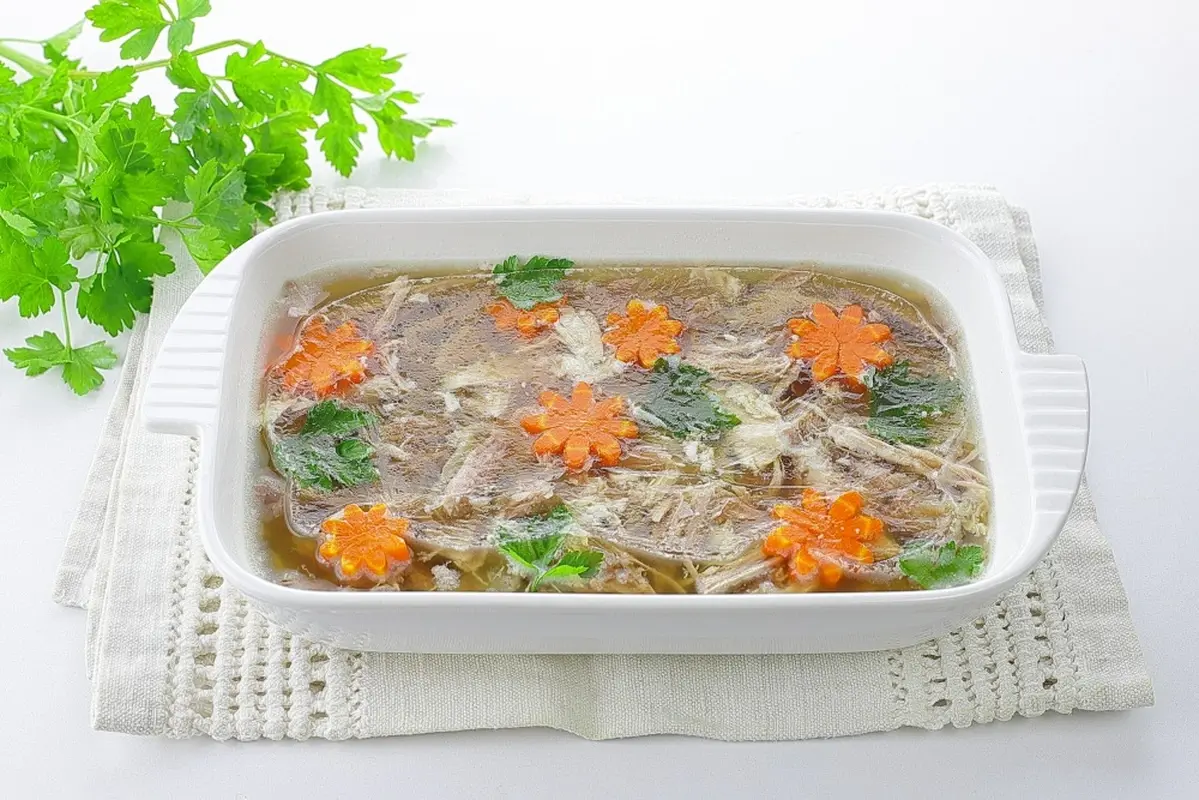
How did this ancient dish, known in the times of Kyivan Rus, differ from the aspic we know today? For starters, it was prepared by simmering meat for a very long time to create a rich broth loaded with natural collagen, allowing the dish to set without added gelatin. The ancient draghli used animal parts rich in connective tissue (pig’s trotters, hocks, tails, ears, and skin), which gave the broth its viscosity and natural ability to gel. A key part of making this historical aspic was the long, slow cooking—several hours—to extract as much collagen and other nutrients as possible into the stock. The ancient draghli were expected to be clear: the prepared broth was always strained to remove bones and spices. Cooked vegetables added during the cooking process were arranged with pieces of meat in bowls of draghli, then the dish was chilled and served with garlic.
Ingredients: water – 2 liters; lean pork – 0.5 kg; garlic – 5 cloves; gelatin – 30 g; bay leaves – 2 pieces; allspice – 4 berries; hot pepper (chili) – ¼ pod; white horseradish – 2 teaspoons; salt – to taste.
Preparation
Wash the pork, cut it into pieces, and remove any membranes. Place it in a pot and cover with water. Bring to a boil, cook for 3 minutes, drain the water, and rinse the meat thoroughly. Place the rinsed pork back in the pot and cover with clean water. Add allspice, bay leaves, and half of the peeled and crushed garlic. Cook on low heat for an hour. At the end of cooking, season the broth with salt.
Remove the meat, let it cool slightly, shred it into fibers, and distribute it into plates or individual molds.
Soak the gelatin in a separate bowl and let it swell for 10 minutes. After that, dissolve the gelatin in the hot broth, stir, and pour it over the meat. Once the aspic cools, place it in the refrigerator and let it set for 3 hours.
Life Hack
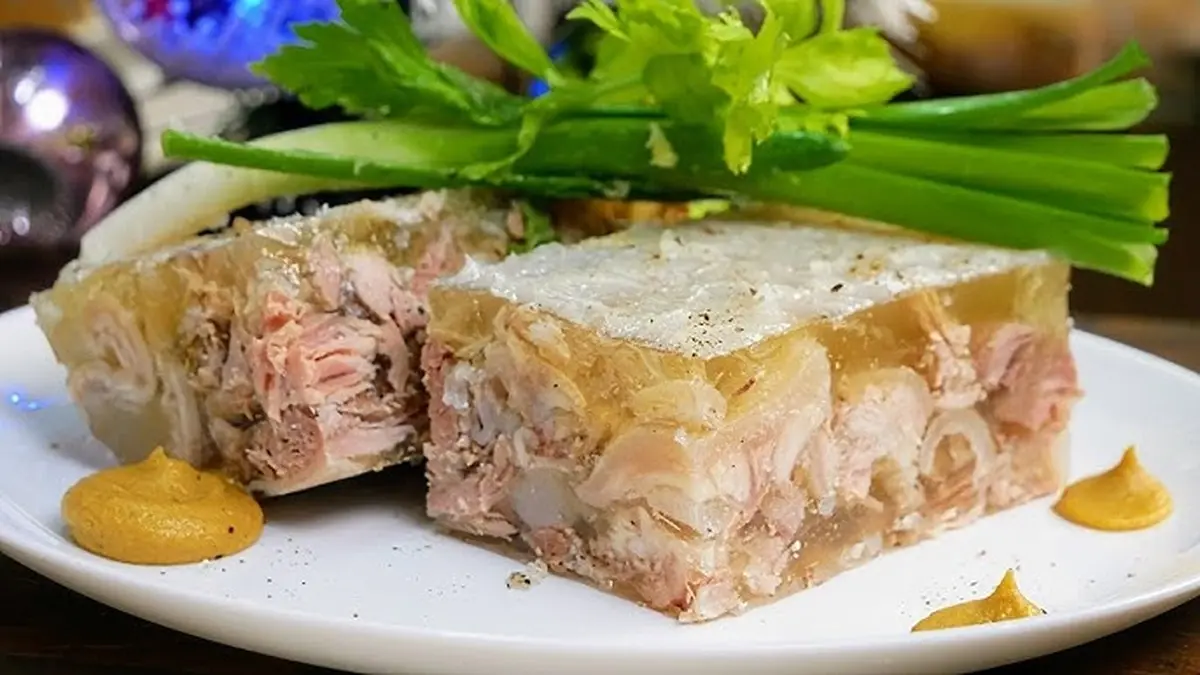
Before serving the pork aspic (which can have a calorie count of up to 350 kcal/100 g), prepare a sauce to cut the fattiness: mix hot pepper with white horseradish and 2 cloves of minced garlic.
