
 Carlos Solis
Spring pea soups are light, satisfying, and exactly what you want when the season drags you down: peas pack protein, fiber, vitamins C, K, and E, plus antioxidants that support the immune system and the cardiovascular system, helping fight spring fatigue. A cheesy soup with fresh peas and greens can help combat sleepiness and anemia, while a potato-and-pea soup—thanks to its potassium and magnesium—can help normalize blood pressure. Read more about the benefits of fresh peas in our separate piece.
What you’ll need for a quick meatball soup (for a 3‑liter pot)
- Water or broth – 2–2.5 L
- Ground meat – 300–400 g
- Egg (optional) – 1
- Processed cheese – 150–200 g
- Young peas (fresh or frozen) – 150 g
- Potatoes – 4–5 medium
- Carrot – 1 medium
- Yellow onion – 1 for the soup + 1 for the meat mixture
- Green onion – a bunch
- Butter or cooking oil – for sautéing
- Bay leaf – 1–2 leaves
- Salt and pepper – to taste
Cooking time: 35–40 minutes
Yields 6–8 servings
Step‑by‑step: How to make the cheesy meatball and pea soup
- Prepare the meatballs – Season the ground meat with salt and pepper, grate one small onion finely for juiciness, add the egg if using, mix well, and shape the mixture into small meatballs.
- Prep the vegetables – Cut the potatoes into cubes, grate the carrot or slice it into matchsticks, and chop the yellow onion finely.
- Make the sauté – Heat a heavy-bottomed pot, melt the butter (or heat the oil), and sauté the chopped onion and grated carrot until soft, about 5–7 minutes.
- Start the soup – Add water or broth to the pot with the sautéed vegetables, bring it to a boil, add the potatoes, and simmer for 5–7 minutes.
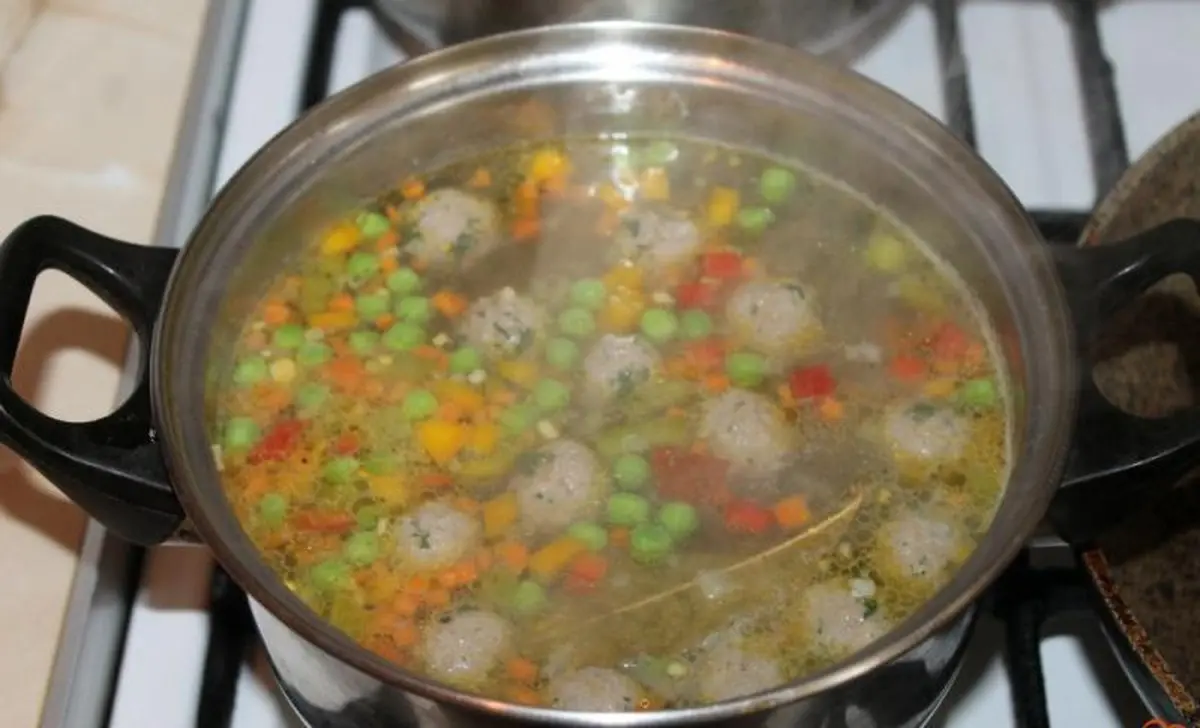
- Add the meatballs – Gently add the meatballs to the boiling soup and cook them for 10 minutes, skimming off any foam as they cook.
- Add the peas – Stir the fresh or frozen peas into the soup with the meatballs.
- Make the cheese base – Grate the processed cheese (Druzhba or another variety) so it melts faster, then add it to the pot while stirring constantly until the cheese fully dissolves into the meatball broth.
- Finish and rest – Season the soup with salt, pepper, and bay leaf, simmer 3–5 more minutes until the potatoes are done, remove the pot from the heat, add the chopped green onion (which adds a bright, peppery note), and let the soup rest for 10 minutes before serving.
Kitchen hacks and tips
- Use an immersion blender to smooth out lumps and make the soup creamy if the cheese forms clumps.
- Choose a processed cheese that melts well for a silky soup. Chill the cheese in the freezer for 15 minutes before grating to prevent clumping.
- Freeze the formed meatballs for 10 minutes before adding them to the boiling soup to help them hold their shape.
- Use fresh ground meat with a modest fat content to keep the meatballs juicy without falling apart.
- Add 50–100 ml of 10–20% cream five minutes before the end of cooking for a richer, creamier finish and a nostalgic lunchroom-style flavor.
- Add chopped green onion at the end of cooking or sprinkle it over each bowl before serving to preserve its color and vitamins.
- If you’re sensitive to legumes, read our practical guide so you can enjoy this dish without discomfort.
Q&A: Quick meatball soup with peas and processed cheese
What kind of processed cheese works best for soups?
Choose a processed cheese that’s soft, high in fat, and made from real dairy so it melts evenly into hot liquid without forming flakes. A good processed cheese will list cheeses (for example, cultured milk cheese), cream or butter, powdered milk, and melting salts in the ingredients. Avoid products with vegetable fats—palm oil or other vegetable oils usually mean the cheese will not melt well and can leave an off taste or a film in the soup. The higher the fat content (around 45–50%), the better the cheese will melt and the silkier the soup will become. For fast, even melting, pick an elastic, paste-like processed cheese. When in doubt, choose a classic mild processed cheese without milk-fat substitutes, extra additives, or flavor inclusions like mushroom or ham.
How do different cheeses behave when heated, and which is best for soup?
Different cheeses react to heat in different ways: some stretch, some separate, and some flake. For a cheese soup, a soft processed cheese without vegetable fats works best because it dissolves uniformly and creates a creamy base. Harder cheeses like Gouda or cheddar will melt but need slow heating and constant stirring.
Can I substitute frozen peas for fresh, and will the soup taste different?
Yes. Frozen peas work as well as fresh and are often even better because they are frozen right after harvest when they’re sweetest. Add frozen peas straight to the boiling soup without thawing about 5 minutes before the end of cooking so they keep their color and don’t overcook. Frozen vegetables are generally comparable to fresh in vitamin content. If you use fresh peas from the pods, cook them for the same amount of time. Add canned peas at the very end, since they are already cooked and only need to be warmed through.
When should green onion be added to soups, and what does it pair with?
Add chopped green onion at the end of cooking or sprinkle it directly into the bowl before serving to preserve its color, aroma, and vitamins C, K, and folate. Using fresh herbs and greens in soups also helps the body better absorb other nutrients. Green onion pairs well with sour cream, eggs, potatoes, and meat, making it indispensable in hearty spring soups.
If you enjoy light spring soups with fresh herbs, try other seasonal first-course recipes too—like a green borscht with spinach, sorrel, or nettles.
