
 Gaby
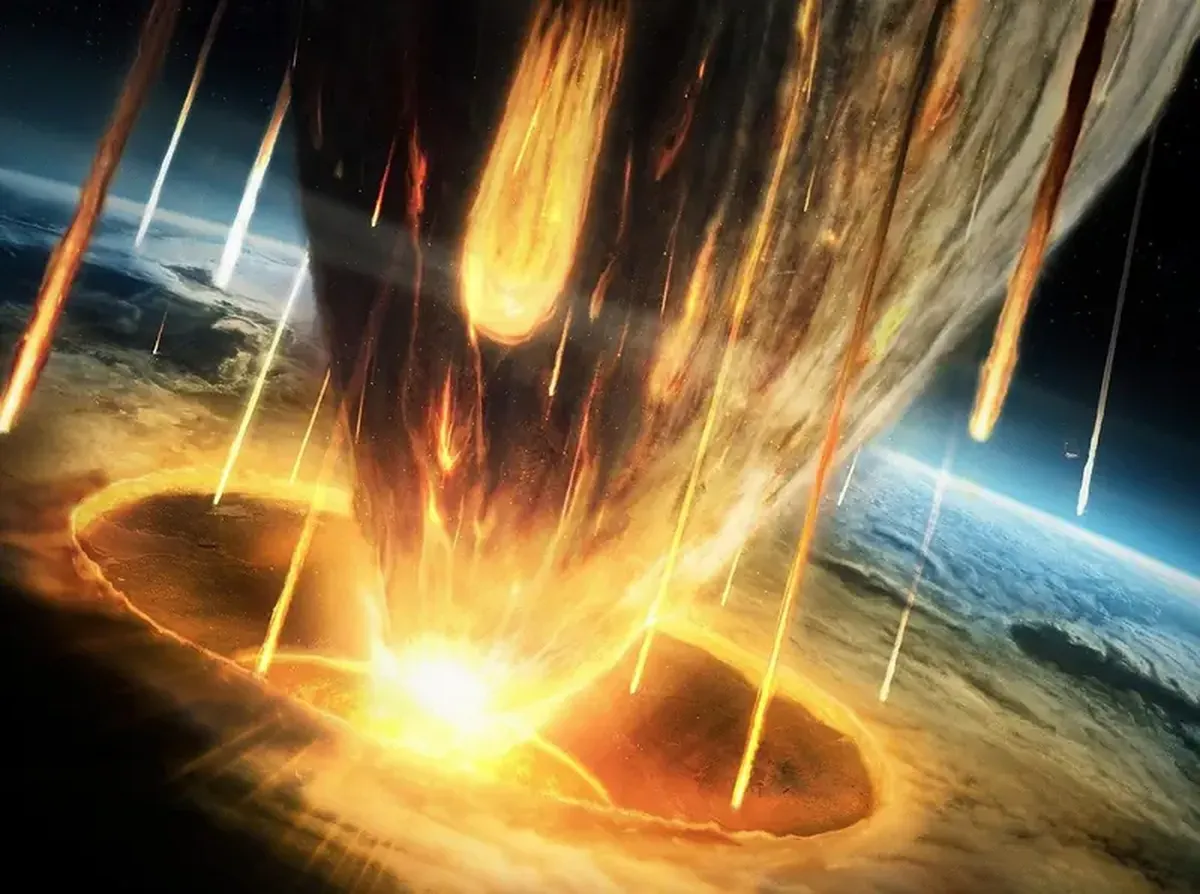
GabyDeep beneath the Atlantic Ocean, the Nadir crater formed around the same time as Chicxulub—the crater left by the asteroid that wiped out the dinosaurs off the edge of the Yucatán Peninsula. About 66 million years ago a massive asteroid more than 10 kilometers wide struck Earth, wiping out roughly 75% of plant and animal species. That impact created a crater about 180 kilometers across, known as Chicxulub. Now researchers say a smaller space rock hit Earth around the same time, creating the Nadir crater—more than 9 kilometers across—buried deep beneath the Atlantic.
Researchers discovered it two years ago, 300 meters below the seafloor off the coast of West Africa. The discovery was made by Visdin Nicholson of Heriot-Watt University in Edinburgh. Dr. Nicholson says the crater formed at the end of the Cretaceous period. Until now, the exact circumstances were unclear. A new study that mapped Nadir in extraordinary detail has revealed much more about how it formed.

What did the researchers find out? Using high-resolution 3D seismic data, Dr. Nicholson’s team concluded “beyond a reasonable doubt” that an impact created the crater. “This is the first time an impact structure has been fully imaged using high-resolution seismic data,” the lead researcher said. “This direct source of information will help us reconstruct how the crater formed and evolved.” He noted there are about 20 confirmed marine craters worldwide, but none has been imaged in such detail.
This allowed the team to build a clearer picture of the event. For instance, the team now estimates the previously unknown asteroid was larger than thought—between 450 and 500 meters across. The researchers reported it struck Earth at about 72,000 kilometers per hour. The study also clarifies the sequence of events that followed the impact.
Dr. Nicholson explained, “After the impact and the formation of the central uplift, soft sediments surrounding the crater flowed inward onto the evacuated floor, creating a visible edge. The quake from the impact likely liquefied sediments beneath the seafloor across the plateau, producing faults on the ocean floor.” He added that the asteroid’s impact triggered a tsunami that reached heights of 800 meters. “The impact also caused large landslides as the plateau’s edge collapsed into the ocean,” he elaborated. “We also see evidence that a series of tsunami waves bypassed the crater and then returned, leaving large scars from re-ejection and preserving traces of the event.”
Why does this matter? Researchers are trying to date the event as precisely as possible and to determine whether the Nadir crater is linked to Chicxulub, IFLScience reports. Dr. Visdin Nicholson said there have been no collisions with such gigantic asteroids in Earth’s history, so studying this could be extremely valuable. It will help us learn more about how the dinosaurs’ reign ended and improve our understanding of how asteroid impacts behave on Earth.
Dr. Nicholson compared the opportunity to studying the Tunguska event of 1908. “Obtaining new 3D seismic data about Nadir is an unprecedented opportunity to test hypotheses about impact craters, develop new models of their formation in marine environments, and understand the consequences of such events,” he said. The results of the study were published in the journal Communications Earth & Environment.
