
 Carlos Solis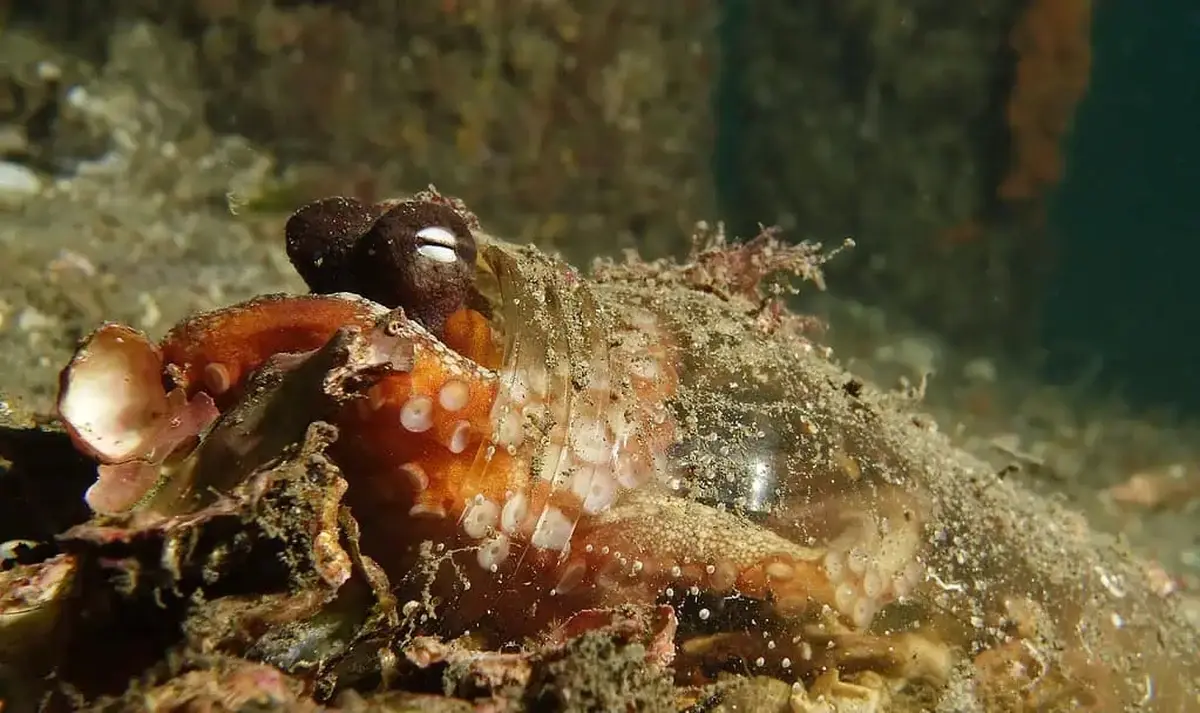
Divers and naturalists often find octopuses hiding in bottles, jars, tin cans, bits of plastic, and even spoons. These clever animals regularly use human debris as temporary shelters.
A Bottle Home: Striking Footage
In the video, an octopus of the species Octopus tetricus appears to pour itself out of a beer bottle. The animal changes color — you can see a clear shift at 0:17. Science blogger Mike Lisiecki shot the footage in 2010, and the clip shows how a flexible, boneless body lets an octopus squeeze into tight spaces to escape danger or to hunt.
In captivity, caretakers often set up mazes with treats at the end to exercise octopuses’ minds. Many of these natural scenes are charming, but they also raise alarm because they reveal how human trash pollutes marine animals’ habitats.
Why They Do It
Octopuses naturally seek shelter such as shells, rocks, and crevices. On sandy bottoms those “homes” can be scarce, and a bottle or jar becomes the nearest safe option. That doesn’t mean pollution helps these animals — environmental changes force them to adapt and come up with solutions in a world people have already altered.
Octopuses are remarkably intelligent and curious, and they manipulate objects with surprising dexterity. In lab studies, researchers have filmed octopuses unscrewing jar lids to reach food. In one experiment, researchers put a crab inside a jar; the octopus inspected the container, found the lid, turned it, and pulled out the prey.
Those observations highlight octopuses’ extraordinary cognitive skills: problem solving, tool use, and adapting to new challenges. Those traits challenge our ideas about intelligence and raise questions about our moral responsibility to protect the ecosystems where these animals live.
This piece draws on reporting by ZME Science

